

 |
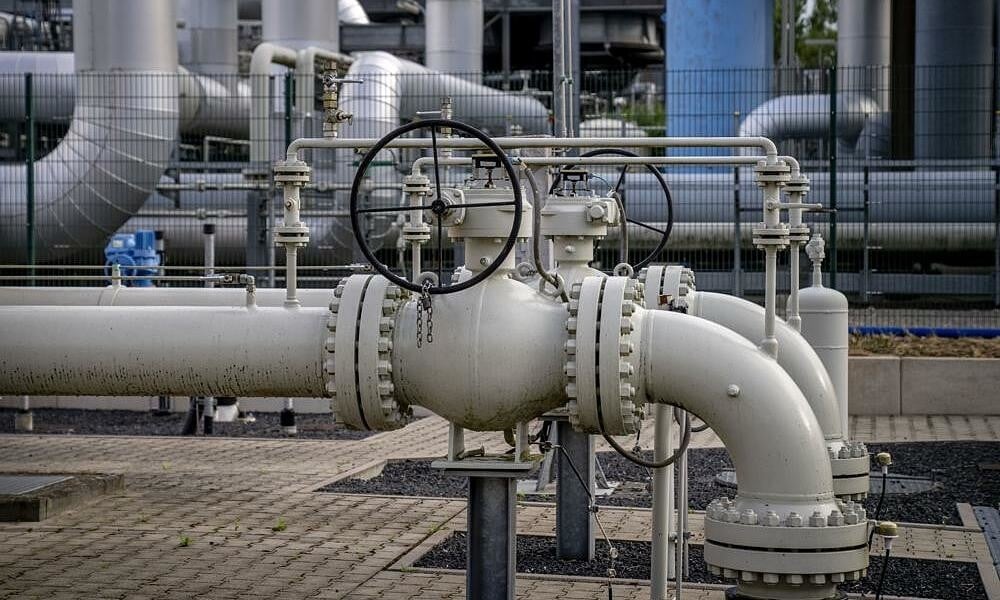
| Reckrod gas storage facility in Eiterfeld, Germany. (Source: AP) |
This temporary measure allows the 27 EU member states to provide various forms of financial support to compensate companies affected by rising electricity and gas costs.
This plan was introduced one month after Russia launched a special military operation in Ukraine in February 2022, disrupting energy supplies and causing prices to skyrocket. The plan is set to expire on December 31, 2023.
The EC stated that, although energy prices have stabilized since the end of last year, "the energy market remains vulnerable."
In a statement, the EC clarified: “Member states can maintain their support programs to cover the upcoming winter heating period as a safety net.”
However, Brussels stipulates that subsidies are only permitted "to the extent that energy prices significantly exceed pre-crisis levels."
Natural gas prices in Europe rose due to forecasts of colder weather. Gas prices increased by nearly 7% on November 20th, ending a four-day losing streak. The contract remains trading within a narrow range near 50 euros/mWh, a price level that has prevailed for much of the past few weeks.
Temperatures across much of northwestern Europe are expected to fall below normal by the end of the month, which could boost heating demand.
Meanwhile, the seizure of a ship in the Red Sea on November 19 by Iranian-backed Houthi rebels has raised concerns that the Israel-Hamas conflict could lead to widespread shipping disruptions.
Jonathan Stern, an expert at the Oxford Institute for Energy Studies, commented: “At the moment, anything that could be considered an event could cause a price increase. There is a possibility that conflict could spread and that could disrupt the flow of gas from Qatar to Europe. But at the moment, there are no signs that anything like that could happen.”
Source



![[Photo] Closing Ceremony of the 10th Session of the 15th National Assembly](/_next/image?url=https%3A%2F%2Fvphoto.vietnam.vn%2Fthumb%2F1200x675%2Fvietnam%2Fresource%2FIMAGE%2F2025%2F12%2F11%2F1765448959967_image-1437-jpg.webp&w=3840&q=75)





































![[OFFICIAL] MISA GROUP ANNOUNCES ITS PIONEERING BRAND POSITIONING IN BUILDING AGENTIC AI FOR BUSINESSES, HOUSEHOLDS, AND THE GOVERNMENT](https://vphoto.vietnam.vn/thumb/402x226/vietnam/resource/IMAGE/2025/12/11/1765444754256_agentic-ai_postfb-scaled.png)









































Comment (0)