

The price of gold rings set a new record in the trading session on September 26th, increasing by 100,000-200,000 VND/ounce, reaching 83 million VND per ounce (selling price), nearly approaching the price of SJC gold bars.
Despite the sharp and continuous price surges, trading in the gold market has been subdued.
People are still complaining that it's difficult to buy SJC gold bars at the price of 83.5 million VND/ounce through the four major banks: BIDV, Vietcombank, VietinBank, Agribank , and Saigon Jewelry Company Limited (SJC).
Trading in plain gold rings has also been sluggish. When gold prices surge, many shops limit sales to only 1-3 taels per customer; sales time is also very short, in some places only 10 minutes.
In reality, the gold market in Vietnam is quite small, and transactions become even more infrequent when the State Bank of Vietnam (SBV) and several ministries and agencies get involved in maintaining market stability.
While some of the money is still flowing into the real estate market as apartment and land prices rise, the majority is flowing into the banking system.

Many credit institutions, such as Agribank, NCB, PGBank, BacABank, OceanBank, etc., tended to adjust deposit interest rates upwards in the last week of September compared to the end of August, by about 0.1-0.5 percentage points, focusing on short-term maturities. Online savings interest rates were also higher than those for deposits made at the counter. Some banks offered very high "special interest rates," up to 8-9.5% per year, for deposits ranging from several hundred billion to trillion VND.
The trend of banks raising interest rates is occurring as these institutions are stepping up lending, especially in the last quarter of the year.
According to a representative from the State Bank of Vietnam, credit growth reached 7.38% in the first eight and a half months of this year, lower than the target of 15% growth for the whole year.
Previously, the Prime Minister requested continued consistent implementation of the credit growth target of approximately 15% for the whole of 2024. At the end of August, the State Bank of Vietnam also allowed banks to independently expand their credit "room" if their credit growth rate in 2024 reached 80% of the target set at the beginning of the year.
Therefore, in the coming period, more money will be injected into the economy and markets. This is a driving force for economic development.
New signals of cash flow
On the stock market, cash flow has been quite tight in recent months as foreign investors have withdrawn capital very strongly, while institutional investors and large businesses have had to settle many bond debts borrowed several years ago. Money is also being channeled into year-end business activities.
However, in the last few trading sessions, there has been a tendency for money to flow into the stock market more strongly.
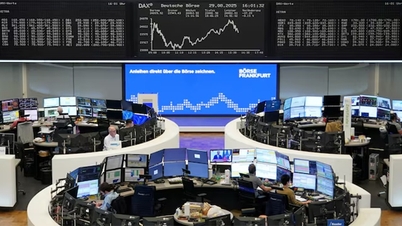
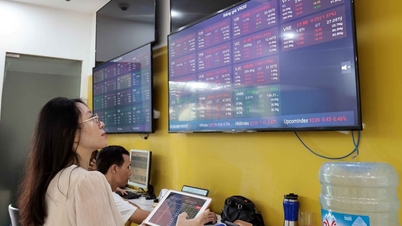
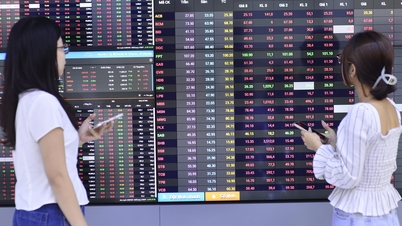
After months of plummeting liquidity and seemingly discouraged investors, the Vietnamese stock market unexpectedly saw a return of billions of USD on September 25th. Liquidity reached its highest level in 26 sessions, and both the VN-Index and VN30-Index surged. Domestic investors poured money in, while foreign investors reversed course and became net buyers.
On September 26th, strong capital inflows continued into the stock market, pushing the VN-Index past the 1,290-point resistance level in the early afternoon. Trading volume near the end of the session reached nearly 22,000 billion VND across all three exchanges, including 20,000 billion VND on the HoSE.
Unexpected capital flows have returned to the stock market amidst investors' anticipation of positive policy signals, trending towards supporting economic development.
Besides the Ministry of Finance's policy allowing securities companies to provide pre-funding services to foreign institutional investors without requiring sufficient funds for transactions, the State Bank of Vietnam is also taking strong steps to inject more money into the economy.
According to VNDirect Securities, eliminating pre-funding helps the stock market attract more FII (foreign indirect investment). This is also an important condition supporting the Vietnamese stock market's upgrade to emerging market status.
Some forecasts suggest that asset management funds worth trillions of USD could invest in Vietnamese stocks.
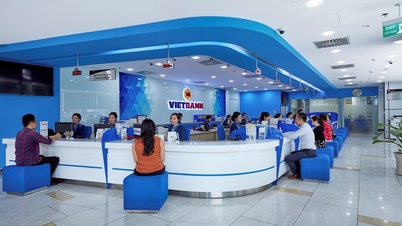
Recently, the Government proposed to the National Assembly Standing Committee to consider investing additional state capital in Vietnam Foreign Trade Commercial Bank - Vietcombank (VCB) through the distribution of stock dividends. VCB is proposed to receive an additional VND 20,695 billion to increase its charter capital.
Raising capital not only helps VCB in its restructuring process but also supports the economy by providing a large additional amount of credit. This is also a trend being seen worldwide.
In the two sessions on September 24-25, the State Bank of Vietnam (SBV) significantly increased lending to banks through the open market operations (OMO), thereby injecting tens of trillions of dong into the system. Specifically, on September 25, the SBV injected nearly 15,000 billion dong with a 7-day maturity and an interest rate of 4%, while on September 24, it injected a net amount of over 22,500 billion dong.
Money is flowing strongly into the banking system, which can then enter the economy and, to some extent, other markets, including the stock market. More money will improve liquidity and increase commodity prices.
Despite positive economic policy signals and cash flow, many businesses are still facing prolonged difficulties. Furthermore, profit-taking pressure is highly likely as the VN-Index approaches 1,300 points.

Source: https://vietnamnet.vn/gia-vang-nhan-lap-dinh-moi-dong-tien-ty-usd-co-the-do-vao-mot-kenh-dau-tu-2326114.html




























![[Video] The craft of making Dong Ho folk paintings has been inscribed by UNESCO on the List of Crafts in Need of Urgent Safeguarding.](https://vphoto.vietnam.vn/thumb/402x226/vietnam/resource/IMAGE/2025/12/10/1765350246533_tranh-dong-ho-734-jpg.webp)


































































Comment (0)