

The Mợi Festival is an important festival of the Muong people in Son La , signifying the remembrance of Ancestor Mợi - the person who contributed to building and preserving spiritual and cultural activities, and also expressing gratitude to Master Mợi for healing the sick and saving lives, and praying for health and peace for the village.
The festival is also an opportunity for families, clans, villages, and communities to interact, unite, exchange production experiences, and work together to build a prosperous and happy life.
Festivals are usually held at the beginning of the year or on special days associated with the traditional customs and practices of the community.
The festival is usually held over two days, starting on the second day of the first lunar month each year, and consists of two parts: the ceremonial part and the festive part.
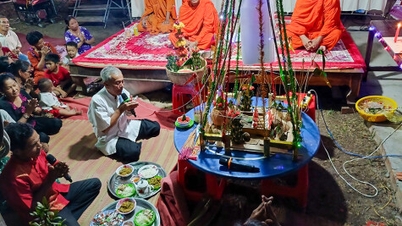
The ceremony takes place at Master Mợi's house and includes rituals such as worshipping ancestors and deities, fortune telling, tying threads around wrists for good luck, preparing six offering trays, and many traditional dishes such as seven-colored sticky rice, Nhắp cakes, wild vegetable salad, vegetarian vegetable platters, etc. Notably, everyone works together to make two ceremonial poles adorned with vibrant flowers from the core of forest trees.
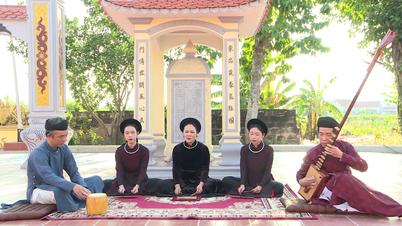
The outdoor part of the festival features dances, gong and drum music, flutes, and many folk games such as throwing the ball, tug-of-war, Xoe dance, swinging, crossbow shooting, and traditional games. The festival recreates the working life and production activities, showcasing the solidarity, joy, and artistic creativity of the Muong people.
At the end of the ceremony, Teacher Mợi thanked the villagers and instructed his descendants to preserve traditions and work together to build a peaceful, prosperous, and happy village.
The Mợi Festival is organized entirely voluntarily, clearly reflecting the cultural identity, beliefs, and community spirit of the Muong people, and is a precious spiritual cultural heritage passed down through many generations.
Through the Mợi festival, the Muong ethnic community in Son La not only strengthens solidarity but also affirms its cultural richness within the diverse tapestry of Vietnamese ethnic groups. This is truly an important intangible cultural heritage that needs to be preserved and promoted, contributing to enriching the traditional cultural values of the country.
Preservation is linked to promoting cultural values.
The Mợi Festival is a unique cultural feature closely linked to the spiritual life of the Muong people in Son La. However, over time, many elements of the festival are at risk of disappearing. Therefore, the local authorities are focusing on preserving and promoting the festival's value, harmoniously combining the preservation of traditional culture with sustainable tourism development.
Conservation measures focus on preserving, restoring, and teaching the rituals, dances, prayers, and folk games of the festival. The festival is held regularly, combined with cultural and tourism activities to both preserve ethnic identity and promote the image of the Muong people and culture to tourists.
Facing the risk of extinction, the Mợi festival was revived in Huy Tân commune in 2004. In 2017, the local authorities continued to organize training courses on Mợi dances for women's association members and the elderly in Thải Thượng, Thải Hạ, and Chiếu villages (Mường Thải commune). At the same time, they encouraged artisans to pass on their skills to the younger generation, contributing to the preservation of ethnic cultural values and aiming towards the development of community tourism.
The amateur performing arts group of Thai village (Muong Thai commune) is currently one of the units actively preserving and spreading the values of the Moi festival.
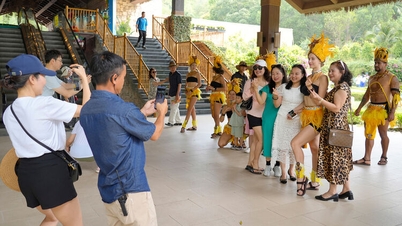
To ensure that the Mợi dances are not forgotten, the team regularly practices and performs at cultural exchange events, cultural festivals, and folk art performances in the district. In addition, the team teaches young people how to use gongs, drums, bamboo tubes, and other traditional musical instruments, helping them become familiar with these instruments and fostering pride in their ethnic identity.
Preserving and promoting the Mợi Festival of the Muong people in Son La is not only a responsibility to safeguard cultural heritage, but also an opportunity to develop community tourism and promote the image of the Muong people and culture to friends both domestically and internationally. The joint efforts of the government, artisans, and the community will help the Mợi Festival continue to live on through time – as a vivid testament to the unique cultural identity of the Muong ethnic group.
Source: https://www.vietnamplus.vn/giu-gin-va-phat-huy-gia-tri-le-hoi-moi-cua-nguoi-muong-o-son-la-post1073039.vnp


![[Photo] Prime Minister Pham Minh Chinh attends the Conference summarizing and implementing tasks of the judicial sector.](/_next/image?url=https%3A%2F%2Fvphoto.vietnam.vn%2Fthumb%2F1200x675%2Fvietnam%2Fresource%2FIMAGE%2F2025%2F12%2F13%2F1765616082148_dsc-5565-jpg.webp&w=3840&q=75)































































Comment (0)