

- Chinese Festival - cultural bridge, tourist highlight of Ca Mau
- Exploiting tourism potential from Festivals
- Preserving and promoting the Thien Hau Goddess Festival in conjunction with tourism in Ca Mau.
This is an occasion for the community to express wishes for peace, favorable weather, and bountiful harvests, while also strengthening community bonds and preserving the cultural identity of the Southern Khmer people .
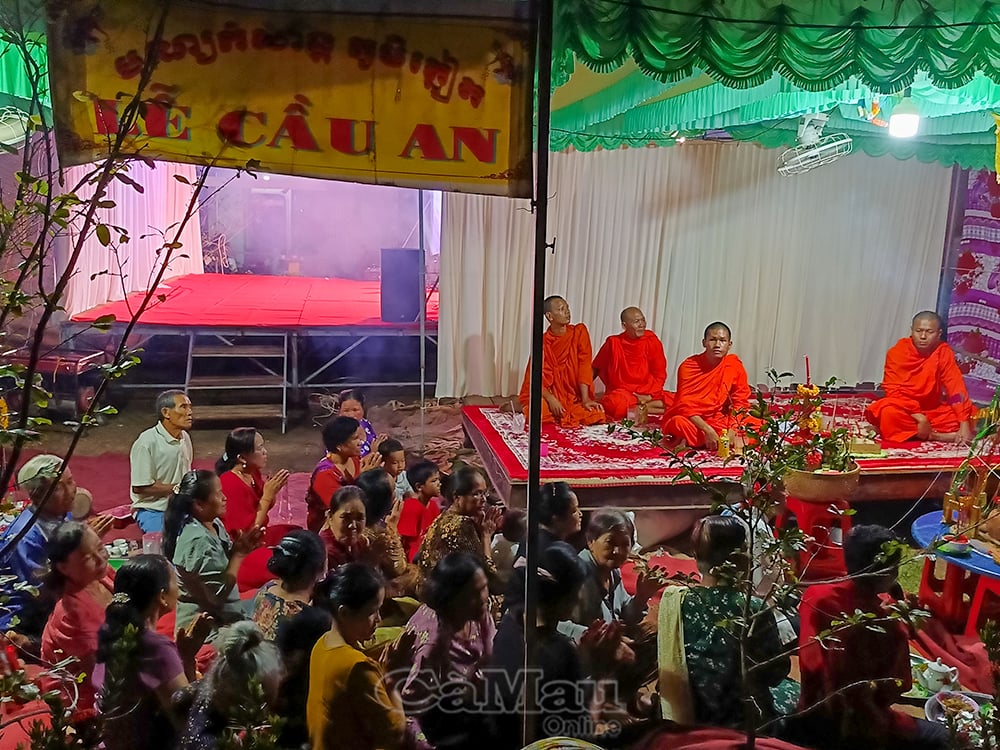 The space for performing the Prayer Ceremony in the community.
The ceremony is deeply rooted in cultural identity.
The Prayer for Peace ceremony signifies a prayer for blessings for each family and the entire village. The ritual expresses gratitude to the land, nature, and ancestors; and encourages the community to live in harmony and unity. The ceremony usually takes place in the temple courtyard or a communal gathering place, and is prepared solemnly with flowers, incense, candles, and offerings.
The Khmer people's prayer ceremony in Ca Mau is meticulously prepared, from the venue to the offerings and the personnel involved. The organizing committee includes the head monk, monks from the temple, Achar (religious leader), and representatives from the villages. The ceremonial space is kept clean, and the altar, seating for the monks, and areas for the community are arranged in an orderly and solemn manner.
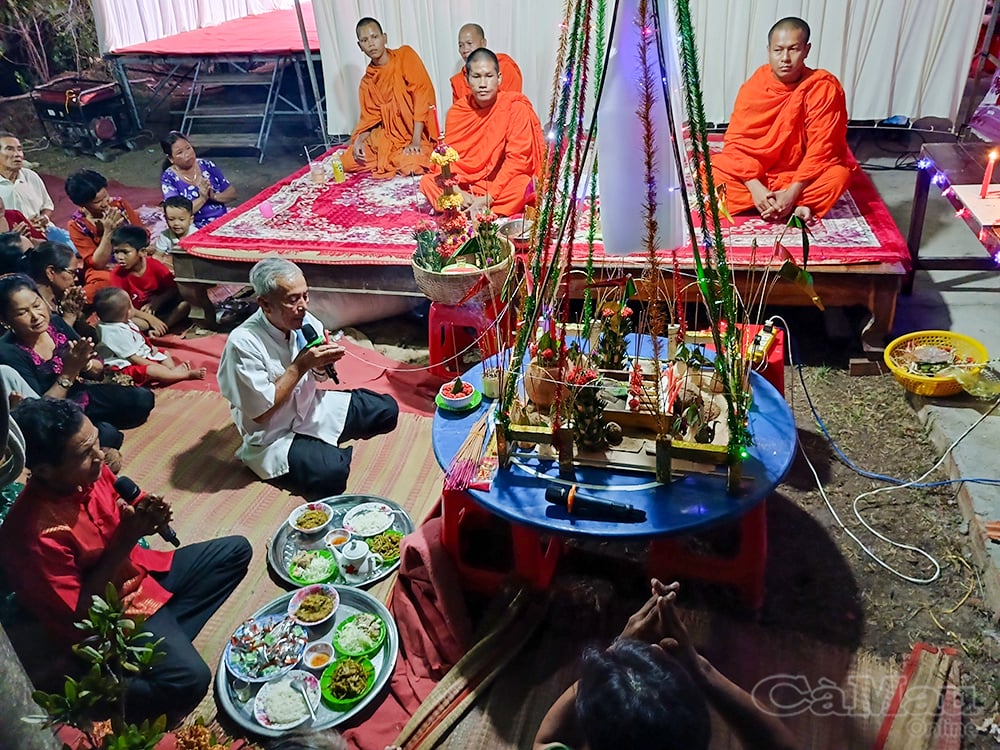 The chanting ritual during the Prayer for Peace Ceremony.
The offerings include incense, candles, flowers, fruits, cakes, rice, and a shrine to the Three Jewels or a communal altar; evening ceremonies may include floating lanterns and wind-blown lamps to enhance the sacredness.
According to traditional customs, the ceremony consists of the following stages: Opening ceremony - Invoking the Three Jewels; Offering alms to each household; Praying for peace in the village; Praying for a good harvest (if applicable); Closing ceremony - Dedicating merit.
The ceremony began with the ritual of Invoking the Three Jewels, with monks chanting the Ratana Sutta (Sutra of the Three Jewels) and Mangala Sutta (Sutra of Merit) to create a pure atmosphere and dispel negative energy. The Achar (religious leader) announced the purpose of the ceremony and guided the congregation in performing Sompiah (prostration).
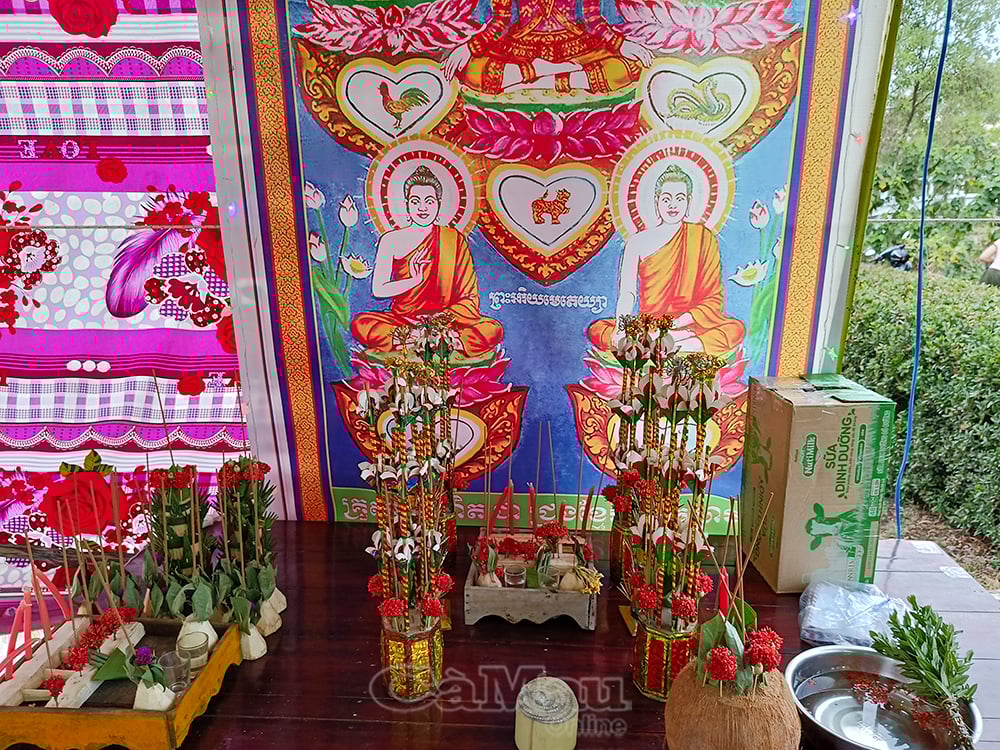 Items used in the ritual offerings during the Prayer for Peace Ceremony.
The "alms-giving" ritual is performed at each household, with monks chanting prayers for peace and healing, such as Anubhavā Paritta, Sabba Roga Nivāraṇa Paritta, and Bojjhanga Paritta. Each family is visited in turn, demonstrating community solidarity.
The most important part is praying for peace for the entire village, with the chanting of Karaniya Metta Sutta, Dhajagga Paritta, Khanda Paritta, Sroksangha, Arak Srok, and Proleung Pteah. The energy of compassion spreads, wishing for peace, harmony, and a bountiful harvest.
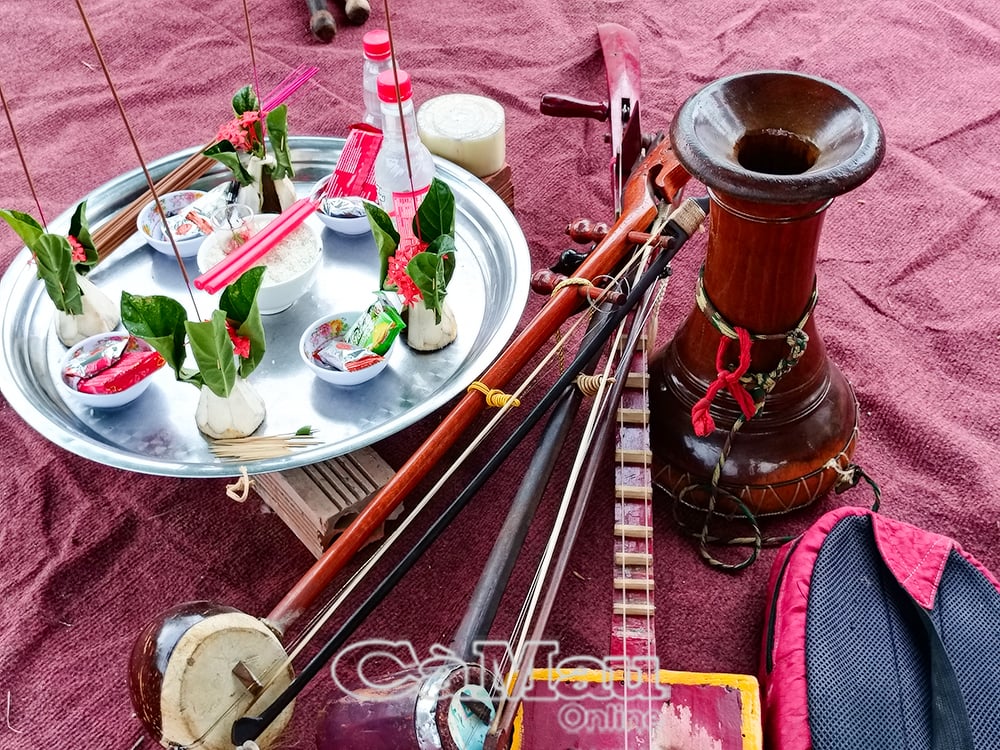 Offerings for the ancestral worship ceremony performed by the band for the Prayer for Peace ritual.
In some places, the ceremony also includes prayers for a good harvest, especially in farming communities. Monks chant the Daek Proleung Sutra (Sutra for Invoking the Spirit of the Rice) and Maha Jaya Mangala (Sutra of Great Blessings), praying for good crop growth and harmonious nature. The rituals may take place in the fields, strengthening the connection with the land.
At the end of the ceremony, the monks dedicate the merit through the Jaya Paritta (Victory Sutra), Samanta Cakkavāḷe (Sutra of Dedication of Merit), and Bang Skôl (if there is a prayer for the deceased), sending benevolent energy to the entire community. The Achar expresses gratitude and reminds the people to maintain a kind heart and live in unity.
Depending on local conditions, the scale of the ceremony may vary; some villages may also include offerings to the God of Agriculture, NeakTa, building sand mounds, etc. The ceremony can last from 1 to 3 days. At Rach Giong Pagoda and Cao Dan Pagoda, the ceremony is usually held in its entirety, with all traditional rituals.
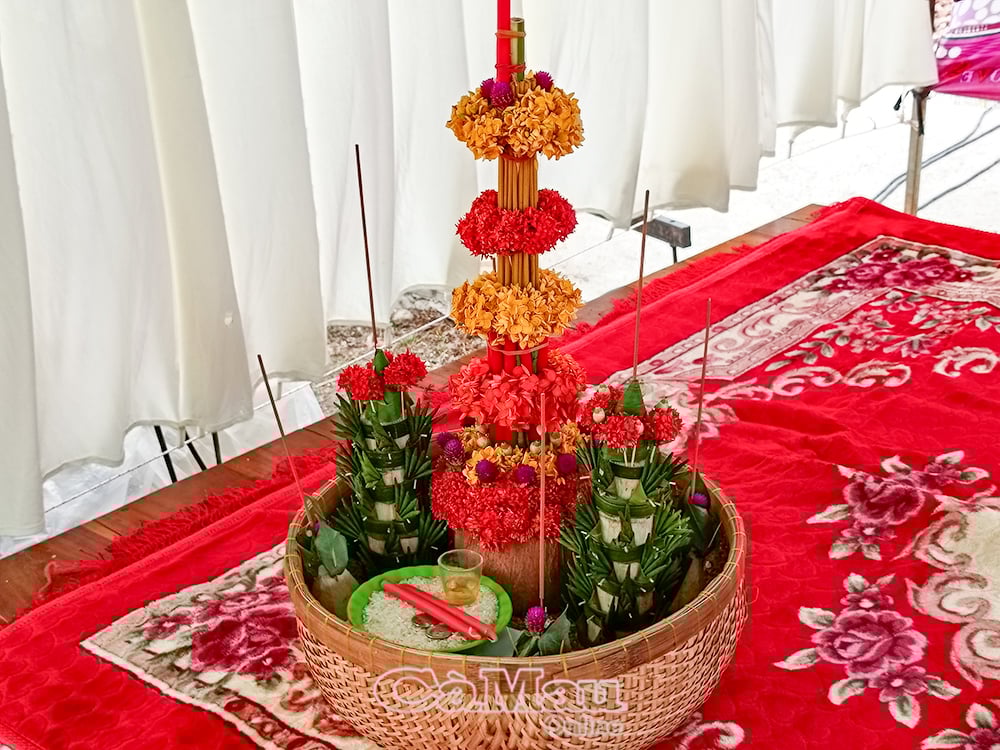 Offerings for chanting prayers for peace.
Preserving cultural values in today's life.
The Prayer for Peace ceremony is not only a religious ritual but also a cultural symbol of the Khmer people of Ca Mau. Through this ceremony, the spirit of solidarity and neighborly affection is fostered; traditional cultural values are passed down through generations. It also serves as an environment for educating children about faith, compassion, community spirit, and respect for nature.
In the modern context, maintaining the Prayer for Peace Ceremony not only contributes to preserving traditional culture but also creates a "bridge" between generations, helping the Khmer community preserve their identity, promote solidarity, and foster compassion in contemporary life. The Prayer for Peace Ceremony thus becomes a distinctive cultural hallmark, a spiritual value always cherished and preserved by the Khmer people in Ca Mau.
Dang Minh
Source: https://baocamau.vn/sac-mau-van-hoa-khmer-qua-le-cau-an-a124563.html


![[Photo] Closing Ceremony of the 10th Session of the 15th National Assembly](/_next/image?url=https%3A%2F%2Fvphoto.vietnam.vn%2Fthumb%2F1200x675%2Fvietnam%2Fresource%2FIMAGE%2F2025%2F12%2F11%2F1765448959967_image-1437-jpg.webp&w=3840&q=75)

![[Photo] Prime Minister Pham Minh Chinh holds a phone call with the CEO of Russia's Rosatom Corporation.](/_next/image?url=https%3A%2F%2Fvphoto.vietnam.vn%2Fthumb%2F1200x675%2Fvietnam%2Fresource%2FIMAGE%2F2025%2F12%2F11%2F1765464552365_dsc-5295-jpg.webp&w=3840&q=75)




























![[OFFICIAL] MISA GROUP ANNOUNCES ITS PIONEERING BRAND POSITIONING IN BUILDING AGENTIC AI FOR BUSINESSES, HOUSEHOLDS, AND THE GOVERNMENT](https://vphoto.vietnam.vn/thumb/402x226/vietnam/resource/IMAGE/2025/12/11/1765444754256_agentic-ai_postfb-scaled.png)

































Comment (0)