

Affirming the value of local specialty crops.
Not only famous in the Tam Dao mountain tourist area, chayote has now become a staple crop in many villages at the foot of the mountains, such as Dong Thanh and Lang Ha (Tam Dao commune). Locals mainly grow chayote for harvesting its shoots, which are popular for their crispness, sweetness, and ease of preparation. Mr. Luu Van Duong, head of Dong Thanh village, said: The entire village currently has 24 hectares of chayote cultivation, accounting for more than 70% of the total cultivated area.
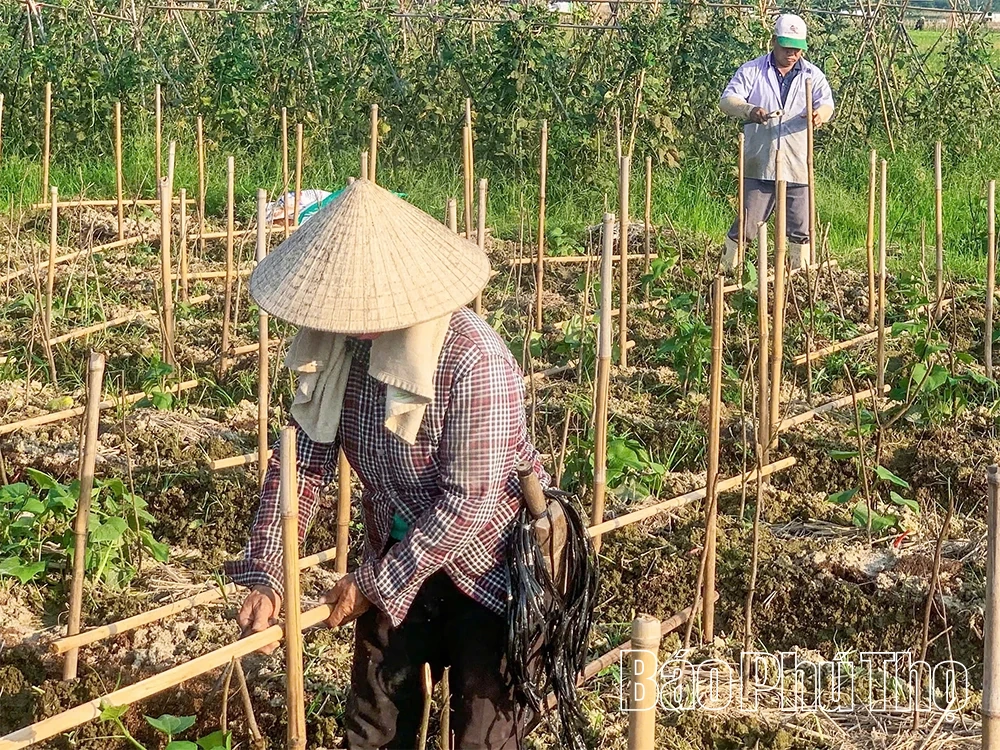
Farmers in Tam Dao are urgently setting up trellises and caring for chayote plants after the impact of typhoon number 10.
Chayote is primarily planted from the beginning of July to August in the lunar calendar, and harvesting begins after 2 to 3 months. However, in 2025, chayote growers in Tam Dao faced difficulties due to the consecutive impact of typhoons No. 10 and No. 11, which caused heavy rains and flooding, severely damaging the entire crop and seedlings. Many chayote farmers lost everything and had to replant from scratch. Ms. Luu Thi Thu, from Lang Ha village, who has been involved with chayote cultivation for over 10 years, shared: “My family has 7 sao (approximately 0.7 hectares), each sao yielding about 50-60 million VND per crop if the weather is favorable and the harvest is good. But this year, the storms destroyed everything, and now we have to spend a hundred kilograms of chayote seedlings per sao to replant.”
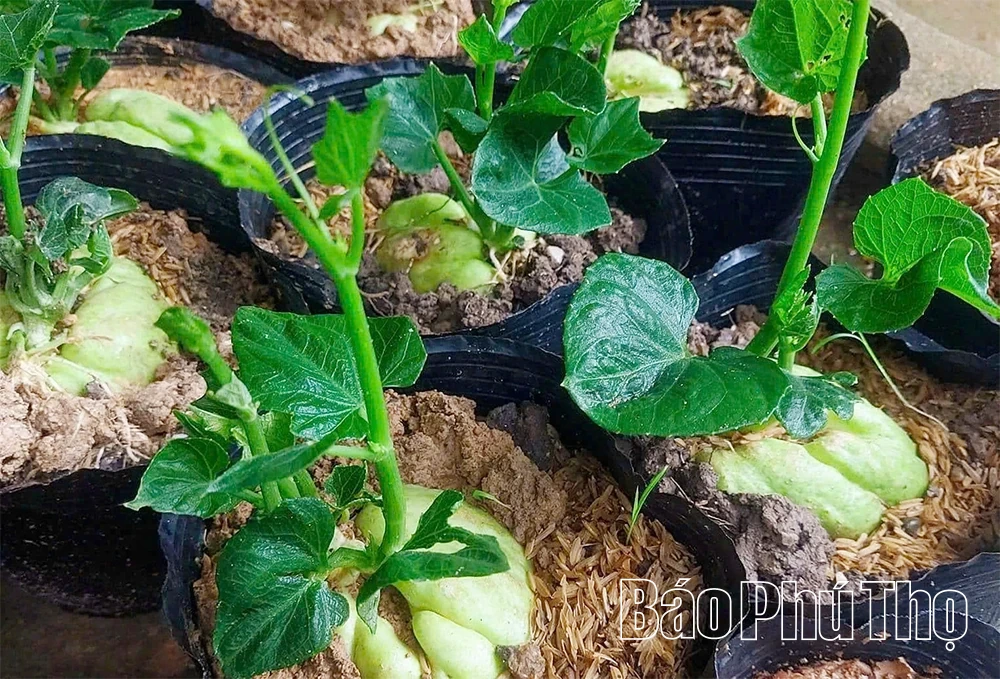
High-quality chayote varieties will contribute to ensuring the yield and quality of the new vegetable crop at the end of 2025.
Chayote in Tam Dao has been grown according to VietGAP standards for many years. This production process requires farmers to strictly adhere to steps from soil preparation, using organic fertilizers, controlling water sources to harvesting and preserving the product. Village head Luu Van Duong of Dong Thanh said: "Cultivating chayote according to VietGAP standards requires more time and effort than traditional methods, because farmers have to compost organic fertilizer, control diseases, and meticulously prepare the soil. Although it's more laborious, the result is that Tam Dao chayote is of high quality, safe for consumers, and trusted by traders and the market, selling at prices 10-20% higher than usual."
When harvesting chayote, locals usually sell it directly from the fields to traders who then transport it to wholesale markets within and outside the province, and even export it to some foreign customers. In January, when the weather in the mountains is cold (usually below 10 degrees Celsius), the chayote plants grow poorly, so the locals transport the vegetables to tourist areas in the mountains to supply and serve the consumption needs of tourists.
However, despite its good quality and well-known local brand, Tam Dao chayote still faces difficulties in consumption and promotion because the product has not yet established its own brand or received OCOP certification, production scale is still small and fragmented, and there is a lack of linkage between households, leading to unstable prices. In the last two years, sales have shown signs of stagnation, while the cost of fertilizers and seeds has increased. "We hope to receive more support regarding plant seeds, bio-fertilizers, and brand promotion programs," Mr. Duong expressed.
To develop into a high-value-added cash crop.
Although chayote from Tam Dao is already well-known and highly valuable, to build a brand for this agricultural product and develop it into a marketable crop with increased value, the local government and people of Tam Dao need to make more efforts to expand production scale, improve quality, and enhance the brand value of this agricultural product. The model of growing clean chayote according to VietGAP standards should be further expanded; agricultural cooperatives should be encouraged to increase consumption linkages and build product credibility in the market.
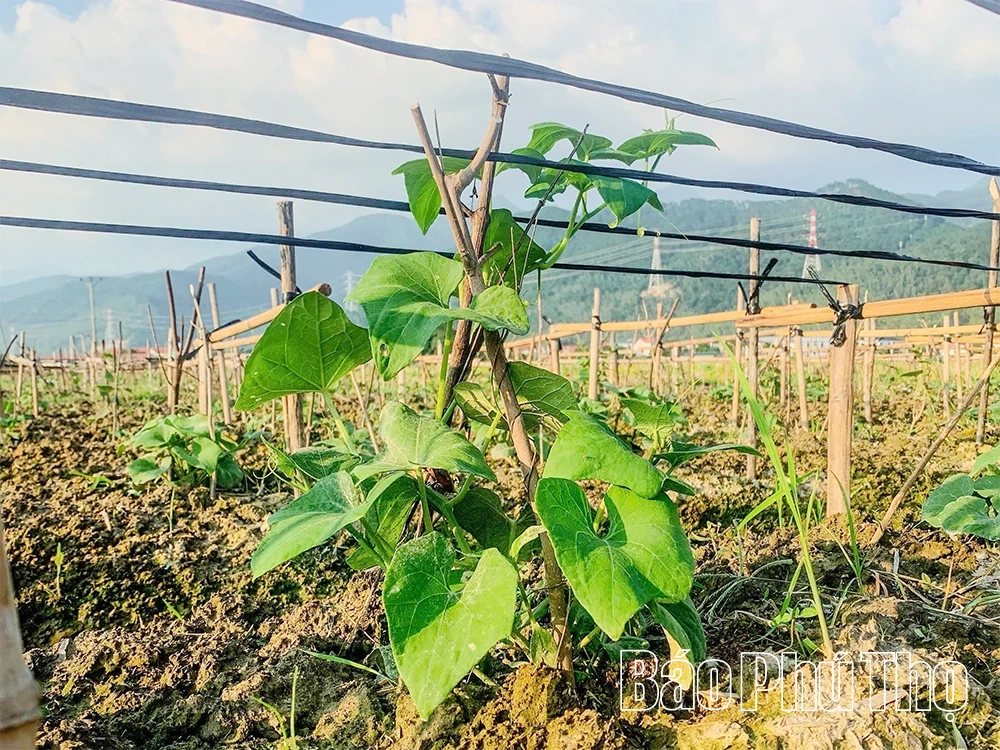
The new chayote sprouts turning green again signal a promising harvest season.
The development of chayote production linked with ecotourism is a strength inherent in Tam Dao. Previously, tourists were only familiar with chayote dishes at restaurants on the mountaintop; now, they can expand their experience to include visiting clean chayote farms, picking vegetables in the gardens, and learning about the cultivation process. This not only helps promote the Tam Dao chayote brand but also contributes to diversifying income sources for local people.
The "One Commune, One Product" (OCOP) program is opening up new opportunities for Tam Dao chayote to be certified and its value enhanced. Currently, villages are coordinating with the commune government to complete the application dossiers for provincial-level OCOP product certification. Once certified, Tam Dao chayote will have the opportunity to be widely marketed, promoted, and build a more sustainable brand. Beyond traditional crops, the local people hope to receive training in modern farming techniques, the use of bio-fertilizers, and high-yield varieties to reduce costs and increase production efficiency.
Despite the many challenges in building a brand and achieving OCOP standards, the image of lush green chayote fields gradually recovering after the storm, and farmers diligently cultivating them, reflects their belief in a new harvest. When each green vegetable is not just an agricultural product but also contains a story of labor, perseverance, and aspiration, the journey to conquer the OCOP market for Tam Dao chayote will no longer be far off.
Ngoc Anh
Source: https://baophutho.vn/giu-vung-thuong-hieu-nang-cao-gia-tri-cua-rau-su-su-tam-dao-241660.htm
















![[Photo] Prime Minister Pham Minh Chinh holds a phone call with the CEO of Russia's Rosatom Corporation.](/_next/image?url=https%3A%2F%2Fvphoto.vietnam.vn%2Fthumb%2F1200x675%2Fvietnam%2Fresource%2FIMAGE%2F2025%2F12%2F11%2F1765464552365_dsc-5295-jpg.webp&w=3840&q=75)















































Comment (0)