

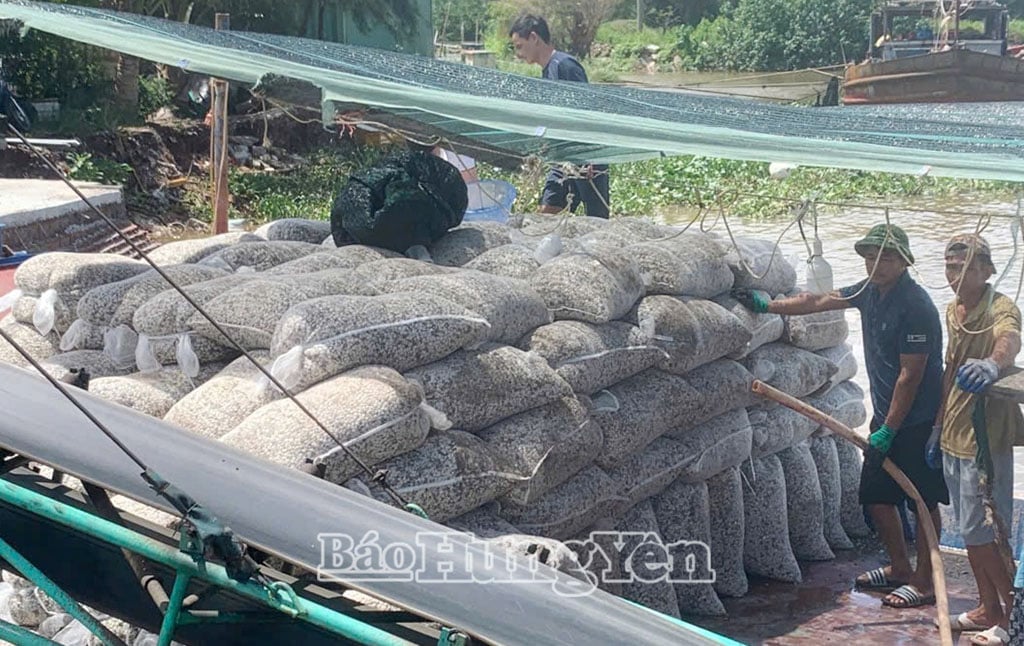
Earning billions from raising clam seedlings.
Born and raised in a coastal village, Mr. Bui Van Thuan, from Chi Cuong hamlet, Nam Cuong commune, has a life closely tied to the sea. Recognizing the potential and strengths of his hometown's coastal area for aquaculture, Mr. Thuan conceived the idea of developing his economy by raising clam seedlings. Mr. Thuan stated: "When I started raising clam seedlings, I faced many difficulties and challenges, such as limited capital and lack of experience, which caused my family to suffer several times. In the first year, I suffered losses. I observed successful years and compared them to poor years, drawing on practical experience. During the process of raising clam seedlings, I continuously learned from experience, participated in training courses on clam farming knowledge and techniques, and visited successful clam seedling farming models in other provinces. From my own practical experience in clam farming, I regularly regulated the seawater in the farming area appropriately and followed the proper care procedures, resulting in high clam yields." Compared to extensive shrimp farming, clam seed farming is more profitable. My 2 hectares of clam seed farms have yielded an economic return of over 1 billion VND per year.
Currently, the supply of clam seedlings in Hung Phu and Nam Cuong communes not only meets the needs of local people but also supplies customers in neighboring provinces. Mr. Nguyen Van Bien, a trader in Hoang Thanh commune ( Thanh Hoa province) who specializes in buying clam seedlings from households in Nam Cuong commune, said: "Each season, I usually come here to buy tons of clam seedlings. The seedlings here are of very high quality and reasonably priced. The 1,000 clams/kg variety sells for 38,000 VND/kg, while the larger 100 clams/kg variety sells for 16,000 VND/kg."
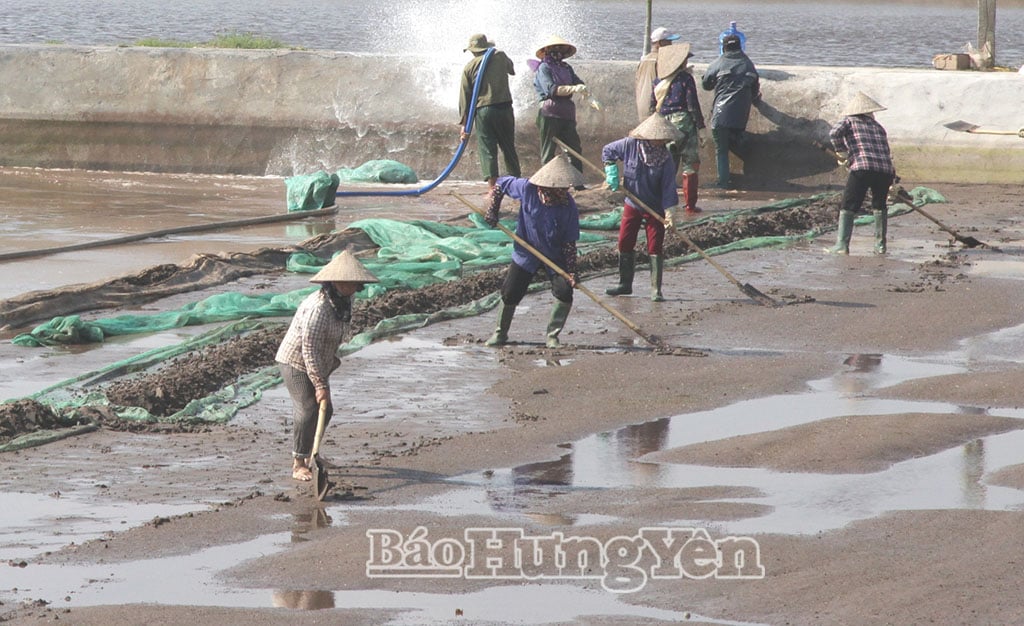
Developing sustainable clam seed farming.
In recent years, coastal localities in the province have mobilized resources to invest in the construction and planning of clam seed farming areas, ensuring the supply of clam seeds within the province as well as neighboring provinces. Mr. Bui Tuan Anh, Chairman of the People's Committee of Hung Phu commune, said: In the period 2025 - 2030, Hung Phu commune strives to achieve an average annual growth rate of over 25% in production value; average per capita income will reach over 110 million VND/year by 2030; and the poverty rate according to the multidimensional poverty standard will be reduced to below 1% by 2030. To achieve the set goals, the commune will leverage its coastal potential and strengths, developing all areas of exploitation, aquaculture, and seafood processing. In particular, the commune will intensify propaganda to raise people's awareness of the importance of sustainable aquaculture development in general, and clam seed farming in particular, to encourage people and businesses to focus on developing more sustainable aquaculture areas. The goal is to develop infrastructure for producing high-quality clam seedlings to serve the needs of the province and neighboring provinces. Currently, Hung Phu commune has developed 65 hectares of clam seedling nurseries.
According to Bui Thanh Lich, Chairman of the People's Committee of Nam Cuong commune: In recent years, agriculture has continued to play a key role in the commune's economy, with aquaculture bringing significant economic value to the people and contributing to the economic restructuring of the locality. Currently, over 600 hectares of clam seed farming in Nam Cuong yield an economic return of 180 billion VND per year. To encourage the expansion of clam seed production, the commune facilitates access to loans from banks for aquaculture households to invest in improving and reinforcing ponds, purchasing equipment, and installing water supply and drainage systems; organizes training courses on aquaculture techniques; and strengthens the application of scientific and technological advancements to improve productivity, quality, and economic value.
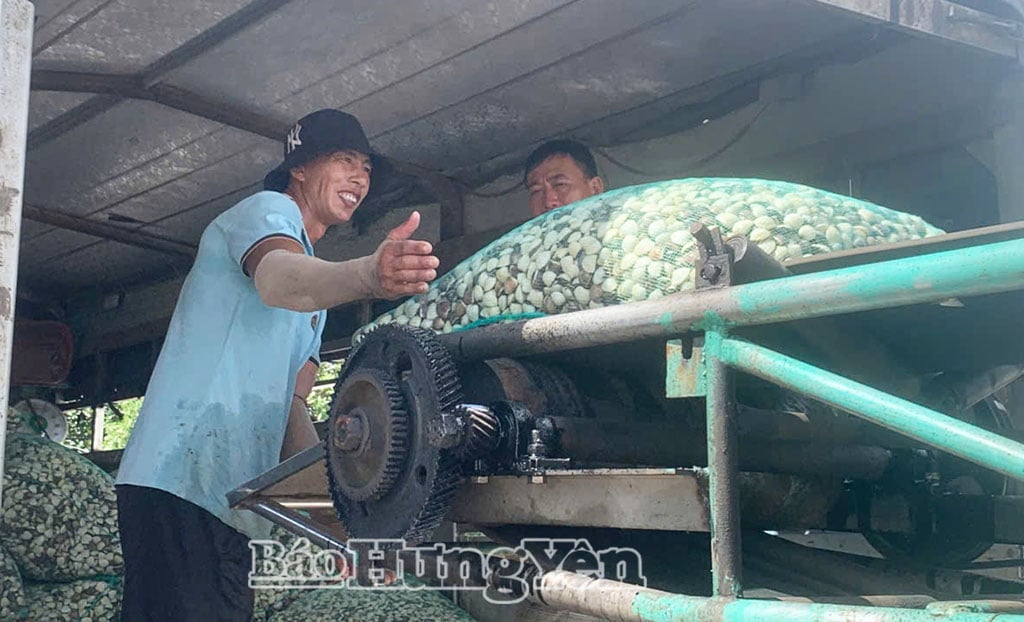
According to Mr. Hoang Minh Giang, Head of the Department of Marine and Fisheries (Department of Agriculture and Environment), the province currently has over 700 hectares of clam seedling nursery area, mainly concentrated in Hung Phu and Nam Cuong communes, supplying over 1,000 million clam seedlings annually. To ensure the sustainable development of clam seedling farming and contribute to increasing people's income, the Department of Marine and Fisheries will continue to advise higher authorities to require coastal localities to effectively implement aquaculture projects and plans; focus on investing in the construction of infrastructure for concentrated clam seedling production and nursery areas; encourage people to utilize water surface areas not used for aquaculture or where aquaculture is ineffective to convert to clam seedling farming; and develop mechanisms and policies to encourage economic entities to invest capital, labor, and science and technology in clam seedling production in the locality. Continue researching and expanding the model of raising clam seedlings with a focus on biosafety and environmental protection.
Source: https://baohungyen.vn/hieu-qua-tu-nuoi-ngao-giong-3187194.html

![[Photo] The General Secretary, President and his wife begin their state visit to the Philippines.](https://vphoto.vietnam.vn/thumb/1200x675/vietnam/resource/IMAGE/2026/05/31/1780230559452_anh-man-hinh-2026-05-31-luc-19-28-11.png)
![[Photo] Admire the coral "masterpiece" amidst the million-year-old heritage of Dak Lak province.](https://vphoto.vietnam.vn/thumb/1200x675/vietnam/resource/IMAGE/2026/05/31/1780221235105_anh-man-hinh-2026-05-31-luc-16-53-27.png)
![[Photo] Solemn bathing ceremony and Buddha procession in Hue](https://vphoto.vietnam.vn/thumb/1200x675/vietnam/resource/IMAGE/2026/05/31/1780228263543_1-jpg.webp)

















![[Video] Sunset at Lap An Lagoon – Where the sun sets over the fishing nets](https://vphoto.vietnam.vn/thumb/340x192/vietnam/resource/IMAGE/2026/05/31/1780192137701_beach-landscape-sea-water-nature-grass-745871-pxhere-com.jpeg)






























![[Photo] Admire the coral "masterpiece" amidst the million-year-old heritage of Dak Lak province.](https://vphoto.vietnam.vn/thumb/402x226/vietnam/resource/IMAGE/2026/05/31/1780221235105_anh-man-hinh-2026-05-31-luc-16-53-27.png)































Comment (0)