

 |
| "Self-drive" economy and billion-dollar boost from public investment |
HSC Securities experts call this the “self-driving mode” phase - an image showing that the Vietnamese economy is activating its growth momentum from within, instead of being too dependent on the international context.
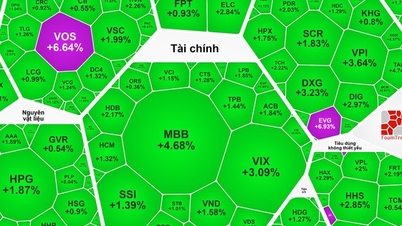
This change is evident in the financial markets. The VN-Index has increased by more than 30% in 2025, an increase reflecting improved investor expectations. HSC forecasts that the index could head towards 1,958 points in the next 12 months, based on fundamental factors such as policy adjustments, increased capitalization of securities companies, or expansion of international cash flows.
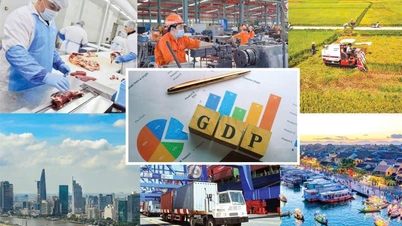
According to HSC calculations, GDP growth in 2026 could reach around 7.6%, lower than the Government ’s double-digit expectations, but still enough to keep Vietnam among the fastest growing in Asia. In the context of a slow recovery in global trade and a slowdown in many economies in the region, maintaining such a growth rate shows that internal momentum is playing an increasingly important role.
The 2025 economy is not just about growth rates, it also shows that new foundations are gradually taking shape. This is a rare year when laws and decrees related to land, investment, securities, and electricity are amended simultaneously, helping to remove many long-standing bottlenecks. According to HSC, a more unified and transparent legal foundation will play a role in activating a new, more sustainable growth cycle.
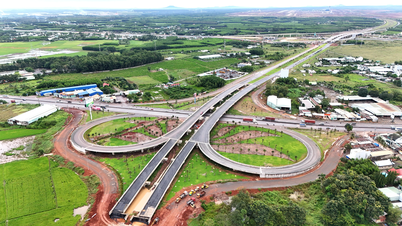
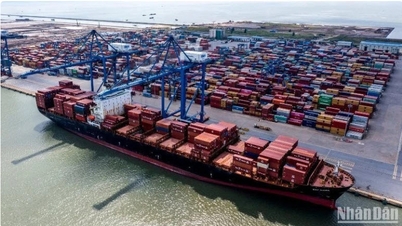
Along with institutional reform, public investment continues to be an important driving force. Vietnam plans to disburse more than $42 billion for infrastructure in 2026 and about $166 billion in the next five years. This capital flow not only promotes overall growth, but also repositions the role of many industries such as construction, materials, logistics and energy.
In the banking sector, capital demand for production, business and infrastructure continues to increase sharply. HSC forecasts that the industry's profit could increase by 13.2% in 2025 and 17.8% in 2026 when profit margins, asset quality and bad debt handling mechanisms are improved. This will be the foundation for promoting credit but also requires tight management to avoid the risk of deviation, especially in the context of housing prices in Hanoi and Ho Chi Minh City have increased significantly this year.
The stock market is a clear reflection of economic developments and is forecast to continue to flourish. Securities companies benefit from both market liquidity and strong capital capacity. Industry profits are estimated to increase by 42.9% in 2025 and nearly 20% in 2026. Meanwhile, the real estate group, after three years of tightening, is starting to recover thanks to legal improvements and project supply. HSC forecasts industry profits could increase by 28.2% in 2025 and 21.7% in 2026, mainly due to the return of supply rather than price increases.
The industry - construction - materials group continues to benefit from the wave of public investment. The industry's EPS is forecast to increase by 14.5% and 8.3% respectively in the next two years. For materials enterprises, the outlook is even more positive as demand for highway, electricity - gas and logistics projects increases sharply.
The energy and utilities sector is also entering a new development cycle. The gradual formation of a competitive electricity market and the completion of a gas commercialization mechanism are expected to boost profit growth by 57.4% in 2025, before stabilizing again in 2026. However, the differentiation between electricity - water - gas (stable, less volatile) and the upstream oil and gas group (dependent on commodity prices) will be clearer.
The consumer and retail sectors are recovering strongly thanks to improved incomes, rising assets and low interest rates. Retail sales are expected to maintain an annual growth rate of 11-12%, continuing to be the mainstay of economic growth.
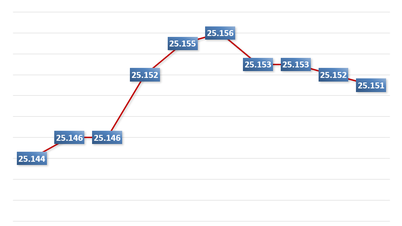
However, there are still risk factors that need to be controlled. Exchange rate is one of the notable points. The fact that VND depreciated 3.5% in 2025 despite the decline of the international USD shows that internal pressure is still large. HSC forecasts that the depreciation rate may decrease to 1.5% in 2026 if the Fed lowers interest rates and remittances increase, but foreign capital flows are still a sensitive factor. Credit may also face the risk of imbalance if it grows too quickly without supervision.
Associate Professor Dr. Nguyen Van Hieu, University of Economics, Vietnam National University, Hanoi commented: “The most notable point of the economy at this time is not the growth figures, but the depth of the changes. From policies, infrastructure to capital markets, everything is being restructured in a more sustainable direction. What the stock market reflects is the expectation of a growth cycle based on a solid foundation, instead of just relying on external factors.”
He also noted that the pace of policy implementation after the Party Congress will be key: If the apparatus operates quickly and decisively, policy lags will be shortened and spillover effects will be stronger.
Overall, Vietnam is entering a new growth trajectory, not too noisy but sure and profound. The “self-driving mode” of the economy, as HSC describes it, is not a flashy breakthrough but a process of consolidating the foundation, adjusting the structure and improving endogenous capacity. This is the decisive factor for the economic resilience in the coming years.
Source: https://thoibaonganhang.vn/kinh-te-bat-nhip-moi-chung-khoan-don-song-ky-vong-174670.html
![[Photo] Cat Ba - Green island paradise](/_next/image?url=https%3A%2F%2Fvphoto.vietnam.vn%2Fthumb%2F1200x675%2Fvietnam%2Fresource%2FIMAGE%2F2025%2F12%2F04%2F1764821844074_ndo_br_1-dcbthienduongxanh638-jpg.webp&w=3840&q=75)



















































































Comment (0)