

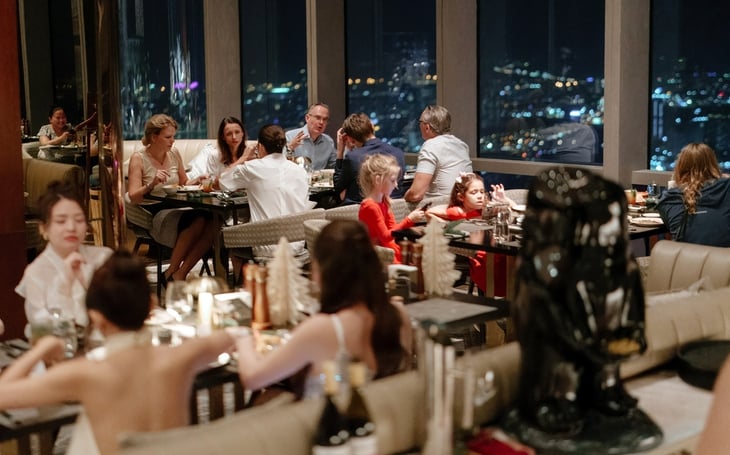
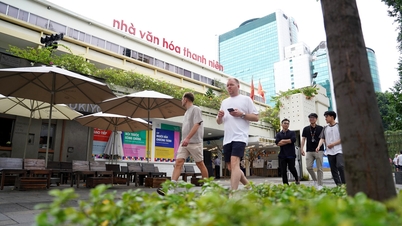
Consumers are willing to spend on activities that involve experiencing and exploring life - Photo: MH
These are favorable conditions for the development of the lifestyle economy , a model based on experiential consumption, personal creativity and indigenous cultural values.
Consume with emotion and responsibility
In the world, "lifestyle economy" is no longer a new concept. Next to Vietnam, Bangkok has created a "coffee and creative space capital" of Southeast Asia. If Seoul has built K-style culture into an export industry worth tens of billions of dollars, Tokyo has turned street culture, vintage fashion and minimalism into an ecosystem. Further, Copenhagen is famous for its sustainable - minimalist - friendly lifestyle.
Looking at Vietnam, specifically Ho Chi Minh City, experience consumption is clearly becoming a trend, even happening faster than previous predictions.
When talking to Tuoi Tre, many young people said that instead of following trends or luxury brands, more and more young people are looking for products rich in spiritual value, personal experience and uniqueness. For them, items are not only for use but also a way to express their views on life and personal identity.
Anh Ngoc (32 years old, living in Ho Chi Minh City) has the means to shop thanks to her high income, but she mainly chooses office pants or skirts, white shirts and a few historical vests when going to work, even though this is not the required uniform of the corporation. "It's not that I don't pay attention to my clothes, it's simply that when I wear it, I feel more comfortable and confident. On the contrary, I invest a lot in taking care of my health from the inside to my skin and hair, traveling and experiencing more," Anh Ngoc confided.
As a professional cinematographer, content creator, and video producer living in Ho Chi Minh City, Tran Trung Hieu (29 years old) with the nickname Hieu BK is very famous in the creative world. From film footage to real life, anyone who follows Hieu BK can see that everything exudes a free-spirited, dusty style of everyday life.
Although he often appears at famous entertainment events, when asked about his clothes and fashion sense, Hieu just smiles. Hieu admits that he follows a minimalist, practical fashion style.
Young consumers are not just buying a product. They are buying emotions. They are not just looking for convenience, they are looking for identity. They are also not choosing to follow the crowd, they are choosing a lifestyle that is individual, unique, and simplifies everything.
Businesses change with the trend
Temporarily leaving his office job with a stable income, Truong Thanh Nam (27 years old) decided to start a business with the online fashion brand Mach Lac.
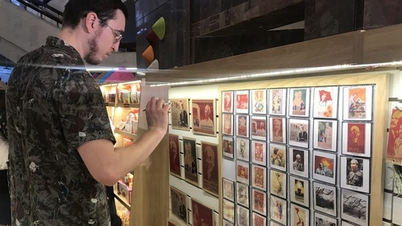
Nam chose to put illustrations of historical events, places and figures - historical stories - on familiar products in daily life such as T-shirts, tote bags or key chains. In this way, history leaves the pages of books and enters life in a close way.
Despite its infancy, Nam said Mach Lac has been fortunate to receive positive feedback from young people who love history like him. Some customers accept orders from far away provinces despite the high shipping costs. Some customers even bring their bags all the way to India to use at work.
Mr. Le Xuan Vu, co-founder of AirCity (a technology start-up in building management and operation), said that currently, the trend of residents wanting to experience and live in "smart homes" is very large. The application of artificial intelligence (AI) in apartment operations has become more popular and plays a key role for real estate businesses. That is also the reason why AirCity is required to develop two more fields by 2026: autonomous robots and AI robots to support dangerous and highly accurate jobs.
Mr. Nguyen Khoa Hong Thanh - Senior Marketing Director and External Communications Director of PNJ - believes that the trend of experiential shopping in the country is really growing strongly. If in the past, consumers considered jewelry as an asset, only wearing it on special occasions and only needing one or two sets, this trend is now different. As the economy grows, lifestyle has also improved, the need for beauty has increased, forcing the business direction of every enterprise to change.
Applying to PNJ, Mr. Hong Thanh believes that instead of selling jewelry as a commodity, now we have to tell a story, sell a product line associated with milestones and social events. Everything must be shaped to become "accompanying and sympathizing with social progress, promoting the beauty of people and life". This is demonstrated through creative marketing campaigns such as Cross-Vietnam Jewelry Journey, Together, Let's Get Married!... helping to spread the inspiration of daily beauty and redefine the message of marriage, creating a strong influence in the community.
Ms. Thi Anh Dao - Marketing Director of Masterise Group - believes that current major trends show a very clear change in consumer behavior: the middle class is growing strongly, becoming the leading group, and Vietnamese people increasingly make decisions based on very specific moments in life, from self-rewarding moments, to "gaps" to recharge.
Experiences are no longer long vacations, but are broken down into quality, sophisticated touchpoints that appear continuously throughout the day. This is the driving force that changes customer expectations for all types of products, especially living spaces.
In real estate, to meet the needs of this 'moment' level of experience, the most important foundation must start from the project's hardware: planning, architecture, materials, landscape and qualified utility systems. When the foundation is well built, the living space will support operations, services and the daily life of residents more smoothly. And when residents live in a good environment, a civilized and sustainable community will naturally form.
"That is the reason Masterise Homes pursues the branded living strategy. It is not a privilege for the few, but a new quality of life for all segments," said Ms. Dao.
From cultural advantage to new value chains
From an investor's perspective, Mr. David Kim - CEO of Mekonglink - believes that Vietnam, especially Ho Chi Minh City, has a "very good starting point" to develop a lifestyle economy. Ho Chi Minh City is currently the largest commercial center in the country, has a fast trading pace, strong ability to accept new trends and possesses a young consumer force willing to pay for personalized products and services and experiences. This is considered an important foundation for lifestyle businesses to test and expand their business models.
In addition, Vietnam also has special advantages in cultural resources, craft villages, cuisine and nature. When "activated" by technology and creative knowledge, these resources do not stop at traditional products but can develop into new economic value chains such as experiential tourism, high-end handicrafts or ESG gifts, a segment that is growing rapidly in the international market.
"However, to build a lifestyle economy, it is impossible to rely on just one side. This model requires close coordination between businesses, local communities, technology units, universities and a team of international experts," Mr. Kim emphasized.
According to him, the biggest obstacle for Vietnam today is the ability to mobilize many parties to participate in a common model, especially in the application of technology. Without a clear coordination mechanism, technology will be difficult to fully deploy, from improving production, building brand stories to creating truly quality ESG travel experiences.
Vietnam has clear advantages, but to turn advantages into sustainable growth, it needs effective connection models, bringing creative knowledge, international technology and local resources into a common ecosystem. Only then can new lifestyle business models develop sustainably and have the capacity to expand to both domestic and international markets.
According to research by Wise Guy Report, the size of the global experience economy reached about 778 billion USD in 2024, expected to increase to 809 billion USD in 2025. It is expected that by 2035 the figure will exceed 1,200 billion USD, with a compound growth rate of 4% per year. Key areas of the experience economy: services, entertainment, tourism and accommodation. This reflects the trend of global high-end consumers spending on products and services that bring experiences and emotions, instead of focusing on accumulating tangible assets.
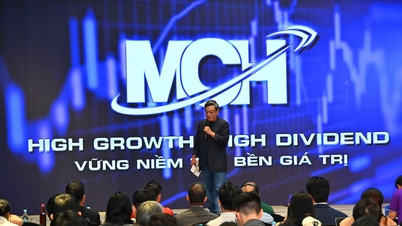
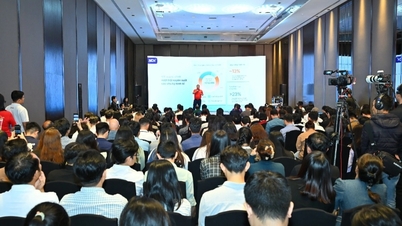
At 2:00 p.m. on December 5, at Gem Center (Saigon Ward, Ho Chi Minh City), Tuoi Tre Newspaper in collaboration with the Ho Chi Minh City Department of Industry and Trade organized the seminar "Lifestyle Economy - New growth driver of Ho Chi Minh City". The event was accompanied by Phu Nhuan Jewelry Joint Stock Company (PNJ) and Masterise Homes Real Estate Development Company Limited.
The workshop is a highlight within the framework of the forum "Lifestyle Economy - New growth driver of Ho Chi Minh City" to discuss lifestyle economy - an economic model that is strongly forming in Vietnam. The program brings together representatives of departments and branches in Ho Chi Minh City, economic experts, the pioneering business community in the lifestyle economy...
Best-selling products because of... patriotism
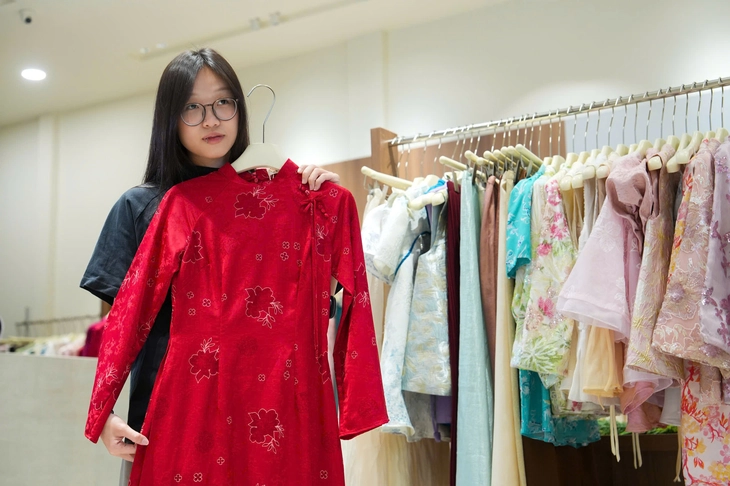
In addition to functionality and price, consumers are increasingly interested in product design and brand story - Photo: HUU HANH
According to SocialTrend data from market analysis platform YouNet Media, the topic of National Day September 2 once rose to the number 1 position in the discussion rankings on social networks.
In the field of e-commerce, the market signal is even more evident. Statistics from YouNet ECI's EcomHeat platform show that in just the first two weeks of August (from August 3 to 16, 2025), patriotic accessories such as lightsticks printed with the national flag, red teddy bears with yellow stars, hair ties, bracelets... recorded more than 30,800 products sold, bringing in revenue of about 2.1 billion VND.
Notably, patriotic scarves once "caused a storm" when they accounted for 86.6% of total accessory group revenue, and continuously appeared in million-view clips on TikTok, becoming a fashion and cultural icon in August and September.
National flags and traditional symbols are recreated by young people in a more diverse and innovative way. If in the past, red flag shirts with yellow stars mainly appeared in ceremonial events, now flags and flowers have penetrated deeply into daily life, from scarves, bags, hats to fashion accessories, young people turn every detail on their costumes into "storytellers", into means of expressing patriotism.
Source: https://tuoitre.vn/kinh-te-lifestyle-khi-tieu-dung-khong-chi-de-dung-20251204225201165.htm


![[Photo] Cat Ba - Green island paradise](/_next/image?url=https%3A%2F%2Fvphoto.vietnam.vn%2Fthumb%2F1200x675%2Fvietnam%2Fresource%2FIMAGE%2F2025%2F12%2F04%2F1764821844074_ndo_br_1-dcbthienduongxanh638-jpg.webp&w=3840&q=75)

















































Comment (0)