

 |
| Many sturdy and spacious houses have sprung up throughout Village 5. |
IMPRESSIONS AFTER 10 YEARS
Mong Village, also known as Hamlet 5, in Ro Men Commune, currently has 184 households and 1,059 inhabitants, with the unique characteristic that 100% of the population are Hmong ethnic people. These are people who migrated from the highlands of Northwest Vietnam to Dam Rong District to establish a new life . Interestingly, although Mong Village does not have as many advantages in agricultural land as some other hamlets and villages in Ro Men Commune, thanks to the attention of the government at all levels and the unity and efforts of the people in overcoming difficulties in production, the lives of the Hmong people here have become stable, and many households have become wealthy in their new homeland.
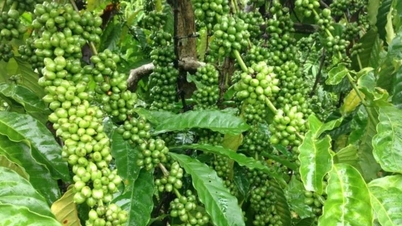
Mr. Hoang Xuan Thai, Party Secretary and Head of Hamlet 5, Ro Men Commune, said: After moving to Dam Rong, a portion of the H'Mong people from Sub-districts 179, 81, and Da Mpo in Lieng S'ronh Commune had to relocate and settle in Hamlet 5, Ro Men Commune. In the early days of settling here, the people faced many difficulties and hardships, and the challenge was how to help them overcome these difficulties and stabilize their lives. Therefore, the village head and the people kept pondering questions such as: What crops to plant? What livestock to raise? Where to get seedlings, livestock, and investment capital? How to sell agricultural products?... Due to many difficulties and a lack of knowledge in planting and caring for long-term industrial crops, the people mainly cultivated upland rice, cassava, and sorghum to ensure food security and address immediate hunger. On the other hand, in the development of production, due to a lack of thorough research into the characteristics of each crop suitable for the local climate and soil conditions, some crops did not yield economic benefits. “In 2008, our people focused on planting Catimo coffee. Because the characteristics of Catimo coffee were not suitable for the hot climate, it led to failure. Thanks to the local government's attention in organizing training courses on scientific and technical transfer, providing loans and seedlings, since 2014, our people have switched to planting Robusta coffee. With the right direction, after only 10 years of switching crops, the H'Mông people have gradually eradicated poverty and risen to legitimate wealth,” Mr. Hoang Xuan Thai affirmed.
To date, Mong Village has a total cultivated land area of 232.5 hectares, including 188.8 hectares of coffee, 30 hectares of rice paddies, and 2 hectares of pepper plantations. Fruit trees of various kinds, including durian, avocado, and pineapple, cover a total area of 33.3 hectares. The remaining over 4 hectares are planted with cashew, curry, macadamia, mahogany, and jackfruit trees. In addition, the villagers also develop livestock farming with nearly 2,500 animals and utilize ponds and lakes for fish farming to improve their quality of life. After more than 10 years of effort and thanks to the effective implementation of economic development strategies, the lives of the people have gradually stabilized and improved, with the number of poor and near-poor households reduced to 12.
30% OF HOUSEHOLDS EARN BILLIONS OF VIETNAMESE DONG.
Having endured hardships in their journey to develop their economy and build a better life for their families, many H'Mông ethnic households have shown strong determination to overcome poverty and backwardness since settling in the Dam Rong area. Mr. Giang Seo Pao, Head of the Front Committee of Village 5, expressed: “With their diligent and hardworking nature, after the rooster crows, people usually wake up early to prepare everything for going to the fields. By 6 a.m., most people are already in the fields and don't return home until 5:30 or even 6 p.m., thus increasing work efficiency.”
Mr. Vang Seo Pao (born in 1981) said: “Currently, my family still has about 4 hectares of land for production. Previously, I mainly cultivated coffee with an average yield of 6 tons of coffee beans per year. Recently, I converted some of the coffee area to durian cultivation, so my family only has 1 hectare of coffee left. To date, I have planted 400 durian trees, of which 100 are already producing fruit, and 200 are in their third year... In the 2024 crop year, my family will have a total income of over 800 million VND from durian and coffee; at the same time, we will invest in building a new house with an area of 120 m2, worth 900 million VND. In addition, we will also equip ourselves with more machinery to serve agricultural production.”
Sharing with us, many commune officials, as well as Party branch secretaries and heads of the village's Fatherland Front Committee, discussed their journey in economic development, cultural life building, and the dissemination of information and mobilization of people to participate in the New Rural Development Movement. In the New Rural Development Program, each official and Party member serves as a leading example in implementation and as a communicator, helping people understand the purpose and significance of the program, with the ultimate goal being prosperity for the people and a more civilized and modern rural area. Therefore, local Party committees and authorities prioritize mobilizing people to eliminate the mentality of dependence and reliance on state investment; to practice thrift in spending; to focus on sustainable poverty reduction; and to emphasize the application of scientific and technological advancements, transforming the structure of crops and livestock to suit the local situation…
Mr. Le Cong Trong, Chairman of the People's Committee of Ro Men commune, said: "When they first migrated to live in the commune, most of the people in Hamlet 5 were poor households with backward farming practices, mainly cassava. Later, thanks to the right policies, they switched to coffee and fruit trees. In recent years, with the stable market for agricultural products, many successful farming households have emerged in the Hmong village, earning incomes ranging from several hundred million to over one billion dong. Of these, 30% have an income of over one billion dong per year, and about 70% have an income of 500-800 million dong per year. Typical examples include the families of Mr. Ly Xuan Vu, Ly A Ho, Vang Seo Manh, Sung A Sang, Hoang Seo Tanh… who have incomes of one billion dong or more. From the end of 2024 to the present, the Hmong people have invested in building many new houses worth from several hundred million to several billion dong."
Source: https://baolamdong.vn/xa-hoi/202504/lang-mong-ngay-moi-32430cf/


























![[Image] Ho Chi Minh City simultaneously commences construction and breaks ground on 4 key projects.](https://vphoto.vietnam.vn/thumb/1200x675/vietnam/resource/IMAGE/2026/01/15/1768472922847_image.jpeg)


















Comment (0)