

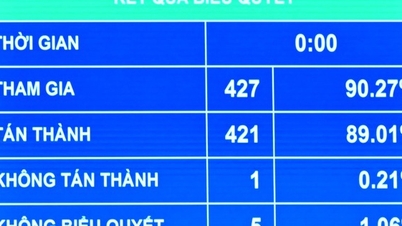
On the morning of December 10, 448/450 National Assembly deputies present (94.71% of the total number of National Assembly deputies) voted to pass the Population Law.
This law regulates communication, advocacy, and education on population issues; maintaining replacement fertility rates; minimizing gender imbalance at birth; adapting to population aging; improving population quality; and conditions for ensuring the implementation of population work.
To maintain the replacement fertility rate, the Population Law stipulates several measures, including a 7-month maternity leave period for female workers and a 10-day maternity leave period for male workers when their wives give birth to a second child.
Compared with current regulations, maternity leave for female workers is one month longer.
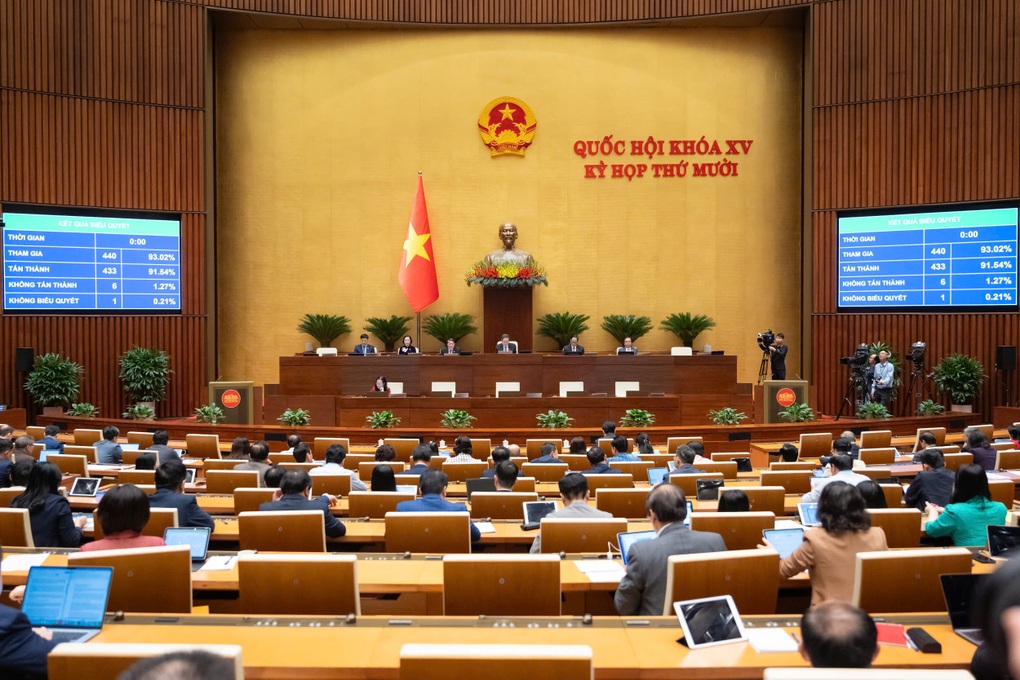
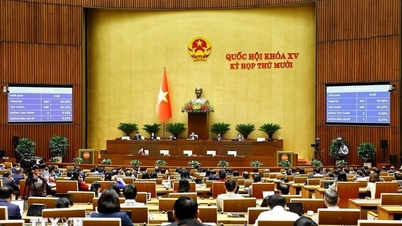
The National Assembly voted to pass the draft laws during the working session on the morning of December 10 (Photo: Hong Phong).
The law also stipulates that there will be financial support for childbirth for women from very small ethnic minority groups; financial support for childbirth for women in provinces and cities with birth rates below the replacement level; and financial support for childbirth for women who have two children before the age of 35.
Specifically, according to the law, people with two or more children will be given priority to buy, lease-to-own, or rent social housing as stipulated by the law on housing.
The law also stipulates other measures decided by the Government. Based on the socio -economic conditions in each period, the Government prescribes the benefit levels, procedures, and processes for these policies.
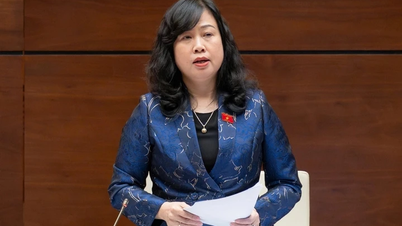
Reporting and receiving information on this content, Minister of Health Dao Hong Lan said that this is a content that many National Assembly delegates are interested in.
The Population Law has established a comprehensive and fundamental policy framework encompassing policies on labor, employment, wages, social insurance, health insurance, subsidies, education, healthcare, housing, and other policies aimed at increasing the birth rate to achieve sustainable replacement fertility.
Support for extended maternity leave and financial assistance during childbirth is categorized by target group and locality, with priority given to purchasing, lease-purchasing, or renting social housing as stipulated by the Law on Housing.
Regarding regulations on reducing gender imbalance at birth, the Law encourages the inclusion of provisions against favoring males over females and against sex selection at birth in community agreements and conventions.
The Population Law clearly states that the practice of medical examination and treatment shall be suspended for individuals who disclose or reveal the sex of a fetus in order to induce abortion. The suspension of medical examination and treatment shall be carried out in accordance with the provisions of the law on medical examination and treatment.
The central statistics agency periodically publishes the status of gender imbalance at birth annually so that the Government and provincial-level authorities can develop and implement appropriate intervention measures.

Minister of Health Dao Hong Lan presented a report on the reception and explanation of the Population Law project (Photo: Hong Phong).
Chapter IV of the Law stipulates contents related to population aging adaptation, in which measures to adapt to population aging are proactively preparing for old age; caring for the elderly; developing human resources to care for the elderly; measures to support, care for and promote the role of the elderly as prescribed by the law on the elderly and other relevant laws.
To proactively prepare for old age, the Law stipulates many contents, which clearly state that individuals proactively prepare for old age from a young age through health, financial and psychological preparation; participating in social insurance and health insurance; participating in learning, improving knowledge and skills to maintain physical and mental health and social functions; participating in activities to support elderly care.
The Population Law clearly states that the State has policies to support priority groups in proactively preparing for old age, while encouraging agencies, organizations, businesses, and individuals to support individuals in preparing for old age in accordance with the needs of each group of elderly people.
Encouraging individuals to participate in health insurance according to the provisions of the law on insurance business is also the direction stated in the Population Law.
The Population Law consists of 8 chapters and 30 articles and will take effect from July 1, 2026.
Source: https://dantri.com.vn/thoi-su/lao-dong-nu-sinh-con-duoc-nghi-dai-hon-co-tu-2-con-de-duoc-uu-tien-mua-nha-20251210092132848.htm


![[Photo] Explore the US Navy's USS Robert Smalls warship](/_next/image?url=https%3A%2F%2Fvphoto.vietnam.vn%2Fthumb%2F1200x675%2Fvietnam%2Fresource%2FIMAGE%2F2025%2F12%2F10%2F1765341533272_11212121-8303-jpg.webp&w=3840&q=75)




























































































Comment (0)