


Vietnamese students using smart devices (Photo: Huyen Nguyen).
Why does Australia ban children under 16 from using social media?
From December 10th, Australia officially banned users under 16 from having social media accounts on platforms such as TikTok, Facebook, and YouTube.
Numerous studies have identified social media as a contributing factor to poor mental health among adolescents, disrupting sleep and reducing concentration.
Meanwhile, children are spending less and less time playing freely with friends or exploring nature, limiting their opportunities for practical learning and development. Because the brain undergoes restructuring during adolescence, excessive and repetitive social media use can have long-lasting effects.
While some researchers say the move is necessary to protect children online, others question the ban's effectiveness and sustainability.
Ms. Vu Bich Phuong, a psychology lecturer at RMIT University Vietnam, noted that Australia's initiative is a bold move demonstrating the country's determination to address sophisticated cybercrimes and risks targeting children. The social media ban also aims to promote shared responsibility between parents and tech giants.
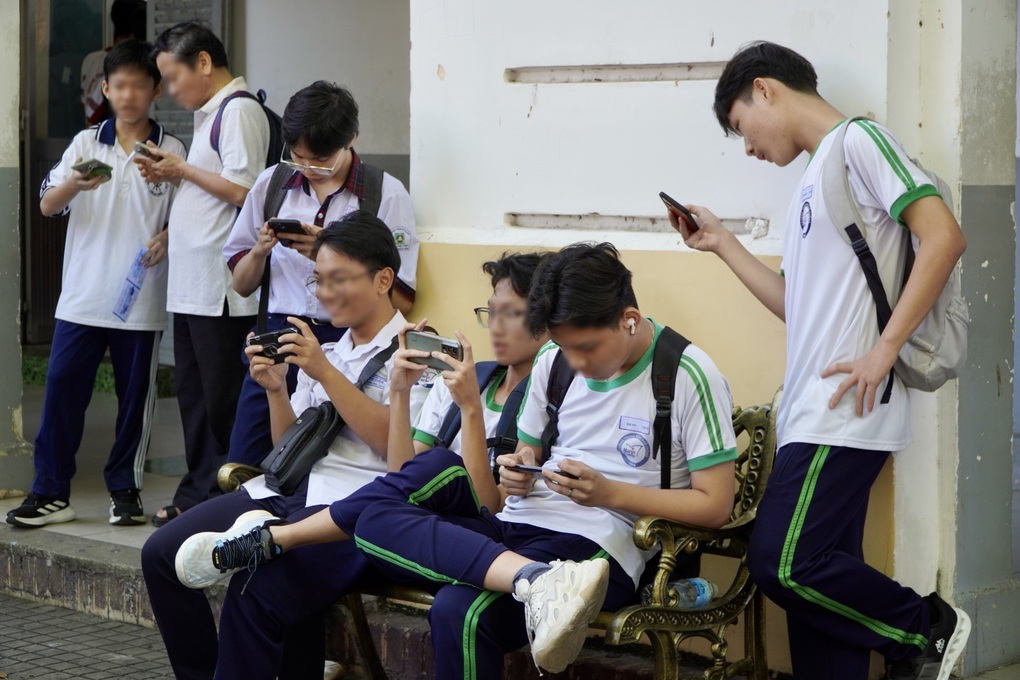
Vietnamese students use social media (Photo: Huyen Nguyen).
MSc. Phuong said that while traditional forms of entertainment such as movies and television are closely monitored, censored and managed according to age, social networks, which reach users more directly and create content more easily, are not closely monitored by law.
“Australia’s social media ban implies that all media platforms should be treated the same in terms of psychological and legal consequences,” Ms. Phuong said.
Banning social media may not address the root of the problem.
In the context of Australia's landmark ban, many are questioning whether Vietnam should follow a similar path. While Vietnam might consider adopting a similar ban, experts believe that practical implementation would be challenging and far from simple.
“We can look around and see Vietnamese children watching short videos on TikTok or Facebook using their parents’ or grandparents’ smartphones. They don’t need their own accounts to use social networks,” said Ms. Vu Bich Phuong.
On the other hand, the female master pointed out that owning an account and passively viewing social media content are two completely different things. Many platforms also have public content that does not require a login to view.
Meanwhile, Dr. Jeff Nijsse, a senior lecturer in Software Engineering, is concerned that the ban could also cause teenagers to turn to other messaging and gaming platforms.
Another issue raised by Dr. Nijsse is junk SIM cards. Vietnamese law requires all social media accounts to be verified via mobile phone number. However, junk SIM cards are still available on the market, creating the potential for users to “dodge” the verification step.
When it's impossible to require users to provide identification, platforms will need to turn to facial-based age estimation, but this technology is still far from perfect. Australian government trials have shown their AI models struggle to accurately identify the 13-16 age group.
Meanwhile, Dr. Gordon Ingram, a psychology lecturer, advises Vietnamese parents to be more aware of their children's online activities, have in-depth conversations with their children about their online activities, and explore available digital safety tools to block harmful content, limit screen time, and prevent contact with strangers online.

A digital safety approach educates children and parents about online risks, making children more aware of dangers, and helping parents better understand how their children are using technology (Photo: Pexels).
Rather than banning social media altogether, a more effective solution would be to require tech companies to comply with creating a safer online environment for children and teens.
For example, companies need to make reporting functions easier to identify and use, and offer child-safe settings options with proactive content moderation.
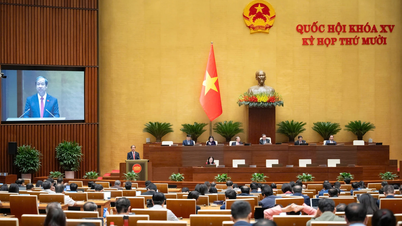
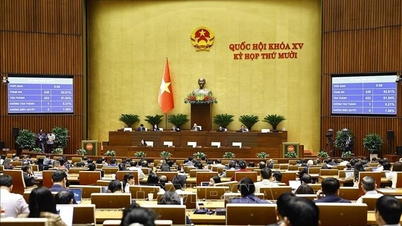
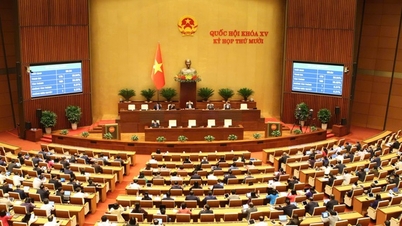
Previously, during the socio-economic development discussion at the 10th session of the National Assembly, which took place recently, Representative Chau Quynh Dao (An Giang delegation) raised an urgent warning about the negative impact of social media on young people and the tragic consequences when children get lost in the virtual world.
"I am very worried about the negative impacts on teenagers. Because if they lack the knowledge and skills to use social media effectively, they can easily become addicted to it," Ms. Dao expressed.
She suggested adding regulations limiting age and time for accessing social media. She cited examples from countries like Australia, which prohibits children under 16 from using social media, and the Dutch government's recommendation that children under 15 should not use certain social media platforms.
The world's first ban on children using social media has now been implemented, but much work remains to be done.
Media literacy, parental supervision, compliance from major tech companies, and child-centered design are key elements in creating a safe environment for children. Only then can they sustainably benefit from one of the most influential technological inventions of the 21st century.
Source: https://dantri.com.vn/giao-duc/cam-tre-duoi-16-tuoi-dung-mang-xa-hoi-viet-nam-nen-lam-giong-australia-20251210111340235.htm





![[Photo] Explore the US Navy's USS Robert Smalls warship](/_next/image?url=https%3A%2F%2Fvphoto.vietnam.vn%2Fthumb%2F1200x675%2Fvietnam%2Fresource%2FIMAGE%2F2025%2F12%2F10%2F1765341533272_11212121-8303-jpg.webp&w=3840&q=75)

























![[Video] The craft of making Dong Ho folk paintings has been inscribed by UNESCO on the List of Crafts in Need of Urgent Safeguarding.](https://vphoto.vietnam.vn/thumb/402x226/vietnam/resource/IMAGE/2025/12/10/1765350246533_tranh-dong-ho-734-jpg.webp)



















































Comment (0)