

According to The Elec , LG Display – a leading supplier of OLED screens for iPhones – is making changes to its supply chain for the iPhone 16. Specifically, they are adding the Taiwanese company Novatek to their list of DDI (Display Driver Integration) chip suppliers.
This move is believed to be aimed at reducing production costs, especially since both LG Display and Samsung Display (Apple's second-largest OLED supplier) are struggling to produce panels for the new iPhone 16 due to its thinner bezel design.
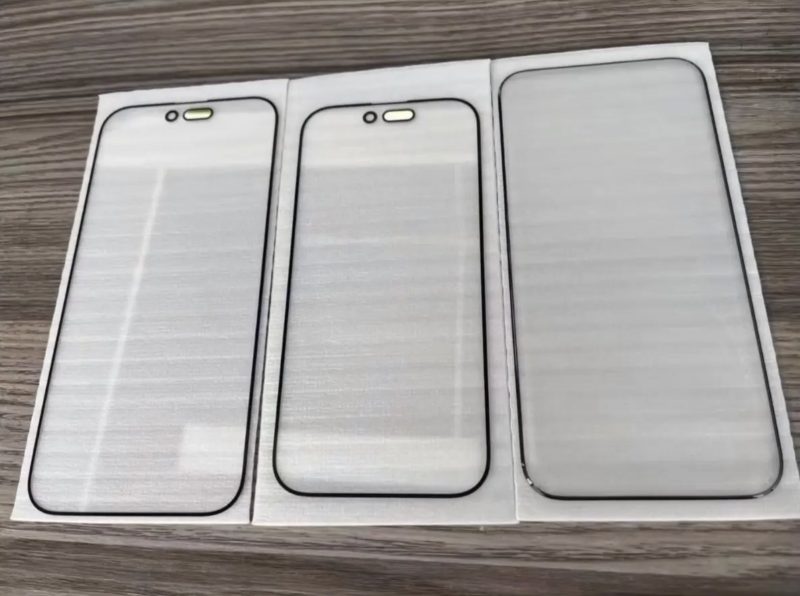
The slim bezel design of the iPhone 16 forced LG Display to seek additional suppliers.
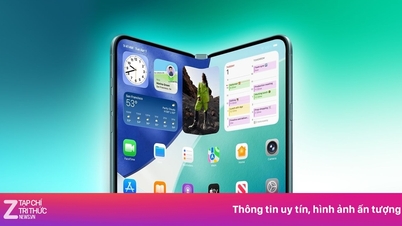
WCCFTECH SCREENSHOT
The addition of Novatek alongside existing supplier LX Semicon indicates LG Display's move towards diversifying its DDI chip supply sources. DDI chips play a crucial role in converting digital image data from the graphics processor to the display signal on the screen.
By partnering with a new supplier, LG Display can negotiate better prices and minimize the risk of dependence on a single source of supply, which could lead to production delays if the current supplier encounters problems.
According to reports, both LG Display and Samsung Display are struggling to achieve the desired production yield for the iPhone 16's OLED panels. This is believed to be due to Apple's new design, which features a significantly thinner bottom bezel compared to previous generations.
LG Display's decision to diversify its supply chain is seen as a strategic move to address these challenges and could yield cost advantages. However, further monitoring is needed to assess the impact of the partnership with Novatek on production efficiency and panel quality.
However, both LG Display and Samsung Display need to adjust their production processes to meet Apple's output ratio targets for the iPhone 16. According to previous reports, Apple may use the new BRS (Border Reduction Structure) technology to achieve ultra-thin bezels for the iPhone 16. Both Samsung Display and LG Display are expected to adopt this technology. Typically, Apple only equips new technologies to the Pro line, but BRS could be used for all four iPhone 16 models.
However, other rumors suggest that the iPhone 16 and iPhone 16 Plus may not have any screen changes, with only the iPhone 16 Pro and iPhone 16 Pro Max featuring larger screens with thinner bezels.
In terms of design, the iPhone 16 and iPhone 16 Plus are predicted to have a vertically arranged rear camera array instead of a diagonal one like previous generations. This change is intended to support spatial video recording for the Apple Vision Pro headset.
Source link

![[Photo] Prime Minister Pham Minh Chinh receives the Governor of Tochigi Province (Japan)](/_next/image?url=https%3A%2F%2Fvphoto.vietnam.vn%2Fthumb%2F1200x675%2Fvietnam%2Fresource%2FIMAGE%2F2025%2F12%2F16%2F1765892133176_dsc-8082-6425-jpg.webp&w=3840&q=75)
![[Live] 2025 Community Action Awards Gala](/_next/image?url=https%3A%2F%2Fvphoto.vietnam.vn%2Fthumb%2F1200x675%2Fvietnam%2Fresource%2FIMAGE%2F2025%2F12%2F16%2F1765899631650_ndo_tr_z7334013144784-9f9fe10a6d63584c85aff40f2957c250-jpg.webp&w=3840&q=75)
![[Image] Leaked images ahead of the 2025 Community Action Awards gala.](/_next/image?url=https%3A%2F%2Fvphoto.vietnam.vn%2Fthumb%2F1200x675%2Fvietnam%2Fresource%2FIMAGE%2F2025%2F12%2F16%2F1765882828720_ndo_br_thiet-ke-chua-co-ten-45-png.webp&w=3840&q=75)
![[Photo] Prime Minister Pham Minh Chinh receives Lao Minister of Education and Sports Thongsalith Mangnormek](/_next/image?url=https%3A%2F%2Fvphoto.vietnam.vn%2Fthumb%2F1200x675%2Fvietnam%2Fresource%2FIMAGE%2F2025%2F12%2F16%2F1765876834721_dsc-7519-jpg.webp&w=3840&q=75)




















































































Comment (0)