

.jpg)
Training based on "orders"
To develop a young workforce and cultivate high-quality labor, Hai Phong city focuses on training from the ground up. The streaming of students and career guidance from the secondary school level is considered a fundamental solution to help students access the right fields, professions, and societal needs.
Universities such as Sao Do University and Vietnam Maritime University have developed training strategies closely aligned with real-world needs, focusing on key sectors of the city such as port services, logistics, mechanical engineering, information technology, and automation. These universities build training programs based on labor market data and commission training from businesses.

The tripartite linkage between schools, the government, and businesses is considered a strategic move for Hai Phong. Many schools have implemented cooperation with FDI and domestic businesses such as LG Innotek, Pegatron, VIMC , Vinalines, etc., from curriculum design, internship and practical training to student recruitment.
Associate Professor Pham Van Thuan, Vice Rector of Vietnam Maritime University, stated that balancing the structure of training programs is an urgent task, requiring increased communication about human resource needs, especially in the engineering and technology fields which are experiencing a shortage of personnel. Based on annual surveys of recruitment needs from businesses and localities, the university adjusts its enrollment scale according to labor market signals and develops new programs to meet practical needs.
Policies are needed to support workers over 35 years old.
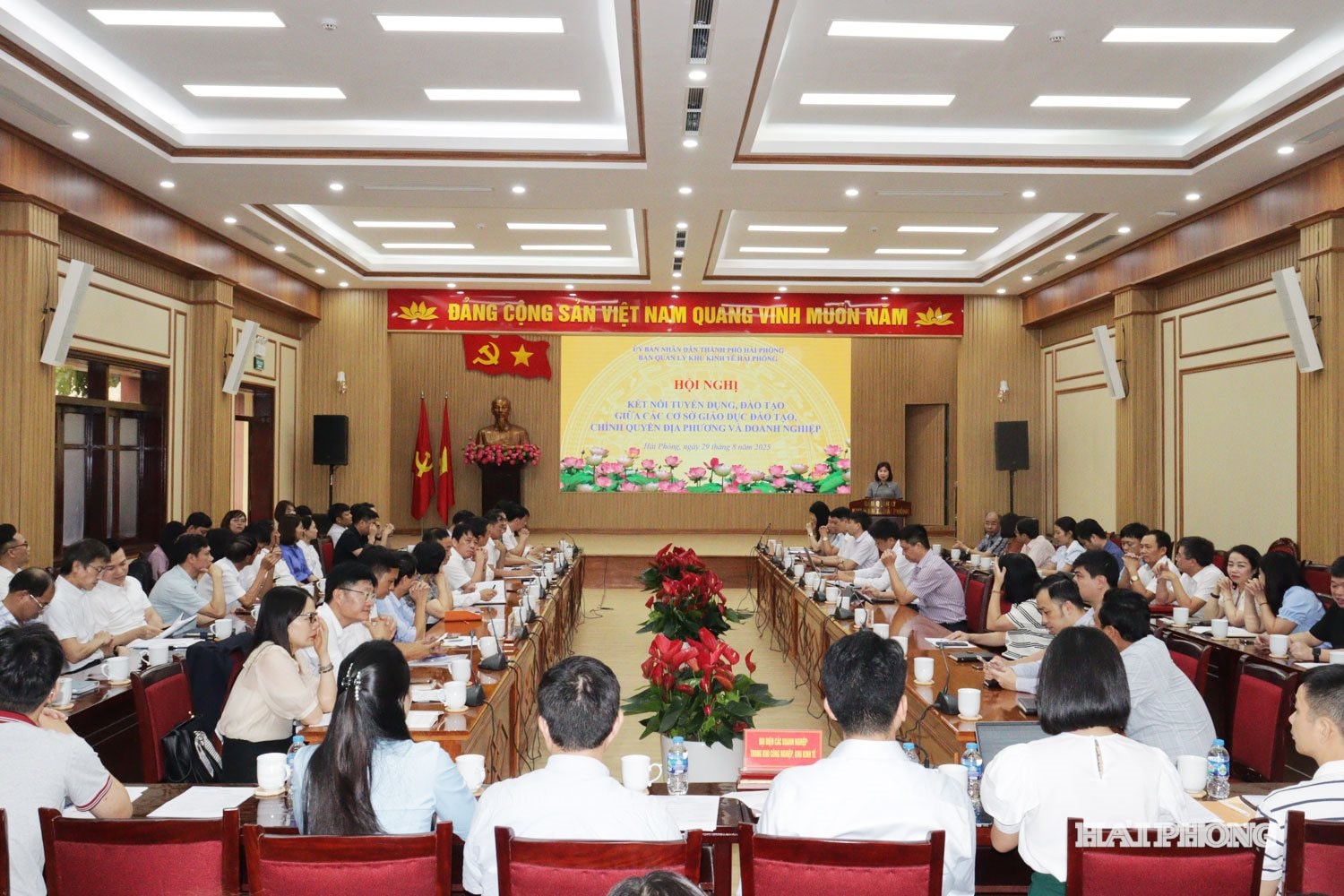
In recent years, the city has implemented many policies to encourage and motivate people to participate in vocational training, such as Resolution No. 35 of the People's Council of Hai Duong province (formerly) on policies to support workers who have received vocational training at the elementary, less than 3-month, intermediate, and advanced levels at vocational education institutions in the province; Resolution No. 03 of the People's Council of Hai Phong city on policies to support training in some professions in Hai Phong city from 2024 to 2030…
Within the city, there are more than 80 vocational education institutions and licensed vocational training centers offering 351 diverse fields and professions such as electrical and electronics, mechanics, garment making, shipbuilding, maritime, logistics, tourism, and services. This is a favorable condition that helps support vocational training for workers over 35 years old, enabling them to keep up with current labor trends in industrial zones.
Ms. Nguyen Thi Thanh, Head of the Job Counseling, Placement and Vocational Training Department at the City Employment Service Center, stated that all workers applying for unemployment benefits at the center receive counseling on vocational training support policies and free vocational training from the central and city governments. In the first 10 months of 2025, the center provided vocational training policy counseling to 15,000 unemployed workers receiving benefits, opened 44 vocational training classes for 800 students, a 137% increase compared to the same period in 2024.
To tap into the labor force of this group, in addition to vocational training policies, there needs to be a mechanism to encourage recruitment and more specific employment opportunities. Lawyer Tran Ngoc Vinh, a member of the National Assembly's Law Committee in the 12th and 13th terms, believes that a specific definition of "older workers" and "middle-aged workers" is needed when amending the Employment Law, along with the addition of specific support policies for this group of workers.
"I propose that policies should be developed to support the training and retraining of older workers according to market needs," said lawyer Tran Ngoc Vinh.
Training support can be provided through the businesses where the workers are employed, or through state-commissioned training units. In addition, supplementing policies to support businesses in extending the retirement age for older workers through tax incentives would be a solution to prevent older workers from being laid off or to provide them with more suitable job opportunities.
To help workers "settle down"
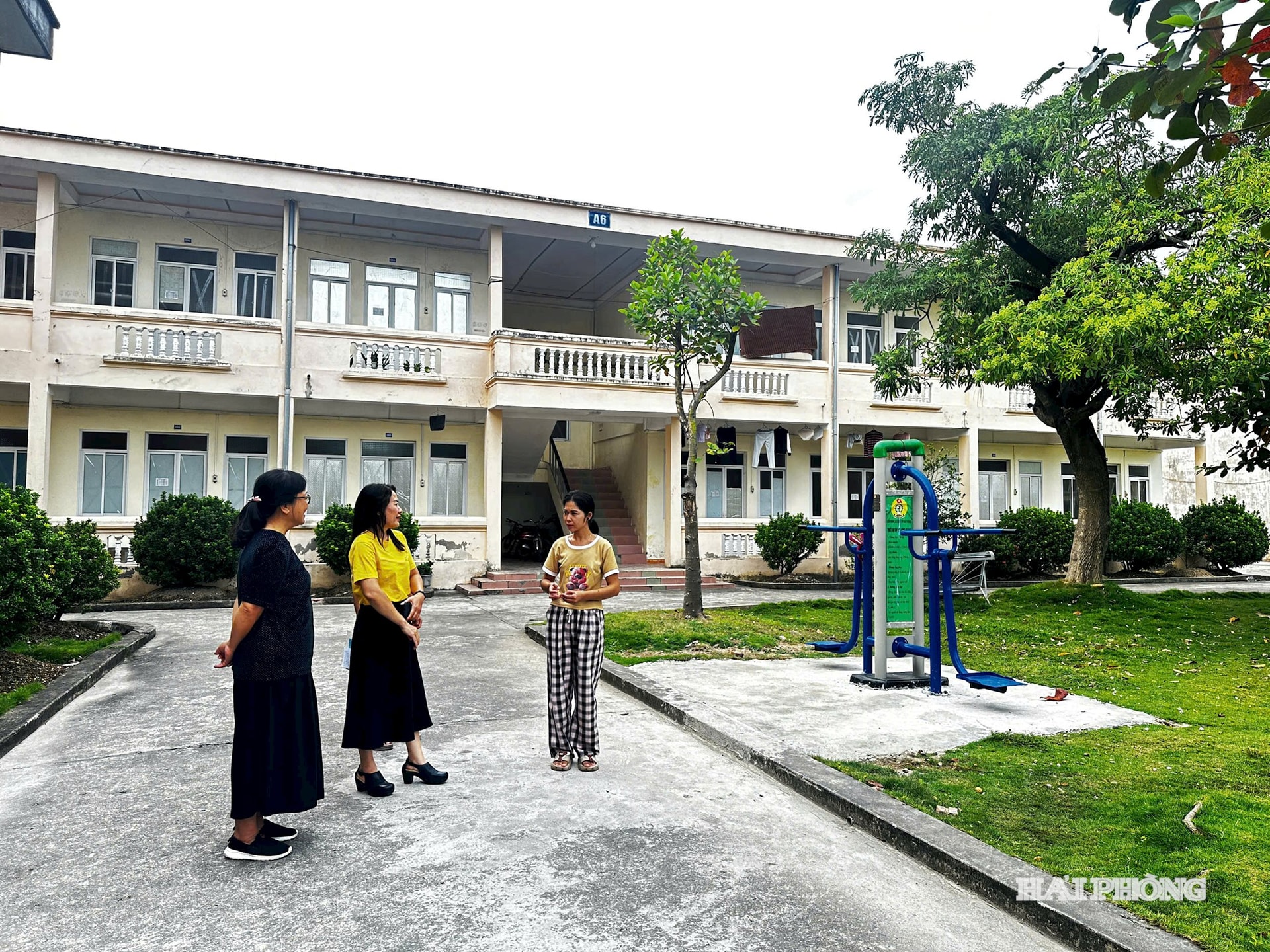
To retain and attract workers from other localities, many businesses proactively implement practical policies. The dormitory for workers from outside the city, owned by Dinh Vang Co., Ltd., has been in operation for over 20 years with approximately 135 rooms, providing accommodation for 900 workers. The company also built classrooms and hired free babysitters for about 65 children of workers from other provinces.
Sao Vang Co., Ltd. has approximately 500 employees from the northern mountainous provinces. According to Bui Thi Hop, Chairman of Sao Vang Co., Ltd., since April, the company's dormitory has been in operation, providing accommodation for about 200 people. For employees who rent accommodation outside the company, the company provides a housing allowance of 1 million VND per person per month.
Brother Vietnam Industrial Co., Ltd., located in Phuc Dien Industrial Park, also built a dormitory complex in 2011, providing accommodation for 2,000 people.
Besides the efforts from businesses, Hai Phong is also a bright spot in the construction of social housing for low-income earners. Over the past two years, Hai Phong has put into use nearly 1,100 social housing units and is implementing 9 other projects to achieve the target of 15,400 units by 2025, aiming for 18,100 units by 2030.
A specific mechanism is needed.

In provinces like Bac Ninh and Vinh Long, the trade union social housing project is proving to be an effective solution to meet the housing needs of migrant workers. The model of the Ha Nam trade union housing complex, with its comprehensive plan for housing, sports facilities, and schools, has successfully addressed the welfare needs of migrant workers, consistently attracting many to settle and work there.
Therefore, along with stable wage and employment policies, the synchronized development of social security infrastructure around industrial zones and economic zones, including social housing, kindergartens, schools, medical facilities, cultural and sports areas, is an urgent requirement.
During the National Assembly Standing Committee's oversight visit to Hai Phong in mid-April 2025 regarding the implementation of policies and laws on human resource development and utilization to meet socio-economic development requirements, the leaders of the Hai Phong Economic Zone Management Board proposed that the city needs more outstanding policies to invest in healthcare networks, public transportation infrastructure, and high-quality education to attract labor, especially high-quality human resources, to feel secure in staying, working, and living in Hai Phong.
Mr. Nguyen Van Quyet, Permanent Vice Chairman of the Hai Phong City Federation of Labor, said that the Hai Phong City Federation of Labor will continue to promote its role as a representative, advisor, and coordinator with all levels, sectors, and businesses to improve policies on wages, benefits, labor safety, and working conditions, ensuring stable income.
In addition to the city's efforts, businesses also need to make efforts to improve wages and effectively implement the city's existing policies.
When workers are guaranteed social security, they will stay and find "peace of mind, security in their homes and jobs," becoming a pioneering force contributing to the construction and development of Hai Phong city.
HAI VAN - MINH NGUYETSource: https://baohaiphong.vn/loat-bai-go-nut-that-lao-dong-de-but-pha-bai-cuoi-dot-pha-chinh-sach-nhan-luc-524958.html
![[Photo] Prime Minister Pham Minh Chinh attends the Vietnam Economic Forum 2025](/_next/image?url=https%3A%2F%2Fvphoto.vietnam.vn%2Fthumb%2F1200x675%2Fvietnam%2Fresource%2FIMAGE%2F2025%2F12%2F16%2F1765893035503_ndo_br_dsc-8043-jpg.webp&w=3840&q=75)


![[Photo] Prime Minister Pham Minh Chinh receives Lao Minister of Education and Sports Thongsalith Mangnormek](/_next/image?url=https%3A%2F%2Fvphoto.vietnam.vn%2Fthumb%2F1200x675%2Fvietnam%2Fresource%2FIMAGE%2F2025%2F12%2F16%2F1765876834721_dsc-7519-jpg.webp&w=3840&q=75)
![[Image] Leaked images ahead of the 2025 Community Action Awards gala.](/_next/image?url=https%3A%2F%2Fvphoto.vietnam.vn%2Fthumb%2F1200x675%2Fvietnam%2Fresource%2FIMAGE%2F2025%2F12%2F16%2F1765882828720_ndo_br_thiet-ke-chua-co-ten-45-png.webp&w=3840&q=75)
![[Photo] Prime Minister Pham Minh Chinh receives the Governor of Tochigi Province (Japan)](/_next/image?url=https%3A%2F%2Fvphoto.vietnam.vn%2Fthumb%2F1200x675%2Fvietnam%2Fresource%2FIMAGE%2F2025%2F12%2F16%2F1765892133176_dsc-8082-6425-jpg.webp&w=3840&q=75)





























































































Comment (0)