

According to reporters' observations, on the morning of July 20th, Cua Lo beach still received a large number of visitors, stretching from the north to the south shore. However, due to the impact of the storm's circulation, the waves began to show signs of becoming stronger, especially between 7 am and 9 am. Some tourists, due to carelessness or lack of attention, still swam quite far from the shore, forcing the rescue team to work continuously, without allowing for even a moment's negligence.
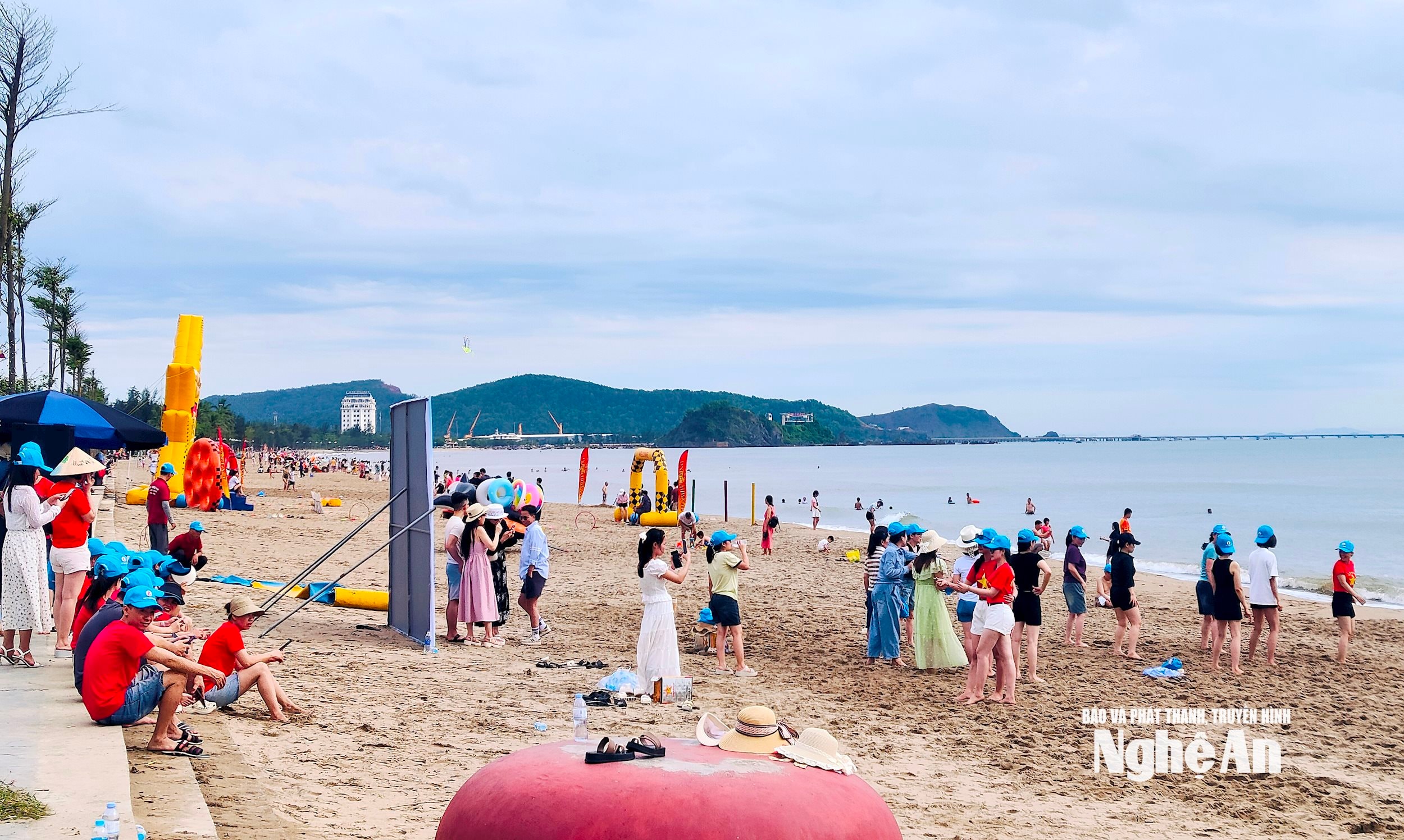
Mr. Le Van Thiet, an officer at the Rescue and Disaster Prevention Center of Cua Lo Ward, said: “Given the impact of Typhoon No. 3, we determined that we could not be complacent. The entire force has been mobilized 100%, divided into small teams to patrol along the beach. One team monitors from above, another uses canoes to patrol further offshore, and another walks along the beach to remind and intervene when necessary.”
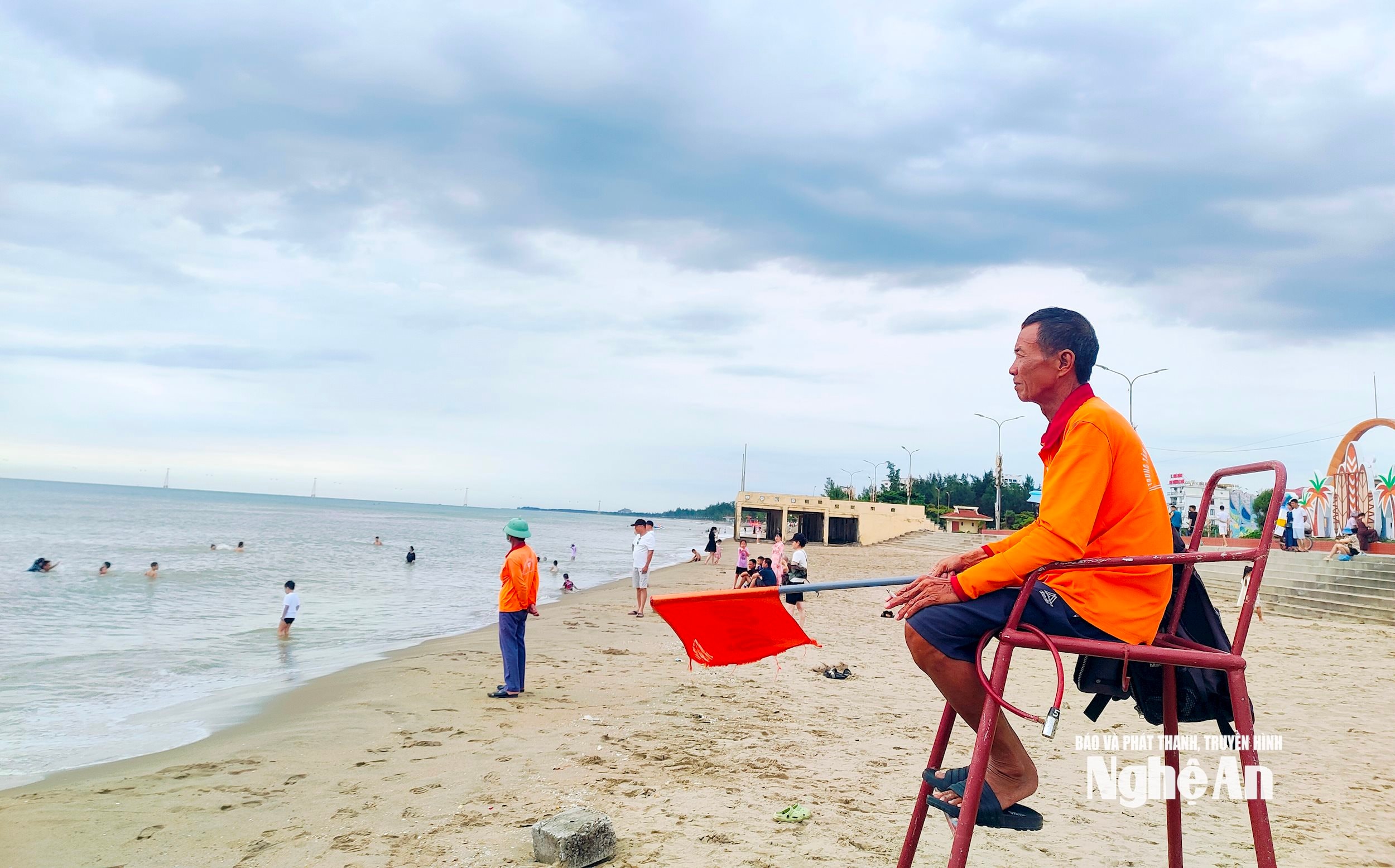
This specialized team-based monitoring model has proven effective in large-scale surveillance. In particular, the combination of aerial monitoring and underwater patrols allows for early detection of dangerous behaviors such as swimming beyond safe limits, gathering far from shore, or young children without adult supervision. "We regularly remind people via loudspeakers, use whistles and red flags in areas with large waves and strong currents," added Mr. Thiet.
Since the night of July 19th, Cua Lo has experienced thunderstorms, strong winds, and lightning. Although there has been no ban on swimming at the beach, according to Mr. Tran Tuan Anh – Director of the Cua Lo Ward Disaster Prevention and Rescue Center, weather conditions are being continuously monitored and updated by the Provincial Disaster Prevention and Control Command and the Meteorological and Hydrological Forecasting Center to ensure timely response measures.
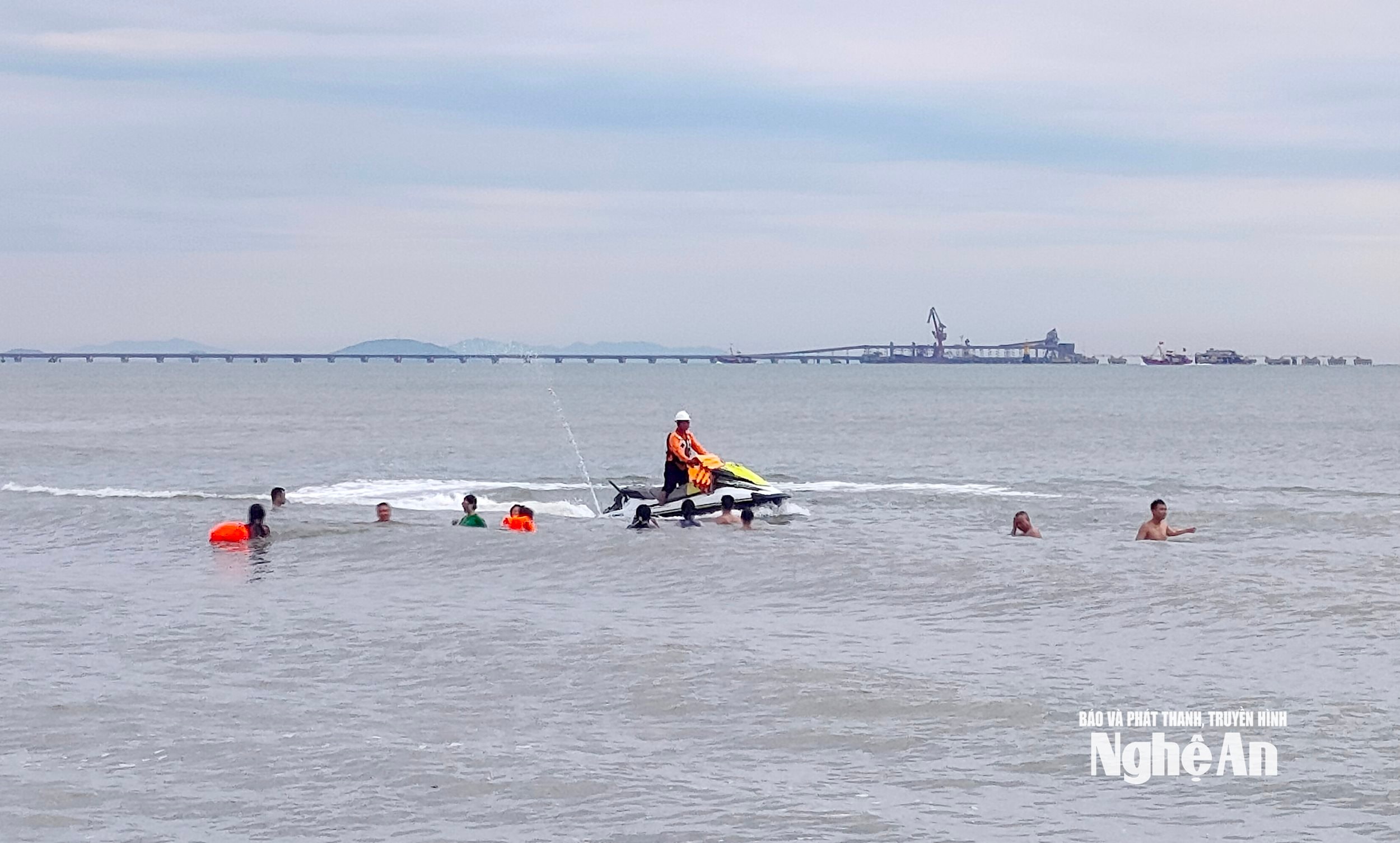
"We haven't banned swimming yet, but we've advised tourists not to swim too far from the shore, to avoid areas with large waves, and to pay attention to announcements from the rescue team. Following the tragic incident in Quang Ninh yesterday, no one can afford to be complacent," Mr. Tuan Anh emphasized.
Information dissemination has also been intensified through loudspeaker systems, warning signs, and regulations boards along the beach. In addition, local authorities are urging residents and tourists to raise their awareness of self-protection, strictly follow the instructions of rescue forces, and avoid going into the sea when there are warnings of danger.
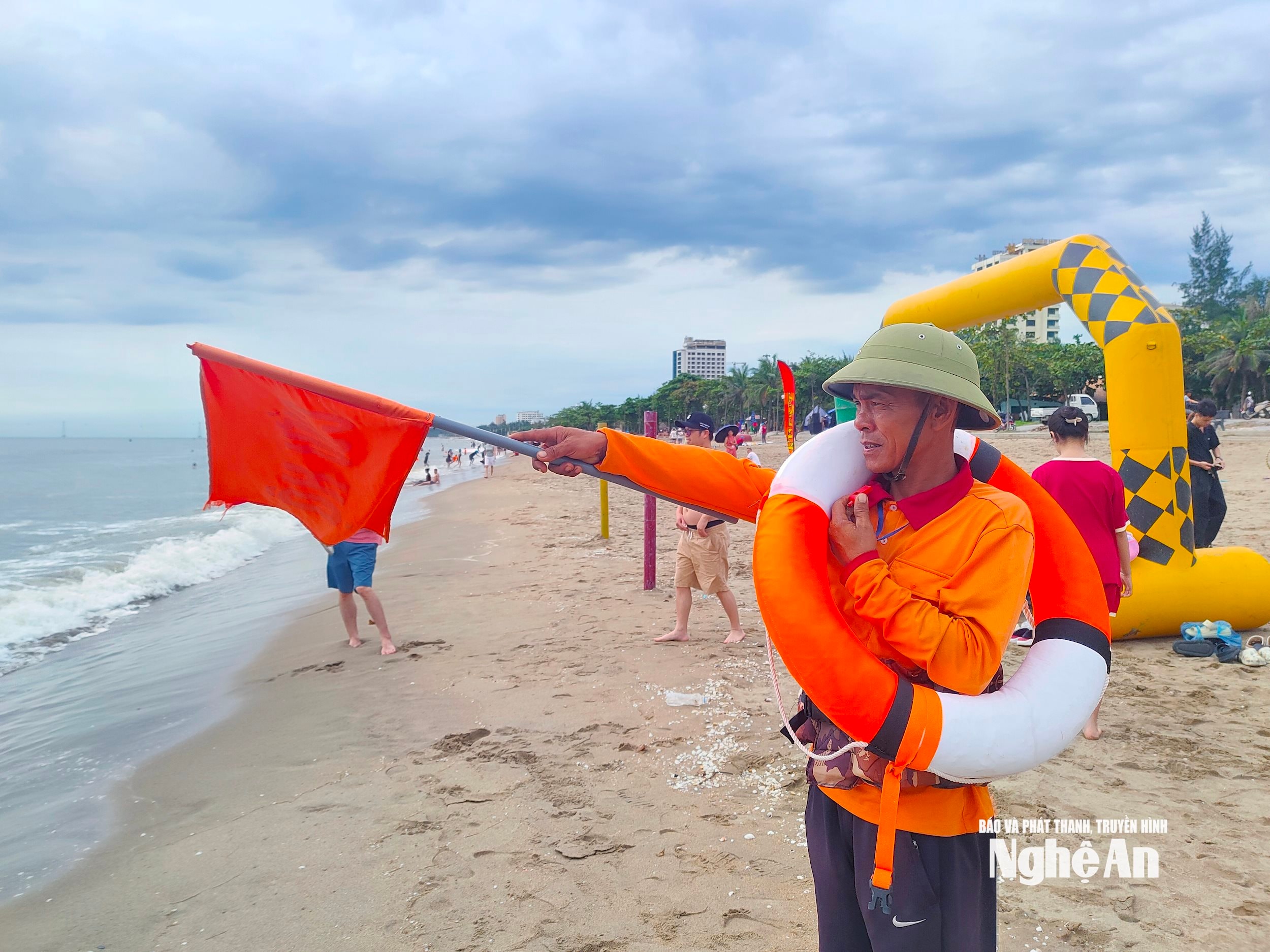
Typhoon No. 3 is moving rapidly and its trajectory is complex. Although the eye of the storm is not directly affecting the sea off Nghe An province, its circulation could cause heavy rain, strong winds, and the risk of unusually high waves in the coming days. Therefore, residents and tourists should not be complacent when swimming in the sea.
Earlier, on June 14, 2025, due to the impact of Typhoon No. 1, more than 20 people swimming at Cua Lo beach were unexpectedly swept into deep water. Upon discovering the incident, rescue forces at Cua Lo beach quickly deployed to provide assistance, coordinating with local residents to successfully bring the victims ashore and administer first aid. No unfortunate incidents occurred.
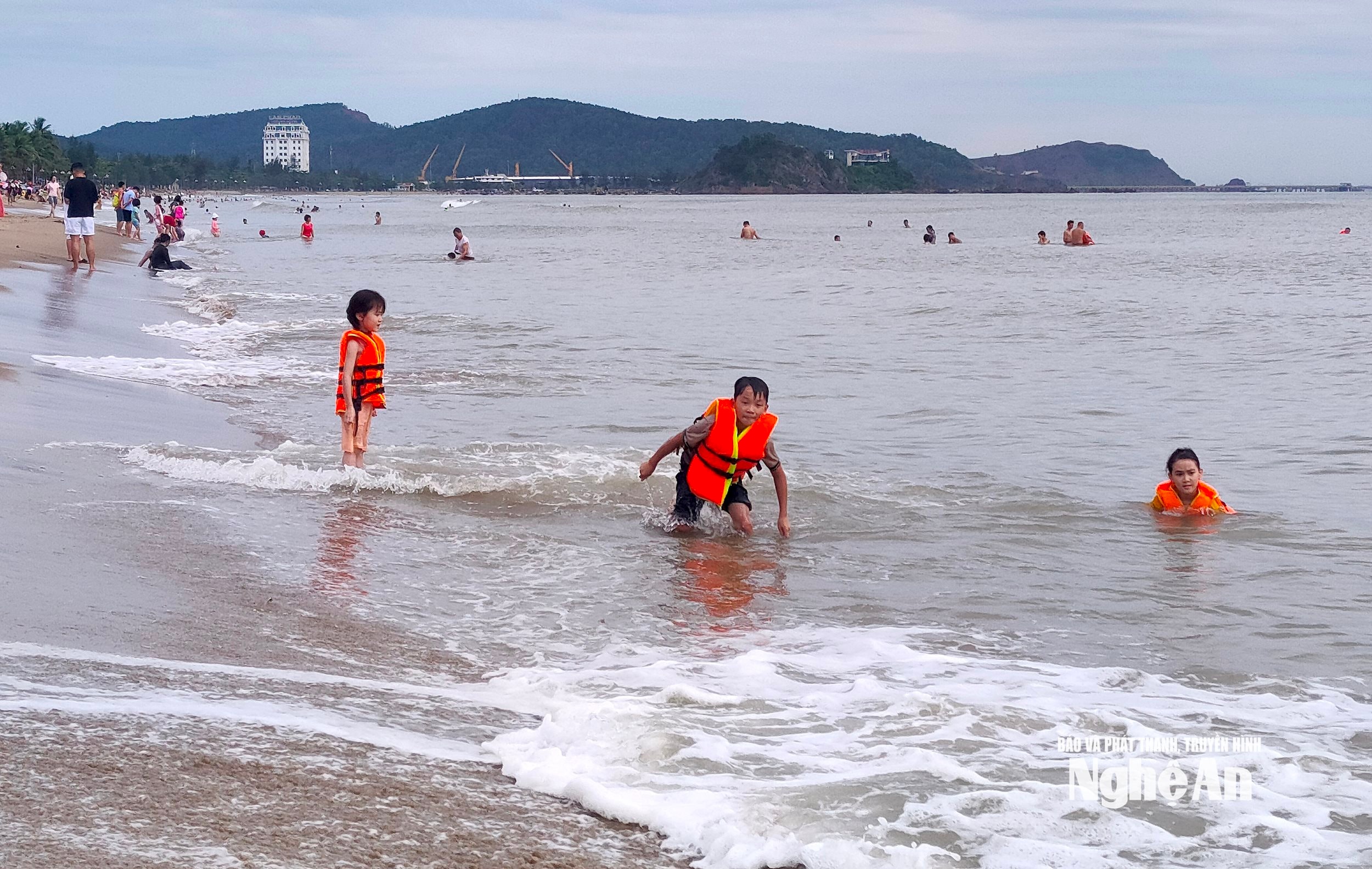
To protect the safety of residents and tourists, authorities have also advised people on times when they should not swim in the sea:
During rough seas, with large waves or strong crashing waves: When you observe large waves, the seawater turning murky due to mud and sand being washed up, or strong sea winds (easily distinguishable by the white foam of the rolling waves), you should absolutely not go into the water because the risk of strong currents and backwaters will be very high.
Strong tidal fluctuations (rapid rising or falling tides): The period of strong tidal changes during the day (usually twice a 24-hour period) is when strong swirling currents can pull swimmers out of the water; consult lifeguards before entering the water.
Located near small streams and canals that flow into the sea: Many points where rivers and canals meet may experience strong currents; swimming right at the mouth of a river or canal is very dangerous.
After heavy rain or high tides: The sea becomes turbulent and muddy due to the washing away of sand and silt, increasing the risk of rip currents and easily disorienting swimmers.
The best time to swim is early morning or late afternoon (twilight): The light is weak, making it difficult to observe unusual waves, increasing the risk; avoid swimming alone during these times.
Areas without lifeguards: Choose beaches with professional lifeguards and signs marked with green, yellow, and red flags; avoid beaches without lifeguards or those marked with red flags indicating no swimming.
Always swim under the supervision of an experienced person and a lifeguard. Avoid swimming after a heavy meal or after drinking alcohol.
When caught in a rip current, do not swim against it, but calmly go with the flow to swim diagonally outwards.
Always respect maritime warning signals and follow the instructions of lifeguards.
Source: https://baonghean.vn/luc-luong-cuu-ho-phuong-cua-lo-tuc-truc-24-24h-de-giam-sat-va-dua-ra-nhieu-khuyen-cao-nham-bao-dam-an-toan-cho-du-khach-10302683.html




![[Image] Vietnam's colorful journey of innovation](/_next/image?url=https%3A%2F%2Fvphoto.vietnam.vn%2Fthumb%2F1200x675%2Fvietnam%2Fresource%2FIMAGE%2F2025%2F12%2F14%2F1765703036409_image-1.jpeg&w=3840&q=75)
































































![[Image] Vietnam's colorful journey of innovation](https://vphoto.vietnam.vn/thumb/402x226/vietnam/resource/IMAGE/2025/12/14/1765703036409_image-1.jpeg)
























Comment (0)