

| What should businesses do when shipping costs to the US and Europe escalate? Shipping companies are predicted to face even greater difficulties in 2024. |
Market redirection
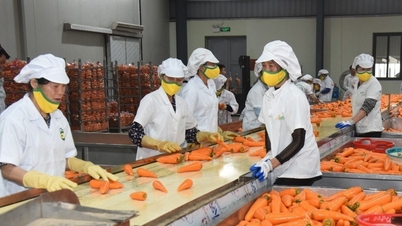
Tensions in the Red Sea have caused shipping freight rates to increase two to three times compared to last month, and many export businesses are scrambling to find ways to overcome difficulties in order to maintain orders and stabilize jobs for their workers.
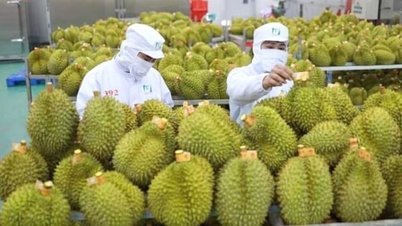
Mr. Nguyen Dinh Tung from Vina T&T Import-Export Company stated that on average, his company exports 15-20 containers of fresh fruit to the US market each week. Recently, the dangerous conditions of transporting goods across the Red Sea have increased shipping costs by 30% and transit time by approximately 15 days, causing significant difficulties for the company's export operations.
To maintain orders, businesses have shifted their export routes from sea to air. “For fruits with a long shelf life like pomelo and coconut (about 65 days), businesses still export by sea. However, for fruits that don't last as long, such as dragon fruit, mango, and longan, we've switched to air transport,” said Mr. Nguyen Dinh Tung.
According to Mr. Tung, air freight costs are 10 times higher than sea freight. Although most customers are understanding and supportive of businesses regarding shipping costs, as this is an objective difficulty, the company has been unable to export large orders during this year-end shopping season, only exporting in small quantities. “Sea freight costs only $0.4 USD/kg, while air freight costs $4-5 USD/kg. Export volume has decreased by 50-60% due to increased costs and reduced purchasing power, leading importers to limit imports,” Mr. Tung shared.
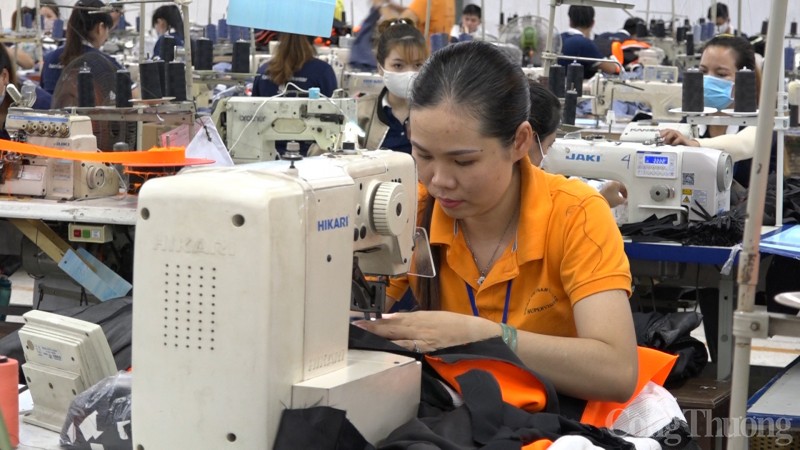 |
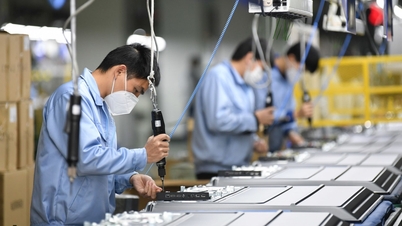
| Export businesses are trying to find ways to cope amidst rising freight costs. |
Meanwhile, many other businesses are seeking to diversify their markets as sea freight rates have doubled or tripled in some major markets such as Europe and the US. Mr. Pham Van Viet, Chairman of the Board of Directors of Viet Thang Jean Co., Ltd., shared that the European and US markets account for up to 70% of the company's export market share. However, since the beginning of January 2024, goods have been stalled, with many shipments having to take detours, extending delivery times by another 2 to 3 weeks. Costs have also doubled. Although regrettable about losing key markets, the company is forced to consider reducing its market share in these two markets to find new directions.
"The textile and garment industry is characterized by seasonal demand, and air freight increases costs by about three times. We can develop markets in China, Japan, and Russia – places less affected by the pandemic – or we can start approaching the ASEAN market to introduce our goods there," Mr. Pham Van Viet emphasized.
Minimize the risk of supply chain disruptions.
According to experts, rising freight costs had already caused hardship for export businesses during the COVID-19 pandemic. Now, this situation is once again causing difficulties for businesses. A fundamental solution is needed to mitigate supply chain disruptions.
Mr. Truong Dinh Hoe, General Secretary of the Vietnam Association of Seafood Processing and Export (VASEP), said that as a key export item of Vietnam, seafood has reached more than 170 countries. To avoid stockpiling raw materials during the harvest season, seafood businesses are quickly negotiating and shifting production to meet the requirements of new partners, waiting for tensions to subside before continuing their export plans or finding opportunities amidst the crisis.
In the short term, for shipments already exported, businesses are trying to negotiate with partners to share some of the sharply increased transportation costs. In the long term, businesses must reconsider contract signing, especially regarding transportation prices, in order to minimize the risks of disruption to the transportation chain.
"With rising transportation costs, there will be supply shortages in some markets. Based on that, we can compensate for that to have more vibrant activities and take advantage of our geographical location," Mr. Hoè suggested.
Regarding this issue, Mr. Do Phuoc Tong, Chairman of the Ho Chi Minh City Mechanical and Electrical Business Association, believes that global inflation could worsen if transportation costs continue to rise, leading to serious congestion of goods. Therefore, businesses should negotiate to separate transportation costs as a distinct expense when signing export orders.
"We're separating shipping costs into a separate expense instead of delivering goods to customers at CIF prices anymore, because including shipping costs in the current situation is very risky. Therefore, businesses are aiming to separate shipping costs when discussing them with customers," Mr. Tong said.
Source link

![[Image] Vietnam's colorful journey of innovation](/_next/image?url=https%3A%2F%2Fvphoto.vietnam.vn%2Fthumb%2F1200x675%2Fvietnam%2Fresource%2FIMAGE%2F2025%2F12%2F14%2F1765703036409_image-1.jpeg&w=3840&q=75)

























































![[Image] Vietnam's colorful journey of innovation](https://vphoto.vietnam.vn/thumb/402x226/vietnam/resource/IMAGE/2025/12/14/1765703036409_image-1.jpeg)































Comment (0)