

Not just a goal for the rich.
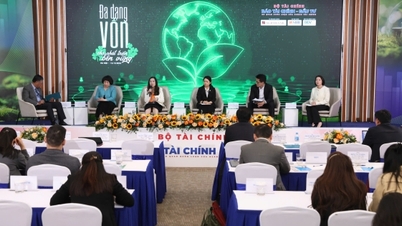
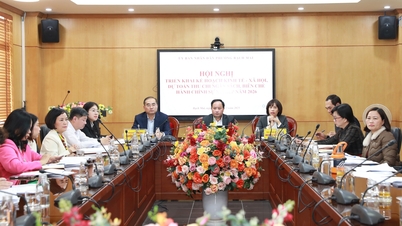
"Vietnam is currently one of the top 20 emitters in the world , with CO2 emissions doubling in the last 10 years." This information was provided by Mr. Hervé Conan, Director of AFD Vietnam, at the seminar "Net Zero - Green Transition: Opportunities for Leaders," organized by Vietnam Television today (June 27).
According to Hervé Conan, with an economic growth rate of at least 6-7% per year, this means energy production will increase by 10% per year, and Vietnam will be one of the world's largest emitters of greenhouse gases.
Therefore, according to him, it is necessary to change habits now in order to break the curve of CO2 emissions growth.
"Without action, Vietnam's energy sector will generate 75% more emissions by 2050. Achieving Net Zero by 2050 requires decarbonization in the energy sector and the concerted commitment of all sectors and citizens," emphasized Hervé Conan.
In response to the question of whether Net Zero is "a game for the rich?", Mr. Nguyen Quoc Khanh, Director of Research & Development (R&D) at Vinamilk and head of the Net Zero Vinamilk project, affirmed that Net Zero is not a luxury game for the rich, but rather a duty, responsibility, and right.
"The negative impacts of climate change affect everyone, without exception. We need to work together to combat the effects of climate change," Mr. Khanh said.
Sharing the same view, Morgan Donovan Carroll, Director of ESG at Vinfast, believes that everyone needs to strive for a greener environment, not only for ourselves but also for future generations, for our families and children.
He also stated that Vinfast will not aim to compete with Tesla, but rather wants to produce quality products and participate in the Vietnamese government's green transition, with the goal of reducing greenhouse gas emissions.
Meanwhile, Mr. To Viet Thang, Deputy General Director of Vietjet, believes that Net Zero is a trend, especially for the aviation industry, a multinational and international sector with many mandatory standards that must be followed.
"Therefore, if we don't anticipate the trend, we will face difficulties when countries introduce stricter regulations. This is not a game, but a mission for businesses; we must be proactive and actively implement it," Mr. Thang expressed.
The carbon credit exchange will be operational by 2028.
Minister of Finance Ho Duc Phoc emphasized that green transformation and emission reduction to fulfill the Net Zero commitment is a long journey with many difficulties and challenges. One of the biggest challenges is the issue of resources.
According to World Bank estimates (2022), Vietnam may need to invest an additional approximately US$368 billion by 2040, equivalent to 6.8% of GDP annually, to pursue a development path that combines resilience and net-zero emissions. Of this, the decarbonization journey to meet international commitments accounts for about 30% of the required resources.
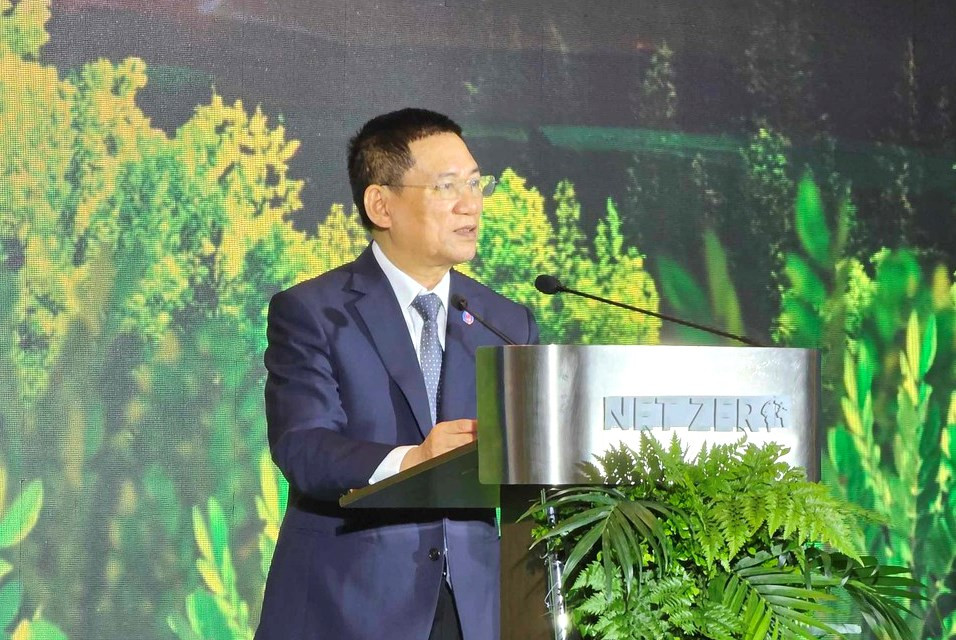
"However, the public sector will only be able to meet about one-third of the demand, while the green finance market is currently in its early stages of development, and the resources mobilized through the green finance market are very small compared to the needs," the Minister said, adding that Vietnam needs to strengthen cooperation and support from the international community.
Accordingly, in addition to prioritizing public resources, the Ministry of Finance will actively coordinate with relevant ministries and agencies in researching solutions to mobilize private resources and international organizations.
Furthermore, the Minister of Finance also stated that, in the coming period, they will coordinate with the Ministry of Natural Resources and Environment and relevant agencies to develop a Decision of the Prime Minister promulgating the list of green classifications according to the tasks assigned in Decree No. 08, as a basis for issuing entities to select green projects and use capital from green bonds.
Regarding the domestic carbon market, the development and implementation roadmap has been issued by the Government in Decree No. 06 on regulations for mitigating greenhouse gas emissions and protecting the ozone layer. Accordingly, from now until the end of 2027, the focus will be on building regulatory and policy systems to create a foundation for the market's operation, as well as piloting a carbon credit exchange, aiming for the official operation of the carbon credit exchange in 2028.
Ms. Ha Thu Giang, Director of the Department of Credit for Economic Sectors (State Bank of Vietnam), stated that, along with state resources, FDI, capital from businesses and individuals, credit from banks is very important for economic development as well as green growth.
Ms. Giang stated that in 2017, when the survey of credit resources for green projects began, only 15 credit institutions with modest scales were reported. Currently, however, 40 credit institutions have reported financing green projects with a scale exceeding 500,000 billion VND, accounting for over 4% of the total outstanding loans in the economy.
However, credit institutions currently face many difficulties in evaluating green projects due to the numerous specialized technical and environmental factors involved.
"Currently, the Prime Minister has assigned the State Bank of Vietnam to develop and issue a list and criteria for green projects. This will be very helpful for state management agencies in developing policies and investment incentives for green projects."
"For the banking sector, this will be a source of documents and criteria for commercial banks to assess, compare, and consider when deciding whether to grant credit," Ms. Giang informed.
According to Deputy Minister of Planning and Investment Nguyen Thi Bich Ngoc, the national strategy on green growth has 10 strategic directions across various sectors and fields, along with 8 groups of solutions. The national green growth action plan has also been approved by the Prime Minister, comprising 134 specific activities.
Ms. Ngoc stated that the Ministry of Planning and Investment is developing a national green classification criteria that harmonizes many factors, including selecting green investment projects, mobilizing domestic and international resources, and quantifying the progress of green growth. This will enable green projects to access green financing and new incentive policies.
“If the criteria are not comprehensive and do not conform to international practices, it will be very difficult to mobilize resources. In the coming time, we expect to issue detailed guidelines for areas and projects that are consistent with the green growth orientation. These are orientations and standards that are in line with international practices. Based on this, ministries and sectors will develop their own standards,” Ms. Ngoc shared.

Source

![[Photo] Two flights successfully landed and took off at Long Thanh Airport.](/_next/image?url=https%3A%2F%2Fvphoto.vietnam.vn%2Fthumb%2F1200x675%2Fvietnam%2Fresource%2FIMAGE%2F2025%2F12%2F15%2F1765808718882_ndo_br_img-8897-resize-5807-jpg.webp&w=3840&q=75)















































































Comment (0)