


Citizens' petitions not only reflect their grievances but also demonstrate their trust in the newly reorganized government apparatus. Therefore, all levels and sectors must consider this a key task, fulfilling legitimate aspirations and contributing to social stability for economic development.
The Secretary of the Ca Mau Provincial Party Committee expressed firm resolve in dealing with officials who exhibit bureaucratic, arrogant attitudes, are detached from the people, and do not prioritize the people's interests as their primary goal.
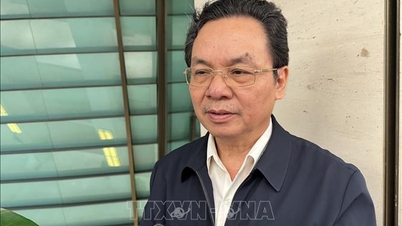
To improve the effectiveness of this work, Mr. Nguyen Ho Hai requested stricter discipline, thorough review and resolution of complex and outstanding cases, especially those related to land; and strictly prohibited any act of forwarding letters with final conclusions back to the locality to shirk responsibility.
Local authorities are changing their approach to resolving issues, applying the "Mandatory Dialogue Rule" to land-related and compensation cases before issuing the initial administrative decision. The criteria for evaluating officials must change to prioritize effectiveness, shifting from quantity-based to quality-based evaluation, incorporating the non-repetitive complaint rate and the Citizen Satisfaction Index into the annual classification criteria.
Besides internal rectification, the Provincial Party Secretary also requested strengthened sanctions to strictly handle cases of abusing the right to complain and denounce to incite unrest, cause disorder, and demand unjustified benefits. The province will establish a specialized task force to provide professional support to local authorities, especially in communes with complex cases.

According to the report of the Standing Committee of the Ca Mau Provincial Party Committee, from July 1st to the present, provincial-level Party agencies have received 468 petitions, an increase compared to 279 petitions in the same period last year.
According to Nguyen Binh Tan, Head of the Internal Affairs Department of the Ca Mau Provincial Party Committee, land-related issues still account for the largest proportion with 165 petitions, reflecting the complexity of management in this field, followed by administrative issues (144 petitions) and judicial and enforcement matters (86 petitions).
The Standing Committee of the Ca Mau Provincial Party Committee noted that many of the complaints have complex historical origins, related to land policies, forest allocation, compensation for land clearance, etc.
The conference frankly pointed out the limitations in promoting the role of the grassroots level; some officials have not truly paid attention to this work, have not devoted enough time to resolving complaints, and have not actively engaged in dialogue with the people. Furthermore, the capacity and skills of some grassroots officials are limited, leading to inadequate and legally unfounded resolution of issues, resulting in complaints being escalated to the provincial level.
In light of the above situation, the Provincial Party Standing Committee has put forward key solutions, emphasizing the tightening of discipline, order, and accountability of leaders at the commune and ward levels. The top priority is to strengthen citizen reception and direct dialogue by the heads of commune and ward Party committees.
The Provincial Party Committee has directed that 100% of Party Committee Secretaries at the commune and ward levels must develop plans, publicly announce schedules, and directly meet with citizens regularly, at least two days each month. Members of the Standing Committee and Provincial Party Committee members will regularly inspect, supervise, and even directly participate in citizen meetings and dialogues in the communes and wards under their management. This will be a key task and a criterion for evaluating and classifying leading and managerial cadres at the end of the year.
Source: https://baotintuc.vn/thoi-su/nghiem-cam-dun-day-trach-nhiem-trong-cong-tac-giai-quyet-khieu-nai-to-cao-20251024140106622.htm















![[Video] The craft of making Dong Ho folk paintings has been inscribed by UNESCO on the List of Crafts in Need of Urgent Safeguarding.](https://vphoto.vietnam.vn/thumb/402x226/vietnam/resource/IMAGE/2025/12/10/1765350246533_tranh-dong-ho-734-jpg.webp)



















































Comment (0)