

Productivity and output decreased.
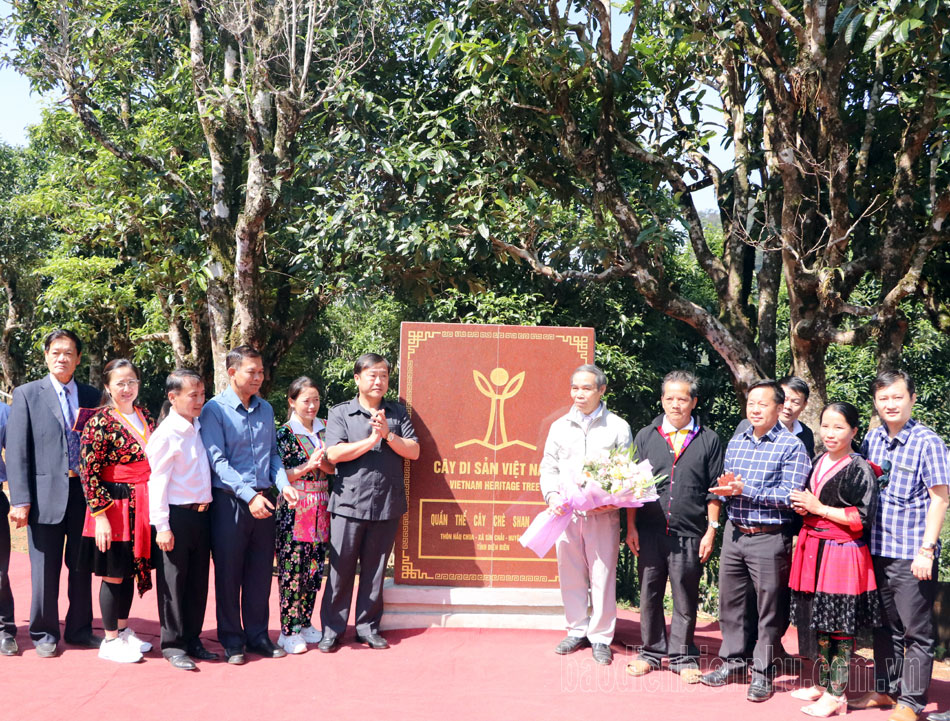
Tủa Chùa District has 595 hectares of tea plantations, including about 30 hectares of ancient Shan Tuyet tea trees, while the rest are planted with lower-growing tea plants mainly in the communes of Sín Chải, Tả Sìn Thàng, Tả Phìn, and Sính Phình. For the Mong ethnic people here, ancient Shan Tuyet tea trees are always considered a rare and precious gift from nature. Thanks to the tea plants, many families have been able to raise their children, send them to school, and buy household items and amenities.
Similar to some other agricultural products, Tủa Chùa tea plants are not immune to the situation of bumper harvests leading to low prices, and high prices coinciding with poor harvests. Typically, tea plants yield 3-4 harvests per year. The first harvest is around the end of March and beginning of April; the second around May and June; the third in August; and the final in October-November. This year, although it is harvest season, tea growers are unhappy because the prolonged heat has significantly affected the growth and development of the tea plants, leading to many tea plantations failing to produce buds, resulting in reduced yield and production.
The family of Mr. Hang A Tong, in Hau Chua village, Sin Chai commune, is one of the households with the most ancient Shan Tuyet tea trees in the area. However, this year, the prolonged hot weather at the beginning of the season prevented the tea trees from producing buds; some trees are at risk of disease and leaf burn… At this time last year, his family had already harvested the second crop, but now they have only harvested one, resulting in a significant decrease in yield.
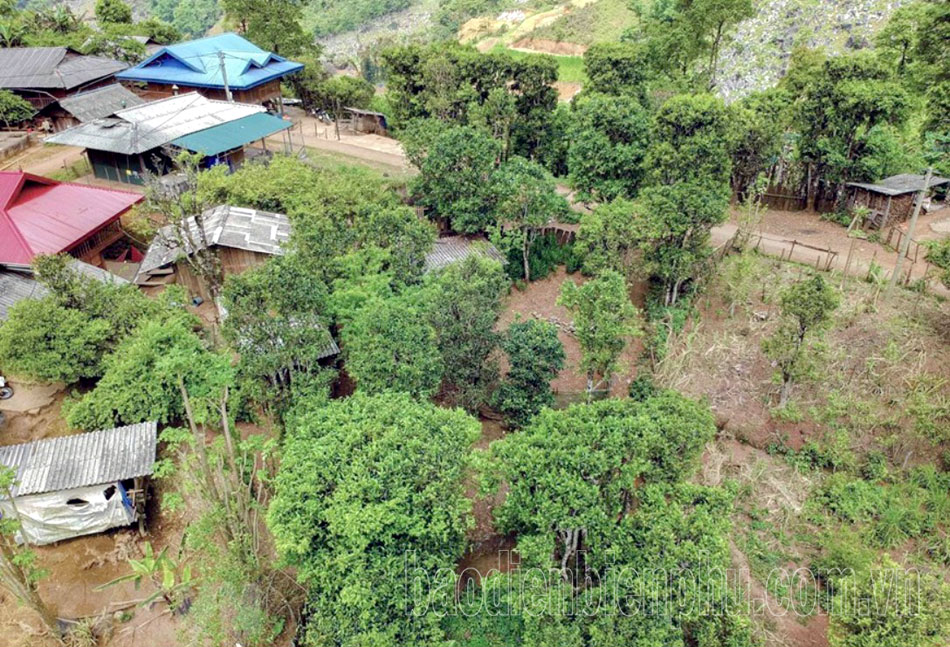
Sin Chai commune has the largest tea-growing area in the district, with nearly 50 hectares, including 3,132 ancient Shan Tuyet tea trees. According to Mr. Giang A Tinh, Chairman of the People's Committee of Sin Chai commune, in recent years the commune has identified tea as a key economic crop for people to develop their economy. Tea cultivation has contributed significantly to helping people in the commune have a stable income and escape poverty. However, this year's prolonged heatwave has affected many tea plantations, preventing tea buds from growing, especially on tall tea plants. Although the second harvest is underway, the yield is very low, only half of last year's. Furthermore, some tea plantations have experienced scorching of young buds.
Not only tea growers, but tea processing facilities are also facing difficulties due to the lack of raw materials. Ms. Nguyen My Linh, Director of Huong Linh Co., Ltd., said: "In previous years, the company purchased about 30 tons of fresh tea leaves from farmers, but this year we have only been able to purchase about 6 tons (equivalent to processing 1 ton of commercial tea). The hot weather has reduced the company's tea leaf procurement volume by two-thirds compared to 2023. The lack of raw materials has led to the postponement of many orders, significantly impacting the company's production."
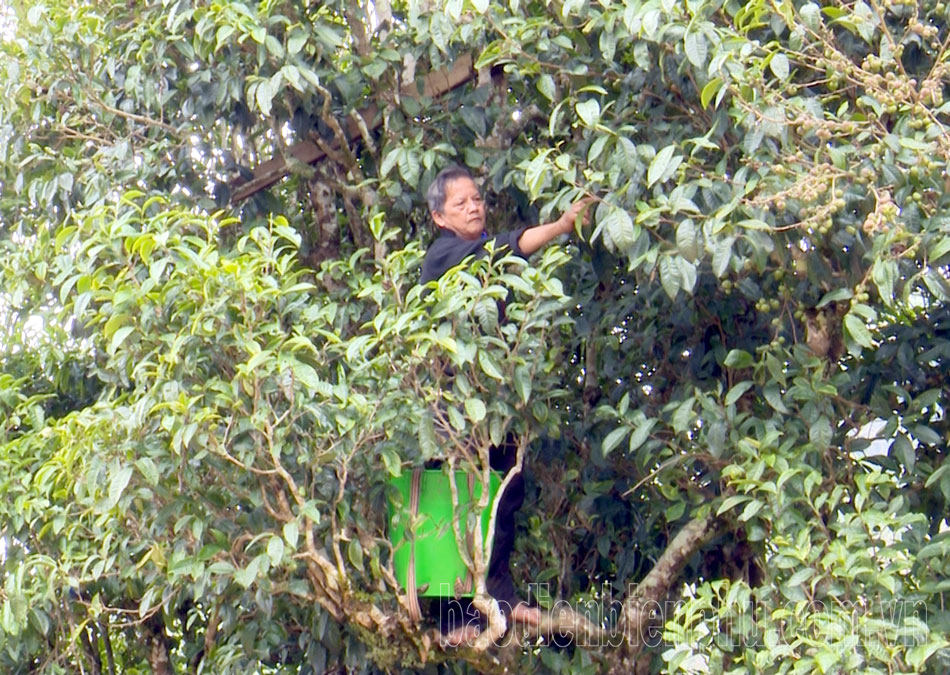
According to authorities in Tủa Chùa district, the hot weather has slowed down the tea harvest compared to previous years, simultaneously reducing tea yield and production. On average, the district harvested about 102 tons of fresh tea buds in previous years, equivalent to 17 tons of dried tea. This year, the yield of fresh tea buds has decreased significantly. Since the beginning of May, the district has experienced scattered rain showers, but the amount of rainfall has been relatively small and unevenly distributed, failing to alleviate the drought in the tea-growing areas. If the hot weather continues, the yield of tea buds will continue to decline.
Foreign traders take over.
According to local experience, the best tea comes from the first harvest (spring crop), which is harvested at the end of March because the cool weather ensures the best quality. At this time, tea growers in the communes of Sín Chải, Tả Phìn, Tả Sìn Thàng, and Sính Phình have finished harvesting the first crop and are beginning the second. However, it is already the end of May, and the first batch of tea buds has only just been harvested, or in some places, not even a single bud has been harvested. This is due to the hot weather preventing the tea plants from producing buds.
For the tea leaves harvested by the local people, foreign traders (from China) bought up all of it, driving the price of fresh tea leaves up to nearly 200,000 VND/kg, whereas in previous years it only fluctuated between 90,000 and 110,000 VND/kg. This is the highest price ever for fresh tea leaves. While the high price naturally benefits the local people, the hot weather has reduced production and the percentage of tea sold is low, so even with the high price, tea growers are not entirely happy.
Foreign traders are paying high prices for tea, but their standards and harvesting techniques are not strict, leading many to worry about the impact on the development of ancient tea trees and the potential for reduced yields in subsequent harvests. Vietnamese traders only buy tea harvested with the youngest bud and two adjacent leaves below. However, foreign traders buy tea with just one bud and 5-6 adjacent leaves, and encourage farmers to harvest all four seasons, even when the tea plants are flowering. Such destructive exploitation will negatively affect tea yields and may even cause the tea plants to wither and die.
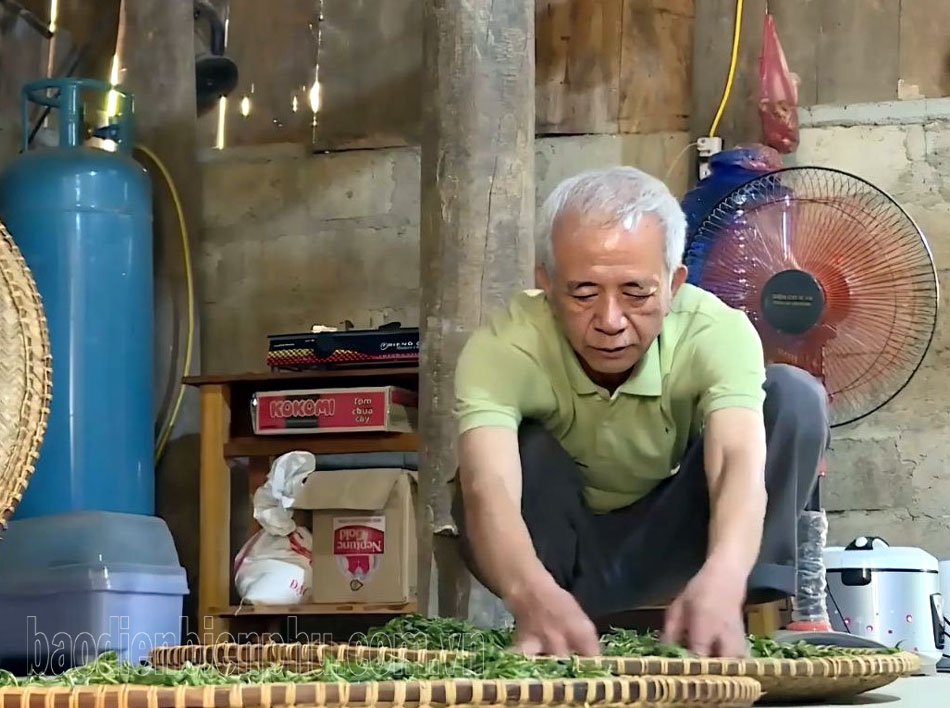
The fact that foreign traders are driving up the price of tea has made it impossible for some tea purchasing and processing facilities in the district (Phan Nhat Tea Company, Huong Linh Co., Ltd., and several smaller processing facilities) to compete. Currently, these purchasing facilities in the district also lack products to supply their regular customers.
Ms. Nguyen My Linh, Director of Huong Linh Co., Ltd., said: "People sell their tea to whichever purchasing facility offers the highest price. Foreign traders are buying fresh tea buds at nearly 200,000 VND/kg, a price that local businesses in the province cannot match. In previous years, the company supplied 4-5 tons of commercial tea to the market annually, equivalent to 24-30 tons of fresh tea buds. However, this year we have only been able to purchase about 6 tons of fresh buds, mainly from low-growing tea plants. Because we cannot compete on price with foreign traders, the company currently has no products to supply to our regular customers."
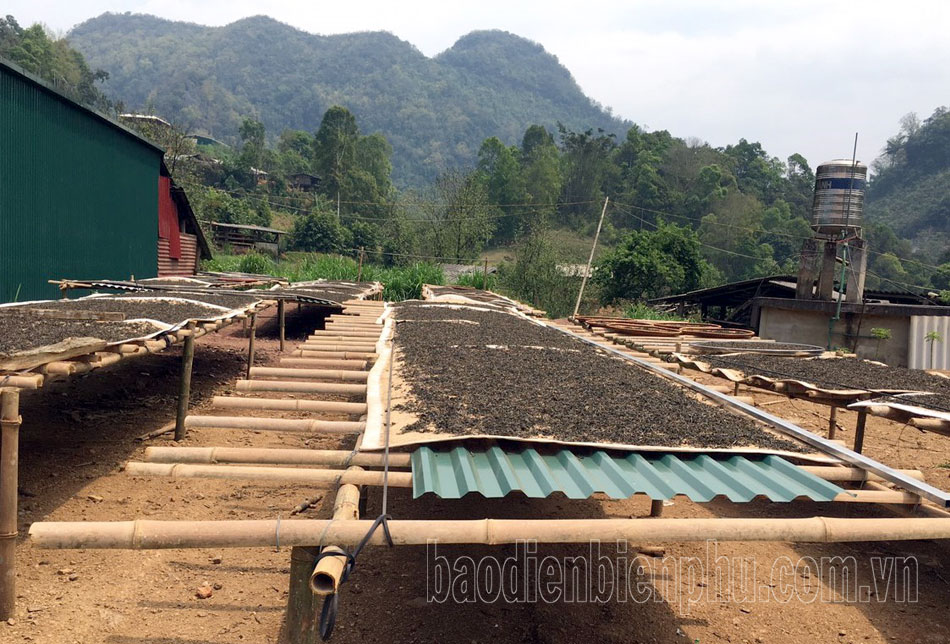
It is suggested that relevant authorities and local governments should strictly control the buying, selling, and processing of tea, especially by foreign traders. This is to prevent destructive purchasing practices that negatively impact tea plant growth and create difficulties for local processing facilities in the province.
Source

![[Photo] The General Secretary attends the groundbreaking ceremony for the construction of the Truong Ha Primary and Secondary Boarding School.](/_next/image?url=https%3A%2F%2Fvphoto.vietnam.vn%2Fthumb%2F1200x675%2Fvietnam%2Fresource%2FIMAGE%2F2026%2F01%2F28%2F1769604498277_vna-potal-tong-bi-thu-du-le-khoi-cong-xay-dung-cong-trinh-truong-pho-thong-noi-tru-tieu-hoc-va-trung-hoc-co-so-truong-ha-8556822-jpg.webp&w=3840&q=75)
![[Photo] Commemorating the unwavering friendship between Vietnam and Laos](/_next/image?url=https%3A%2F%2Fvphoto.vietnam.vn%2Fthumb%2F1200x675%2Fvietnam%2Fresource%2FIMAGE%2F2026%2F01%2F27%2F1769518372051_ndo_br_1-jpg.webp&w=3840&q=75)


![[Photo] National Assembly Chairman Tran Thanh Man meets with former leaders of the National Assembly from various periods.](/_next/image?url=https%3A%2F%2Fvphoto.vietnam.vn%2Fthumb%2F402x226%2Fvietnam%2Fresource%2FIMAGE%2F2026%2F01%2F28%2F1769601014034_anh-man-hinh-2026-01-28-luc-18-50-04.png&w=3840&q=75)


![OCOP during Tet season: [Part 3] Ultra-thin rice paper takes off.](/_next/image?url=https%3A%2F%2Fvphoto.vietnam.vn%2Fthumb%2F402x226%2Fvietnam%2Fresource%2FIMAGE%2F2026%2F01%2F28%2F1769562783429_004-194121_651-081010.jpeg&w=3840&q=75)


![OCOP during Tet season: [Part 2] Hoa Thanh incense village glows red.](/_next/image?url=https%3A%2F%2Fvphoto.vietnam.vn%2Fthumb%2F402x226%2Fvietnam%2Fresource%2FIMAGE%2F2026%2F01%2F27%2F1769480573807_505139049_683408031333867_2820052735775418136_n-180643_808-092229.jpeg&w=3840&q=75)
![OCOP during Tet season: [Part 1] Ba Den custard apples in their 'golden season'](/_next/image?url=https%3A%2F%2Fvphoto.vietnam.vn%2Fthumb%2F402x226%2Fvietnam%2Fresource%2FIMAGE%2F2026%2F01%2F26%2F1769417540049_03-174213_554-154843.jpeg&w=3840&q=75)




Comment (0)