


The La Chi people are one of the ethnic groups with a tradition of making their own clothing, from growing cotton and weaving to sewing and embroidery. Their clothing is simple, yet it embodies a treasure trove of culture and folk knowledge. However, with the rapid development of modern industry, these traditional garments are gradually disappearing, and the La Chi people are struggling to preserve and pass on their skills to future generations.
The laborious craft of growing cotton and weaving cloth.
Nam Khanh commune, Bac Ha district, Lao Cai province is one of the areas inhabited by the La Chi ethnic group. In many stilt houses, freshly dyed linen fabrics are seen fluttering in the wind. This is also where many La Chi people still maintain the custom of wearing traditional clothing in their daily activities.
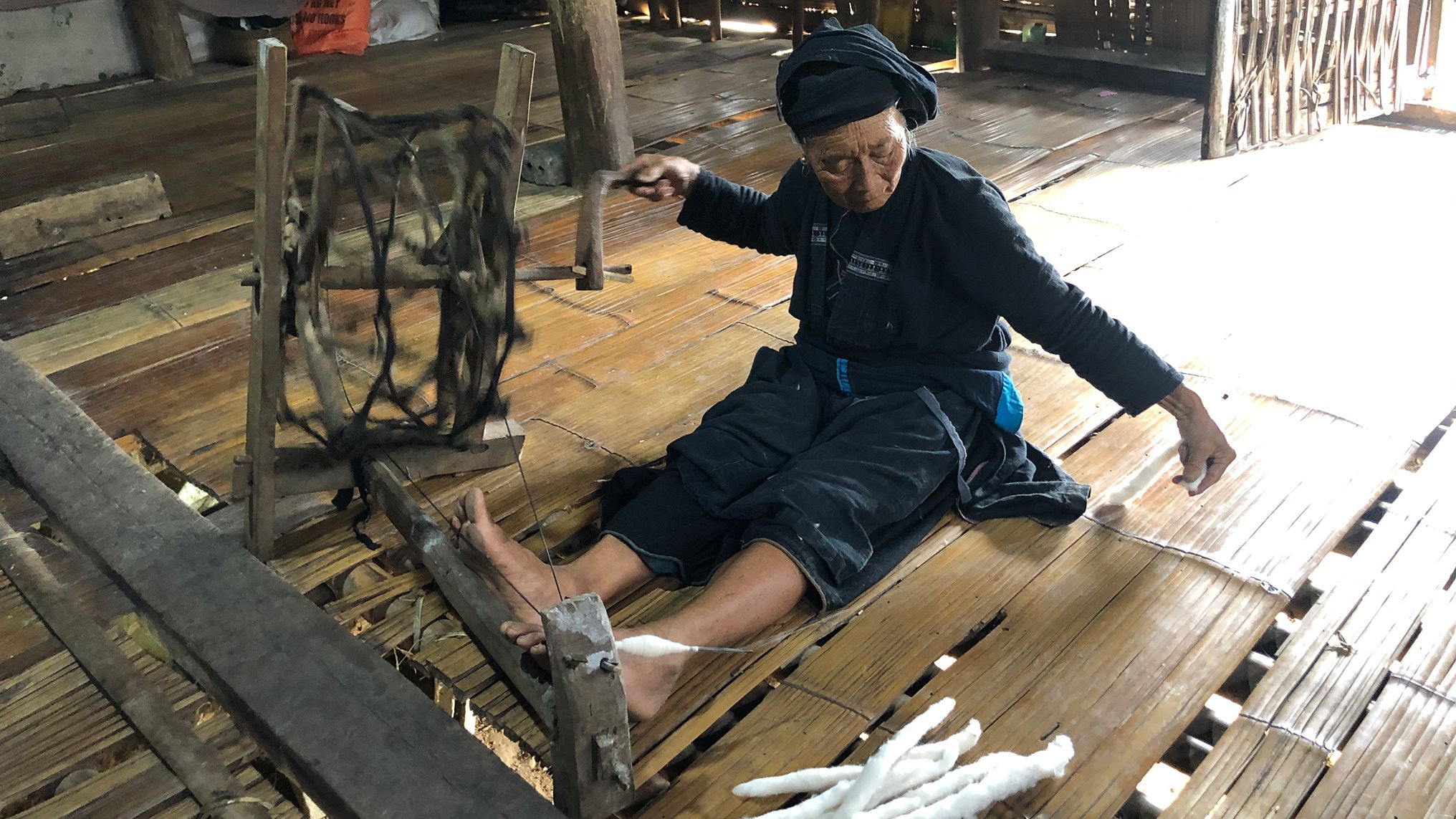
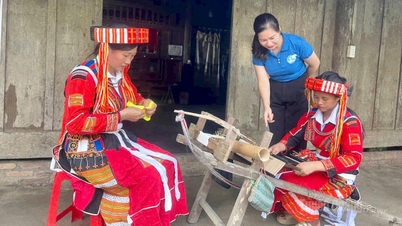
Ms. Vang Thi Mia stands beside her loom, spinning cotton.
Ms. Vang Thi Mia is one of the rare people who have mastered the traditional weaving and tailoring techniques of the La Chi ethnic group. In 2020, at the age of 80, she still diligently sat at her loom, meticulously pulling the shuttle to weave fabric. She said that nowadays young people only like to wear modern clothes, jeans and t-shirts, and in the village now only the elderly preserve and wear traditional clothing. Therefore, she tries to maintain the daily weaving and tailoring work so that young people can see, understand, and eventually return to loving and wearing traditional clothing.
According to Ms. Vang Thi Mia, growing cotton, weaving, and sewing clothes are essential standards for La Chi women in the community. Since ancient times, women have been closely associated with growing cotton, weaving, sewing, and embroidery. Growing cotton and weaving is a habit, an integral part of the life of the La Chi people.
Living high in the mountains, with limited arable land and little water, the La Chi people cultivate cotton interspersed among their terraced rice fields. Cotton can thrive in harsh conditions without requiring much care, only weeding. However, despite the difficulties, the La Chi still dedicate the best plots of land to cotton cultivation. A key characteristic of cotton farming is that the land must be left fallow for one season; if cotton is planted in one location this year, the land must be changed to a different location the following year, otherwise the crop will not yield high productivity.

Cotton bolls at harvest time.
Cotton is only grown once a year. Each year, cotton seeds are sown and planted in early May. Around September or October, the cotton blossoms, covering the fields in white, coinciding with the rice harvest. Therefore, during this time of year, La Chi families often mobilize all their manpower to harvest the cotton and then the rice. The weather is sunny during this period, and the La Chi people also take advantage of the sun to dry the cotton, sort it, and classify it. Yellowish cotton is due to rotten or waterlogged seeds, making it prone to breakage when spun.
During the day, La Chi women work in the fields, and in the evening, they take the time to separate the cotton seeds, then spin the yarn, and finally weave it into cloth. The La Chi people also invented a rudimentary cotton seed separating machine, made of ironwood or other hardwoods, operating on the principle of a hand crank pressing two round wooden bars together. The soft, fine cotton is pressed to one side, while the seeds fall to the other.
Cotton cultivation and weaving are traditionally associated with La Chi women, but La Chi men also participate in some stages to help their mothers and wives, such as sowing seeds, weeding, and separating cotton kernels.
After the cotton is separated from its seeds, the La Chi people use a cotton-whipping tool, also known as a cotton bow, to fluff the cotton and remove any dust. To prevent the cotton from flying all over the house, they use thin cloth to cover the area where the cotton is fluffed. Then, the cotton is rolled into small, long cotton balls for easy spinning.

Spinning requires skill and dexterity from the woman.
The spinning process is the most difficult and requires the skill and gentleness of the woman. The spinning wheel must be used evenly and smoothly to ensure the thread is long, unbroken, and uniform. The thread is then wound into coils, boiled, dried, and then woven into cloth. The spinning wheel consists of a spinning reel and a spinning wheel. After the thread is spun and wound onto spools, it is starched with rice water or millet before being placed on a drying table. After drying, the thread is wound into shuttles and strung.
The yarn laying process is quite interesting. A set of shuttles is pulled across pre-made yarn laying frames in the yard, and the weft yarn is then threaded over the warp yarn, creating upper and lower layers. The weft yarn is then interwoven across the warp yarn to create the fabric surface, which is formed on the upper layer during the laying process. Once the yarn is laid, it is fitted into a suitable loom to produce fabric of the required width. When weaving, the hands and feet must coordinate rhythmically to prevent the yarn from getting tangled.
The traditional clothing of the La Chi people features indigo as the dominant color. The La Chi believe that clothing made from hand-woven and hand-dyed cotton fabric truly showcases the beauty and skill of La Chi women.
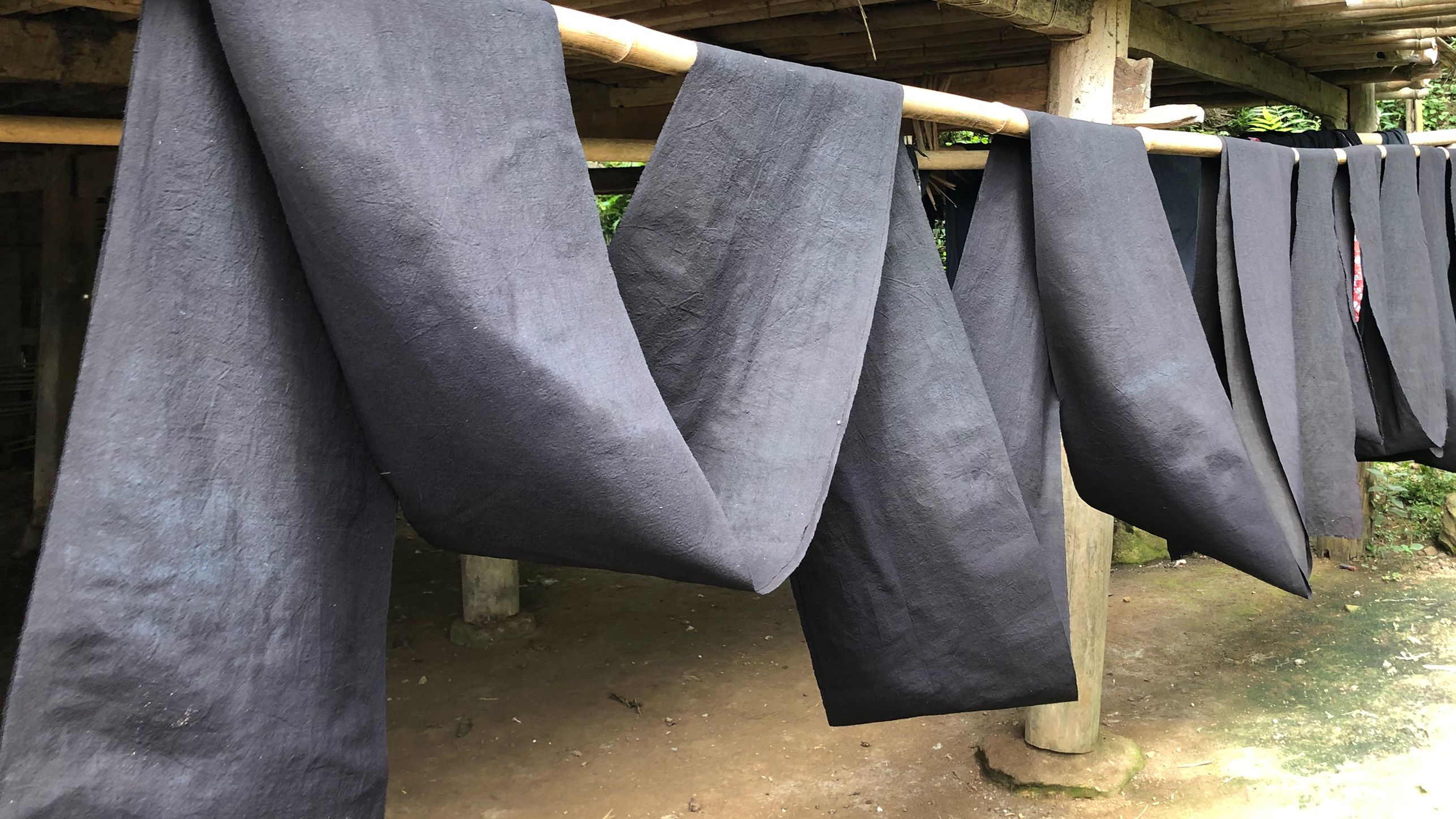
The fabrics are left to dry after dyeing.
After weaving, the fabric must be dyed at least five times. After each dyeing, it must be dried before dyeing again so that the color penetrates evenly and the fabric achieves the correct color.
To complete a traditional costume requires 13 steps, with the indigo dyeing process taking the longest time. The entire process is done by hand using rudimentary tools. Typically, a La Chi woman has to work continuously for many months to complete a single outfit.
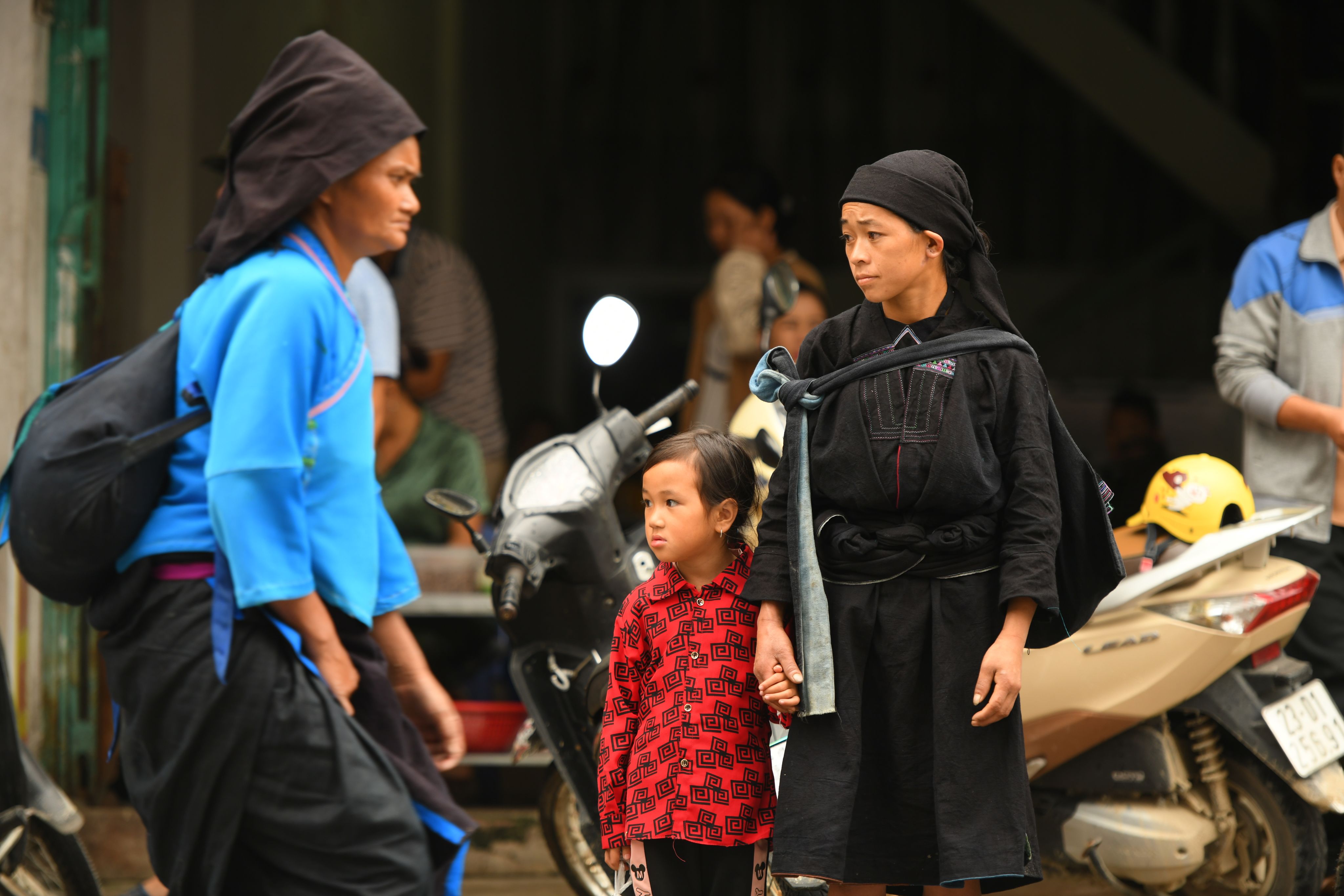
Nowadays, La Chi girls are no longer required to know how to weave or sew clothes.
La Chi girls as young as seven or eight years old are taught the first steps of weaving by their mothers. During the season, they accompany their mothers to the fields to plant cotton, and then are meticulously taught each stitch by their mothers and older sisters so that they can later weave, embroider, and sew their own clothes. This is also how generations of La Chi people preserve their traditional weaving craft.
The distinctive traditional clothing of the La Chi people.
The traditional clothing of the La Chi people is not flashy or elaborate. La Chi men wear a five-panel shirt that reaches to their calves, loose-fitting trousers, and a headscarf. The sleeves of men's shirts are usually wider than those of women.
La Chi women wear a four-panel dress with a central slit. The bodice and collar are embroidered with floral patterns, creating a soft and feminine look. The dress includes a belt, bodice, long headscarf, skirt, and leggings. They adorn themselves with small pieces of jewelry such as earrings and bracelets, and prefer to wear headscarves nearly three meters long. During festivals and holidays, La Chi women wear three long dresses layered on top of each other.
Women's clothing is designed in the style of a four-panel ao dai. The bodice is cut long, extending past the heels to create a soft, flowing silhouette. The two front panels are slit at the sides, extending almost to the waist. When wearing the ao dai, the La Chi people usually wrap the two back panels around their waist. The two front panels are folded down 10-30 cm and then secured with a belt, forming a decorative sash at the front.
La Chi women typically wear short skirts, sewn in a tube style without a waistband. The upper part of the skirt is fitted, while the lower part flares out slightly. When wearing it, they use a belt to secure the waistband at the waist. With this design, the women's clothing is cut loosely, creating comfort for the wearer while also highlighting the woman's health and vitality.
Unlike the Hmong and Dao people, the traditional clothing of La Chi women is not adorned with many ornate patterns. Instead, it features simple designs on the collar and bodice. These patterns include geometric shapes, floral motifs, and borders or dots.
The shaman wears a specific outfit for each ceremony. It consists of a loose, long robe that extends past the ankles, split in the middle, with a cloth belt, and a wide cloth hat with a chin strap. In some ceremonies, the shaman wears a piece of dried buffalo hide or a hat.
Although not elaborate, the textile products of the La Chi people, such as skirts, shirts, scarves, and aprons, are considered to have reached a fairly high level of technical skill, especially in the composition and design of patterns on the edges of the shirts and aprons.
Preserving traditional crafts in the face of extinction.
In almost every stilt house of the La Chi people in Bac Ha, there is a wooden loom for weaving cloth. Here, La Chi women are taught from a young age how to make their own clothes for themselves and their families. This work is also a criterion for judging the skill and diligence of women in the community. From generation to generation, the La Chi people have continued to grow cotton, weave cloth, and use cotton yarn to make clothing for the whole family. This has created a unique identity for the La Chi community and also helps them preserve the heritage left by their ancestors.
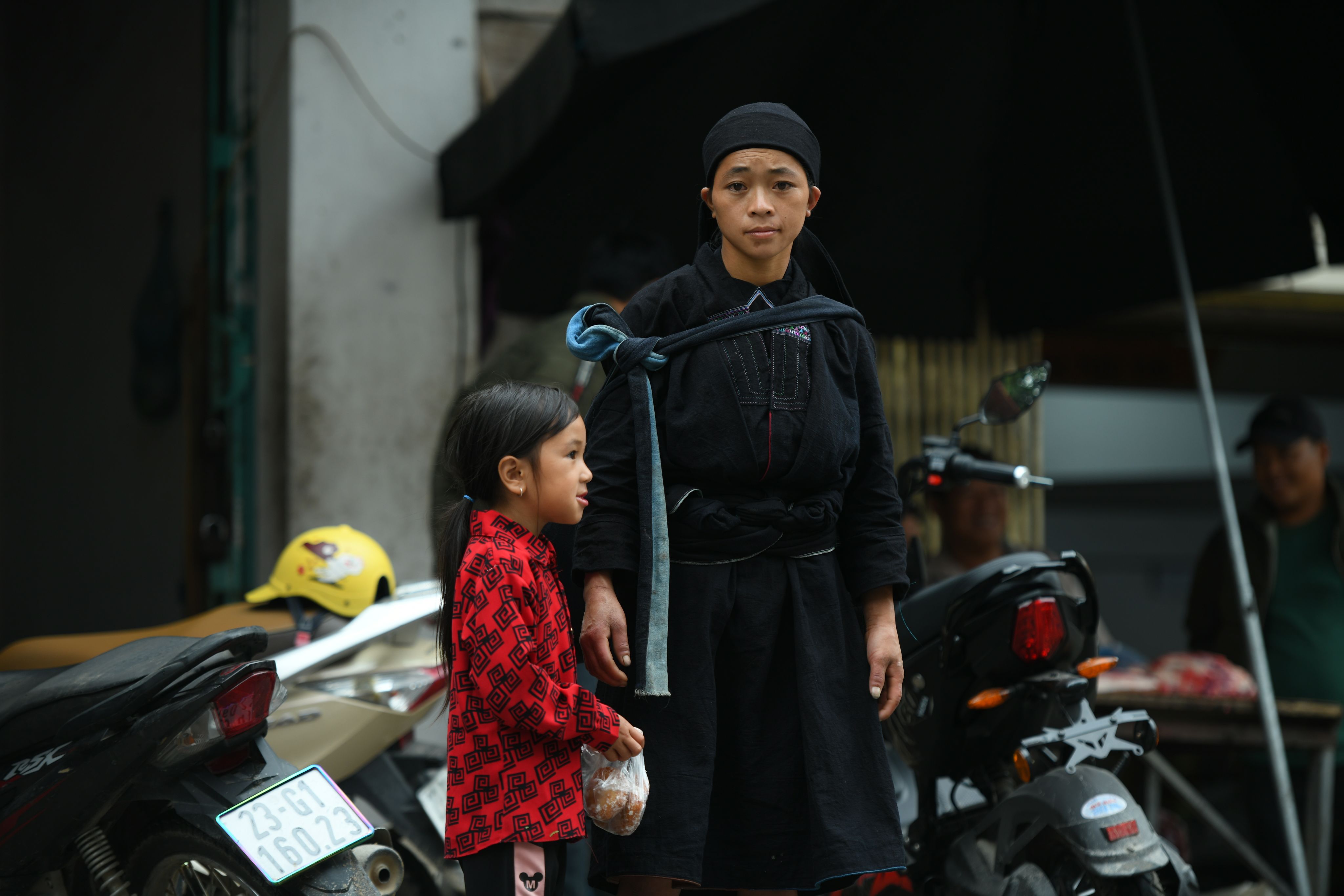
Traditional clothing of La Chi women.
However, the development of modern life and its convenience has led many young La Chi people today to choose modern clothing over traditional attire. A relative of Ms. Vang Thi Mia in Nam Khanh said that for jobs requiring a lot of movement, such as working in the fields, weeding, and planting, especially when traveling by motorbike, modern clothing is more suitable, easier to buy, and easier to use. In addition, young La Chi people also want to keep up with new, modern fashion trends. Ms. Vang Thi Mia is almost the only person in the village who knows all the techniques of weaving, dyeing, and sewing traditional clothing.
That is why today, many La Chi people do not choose to wear traditional clothing in their daily lives. Many La Chi women no longer know how to grow cotton, weave fabric, and sew clothes like previous generations. Therefore, to avoid the risk of the traditional weaving and clothing-making craft of the La Chi people disappearing, in 2022, Lao Cai province developed a program to restore and preserve the brocade weaving craft of the La Chi people. Accordingly, the Department of Culture and Sports of Lao Cai province, along with local organizations, disseminated information to the people about the purpose and significance of the program. Once the people understood, officials from the Department, together with local women, formed conservation groups, training young women in how to spin yarn, weave fabric, sew, and embroider, thereby creating not only ordinary clothing but also decorative products and souvenirs... to serve tourism.

A La Chi woman chooses to buy fabric at the market.
Bac Ha is one of the most popular destinations in the Northwest region, boasting unique cultural features of the highland ethnic groups. The weaving craft of the La Chi people, if properly preserved, maintained, and exploited, has the potential to create valuable resources for effective tourism development.
For generations, weaving and tailoring have been an integral part of the lives of the La Chi people, contributing to their unique cultural identity. Providing the La Chi with a livelihood through weaving and tailoring will help them preserve and protect their distinctive cultural heritage.
Tuyet Loan/Nhan Dan Newspaper
Source: https://baophutho.vn/nguoi-la-chi-giu-nghe-det-218186.htm
![[Photo] Prime Minister Pham Minh Chinh visits and extends New Year greetings to former Party and State leaders and offers incense to the esteemed predecessors.](https://vphoto.vietnam.vn/thumb/1200x675/vietnam/resource/IMAGE/2026/02/14/1771078465521_dsc-2411-jpg.webp)

















































Comment (0)