


On the morning of December 10, with 444/446 delegates present in favor, the National Assembly passed the Law on E-commerce. The Law on E-commerce consists of 7 chapters and 41 articles, effective from July 1, 2026.
Regarding e-commerce activities on social networks and livestream sales methods, taking into account the opinions of many National Assembly Deputies, the new Law has clearly defined the responsibilities of each participant in the livestream sales process (including sellers, livestreamers and platform owners) to increase information transparency, enhance legal responsibilities of the parties and create a basis for inspection, supervision and handling of violations.
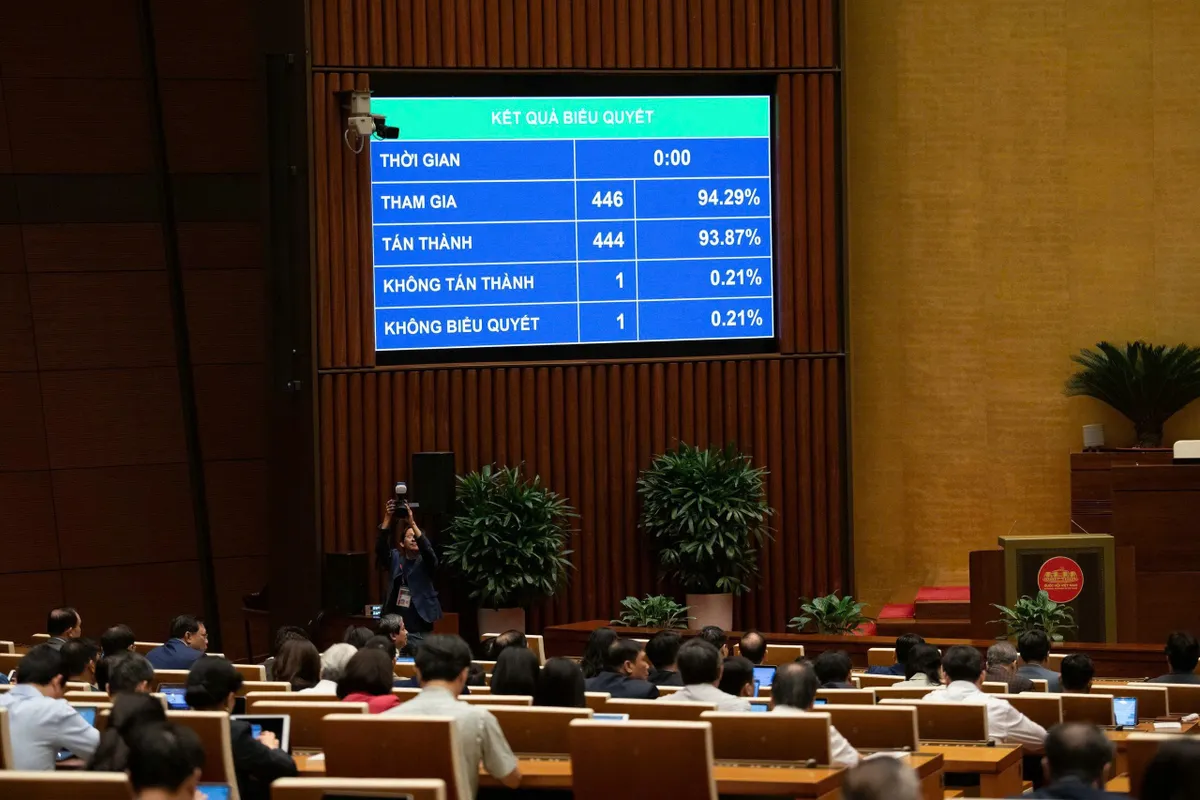
On the morning of December 10, the National Assembly passed the Law on E-commerce.
Specifically, according to the newly passed Law on E-commerce, livestream sellers must provide information to the owner of the e-commerce platform to serve identity authentication.
Livestream sellers are not allowed to provide false or misleading information about the uses, origin, quality, price, promotional policies, warranties and other content related to goods and services; and must not use language, images, costumes or behaviors that are contrary to social ethics and customs during the livestream sales process.
Must stop cooperation, stop streaming, remove displayed information immediately upon discovery or at the request of the seller or at the request of a competent state agency regarding illegal acts.
According to the drafting agency, the regulations on identifying sellers on the platform are built on the basis of exploiting the national electronic identification and authentication system (VNeID) to contribute to cleaning up the e-commerce market and limiting counterfeit goods and goods that infringe intellectual property rights through the ability to trace sellers, while effectively supporting tax management and preventing loss of state budget revenue.
Regarding the responsibility of the owner of the e-commerce platform in livestream sales activities, it is necessary to electronically authenticate the identity of the livestream seller in accordance with the provisions of law on identification and electronic authentication before allowing livestream sales. In case the livestream seller is a foreigner, the identity must be authenticated through legal documents.
In addition, the owner of the e-commerce platform must have a mechanism to receive and resolve comments, requests, and complaints from viewers during livestream sales activities and ensure that viewers can implement this mechanism throughout the livestream sales process and after the livestream sales end.
Require sellers to provide written confirmation of advertising content for goods and services that are required by law to have written confirmation of advertising content before allowing livestream sales.
Stop live streaming, remove displayed information, links immediately upon detection or upon request of competent state agencies when livestreams selling goods violate the law or contain language, images, costumes, or behaviors that violate social ethics and customs. Or livestream sales of prohibited goods and goods that are temporarily suspended from circulation on the market upon request of competent state agencies; goods and services prohibited from advertising according to the provisions of the law on advertising...
The owner of the e-commerce platform must store and ensure the accessibility of information and data on images and sounds of livestream sales activities for at least 1 year from the time of starting the broadcast.
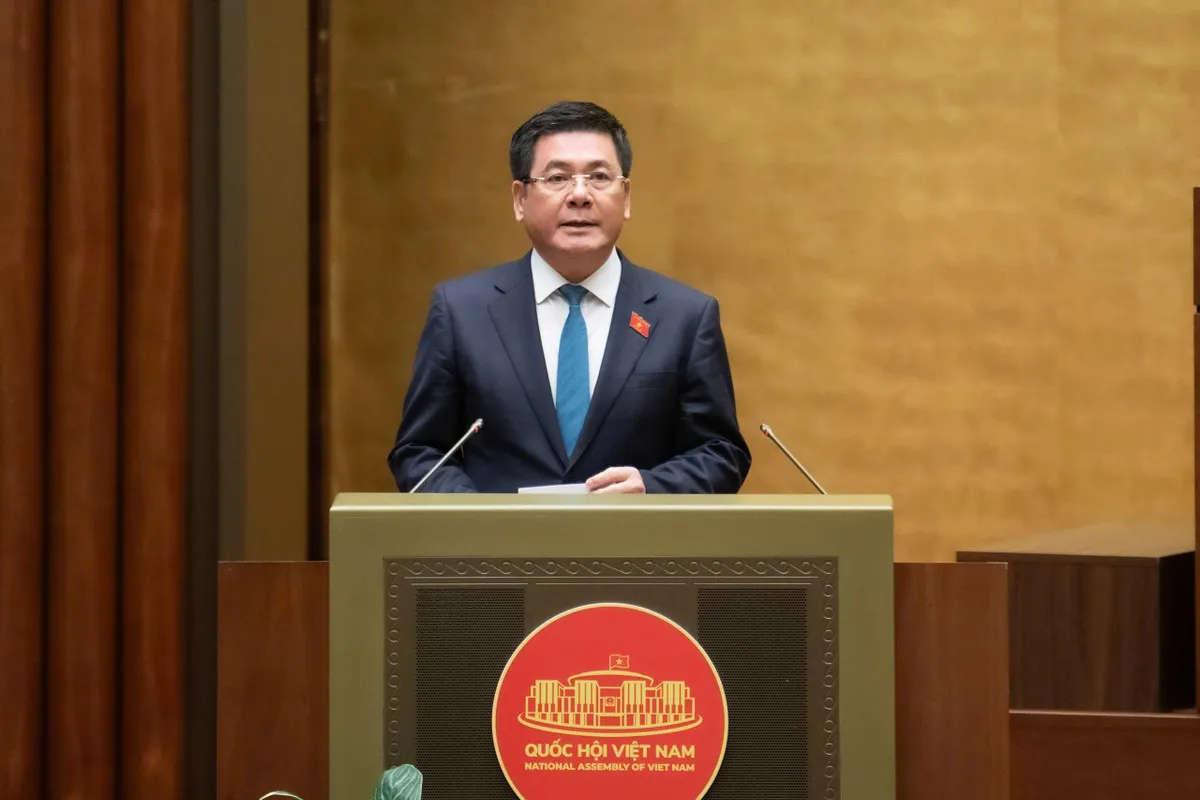
Minister of Industry and Trade Nguyen Hong Dien presented a report on receiving, explaining and revising the draft Law on E-commerce.
Regarding the seller's responsibility in livestream sales activities, it is necessary to provide the livestreamer with full documents proving that he/she meets the investment and business conditions for conditional investment and business industries and professions before livestreaming sales. The livestream sales content must be consistent with the confirmed advertising content...
According to the drafting agency, the regulations on identifying sellers on the platform are built on the basis of exploiting the national electronic identification and authentication system (VNeID) to contribute to cleaning up the e-commerce market. Limiting counterfeit goods and goods that infringe intellectual property rights through the ability to trace sellers, while effectively supporting tax management and preventing loss of state budget revenue.
Regarding the responsibilities of foreign platform owners operating in Vietnam, the Law has been revised based on the operating model and functions of e-commerce platforms. Accordingly, the requirements for appointing authorized representatives, establishing legal entities or appointing authorized legal entities will be applied based on the operating model and functions of e-commerce platforms, ensuring compliance with international commitments of which Vietnam is a member, while improving the effectiveness of state management and protecting the legitimate rights of domestic consumers.
Source: https://vtv.vn/nguoi-livestream-ban-hang-phai-xac-minh-danh-tinh-vneid-100251210131444744.htm
























![[Video] The craft of making Dong Ho folk paintings has been inscribed by UNESCO on the List of Crafts in Need of Urgent Safeguarding.](https://vphoto.vietnam.vn/thumb/402x226/vietnam/resource/IMAGE/2025/12/10/1765350246533_tranh-dong-ho-734-jpg.webp)



































































Comment (0)