

A new, unprecedented mission.
The fact that the Vietnam Fatherland Front – under the direction of General Secretary To Lam – is leading the development of the Provincial-level Social Trust Index is therefore not only a new and unprecedented task, but also creates a scientific basis for evaluating the effectiveness of governance and administration and strengthening the relationship between the government and the people.
The proposed index set comprises 5 main groups and 23 component indicators, including indicators of trust in the political system; trust in the law and law enforcement; trust in the economy and investment environment; trust in social security; trust in the Vietnam Fatherland Front and other political and social organizations, etc. Once completed, this index set is expected to become a comprehensive tool for assessing the level of public trust in the political system at the local level; accurately reflecting the quality of public service delivery; and the competence and ethics of public officials.
Currently, Vietnam lacks an independent tool to measure social trust at the local level. Although we have numerous reports assessing satisfaction levels, such as the Public Administration Reform Index (PAR INDEX), the Provincial Public Administration and Governance Performance Index (PAPI), and the Citizen Satisfaction Index with the Services of State Administrative Agencies (SIPAS), there is no comprehensive tool that fully captures social trust from a scientific perspective, incorporates modern governance principles, and is suitable for Vietnam's conditions. This is precisely the problem that the Social Trust Index aims to address.
A set of indicators, if built on a scientific, independent, and practical foundation, will provide a highly reliable database, strongly supporting the political system in evidence-based policy planning. Instead of relying solely on paper reports, authorities at all levels can rely on data from citizen feedback to adjust processes, improve service attitudes, and apply digital technology to reduce processing time, increase satisfaction levels, and build sustainable social trust. The evaluation results also help identify areas, agencies, or localities at risk of negative practices, thereby strengthening inspection, supervision, and timely handling, contributing to preventing degradation and stopping violations early and proactively.
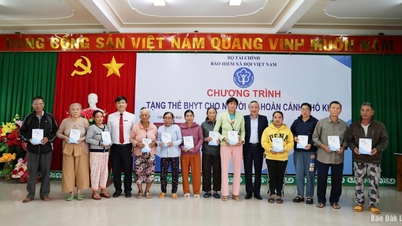
Another important value is that the Social Trust Index will become an effective tool for strengthening social oversight. When the index is publicly and transparently published, citizens can track changes in their localities over time; political and social organizations have a basis for making recommendations and providing feedback; and elected bodies have data to monitor policy implementation. Such oversight, based on objective data, will contribute to promoting integrity, reducing corruption, increasing accountability, and compelling public authorities to strive harder to serve the people.
Independence and objectivity are vital conditions for the survival of the Index.
For the Social Trust Index to be more than just a formal reference report and become an important resource for policy recommendations and administrative reform, it is crucial that this data is translated into concrete actions. Because when problems are identified but not addressed properly, social trust can decline even more sharply. This was also a point raised by many experts, scientists, and Front officials at the recent scientific workshop on consulting on the content and methods of implementing an independent assessment of the provincial-level Social Trust Index.
There is a consensus that the set of indicators must answer the big questions: What is the current level of public trust? What are the strengths and weaknesses of each locality? What factors promote or diminish trust? What solutions does the locality need to sustainably strengthen social trust? Instead of relying solely on internal reports from government agencies, the set of indicators should be people-centered, in line with the spirit of "The people know, the people discuss, the people do, the people inspect, the people supervise, and the people benefit."
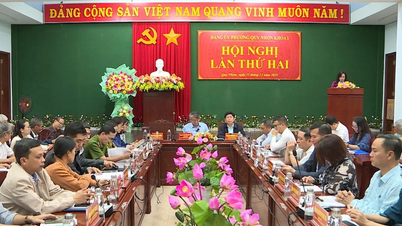
In particular, when developing the Social Trust Index, the Central Committee of the Vietnam Fatherland Front must absolutely ensure the principles of independence and objectivity. It is crucial to avoid situations where units being evaluated participate in the data collection or processing process. Only when the evaluation process is conducted independently, objectively, openly, and transparently will the results be reliable enough for the public and policy-making agencies to use. Furthermore, a strict identity security process must be established; survey data and statistical data must be combined, and measurement results must be linked to accountability, because the strength of an index lies not only in its ranking but also in the pressure for reform it creates. Therefore, a mechanism needs to be developed for all levels of government to organize dialogues, provide explanations, and develop specific remediation plans when the trust index in a particular area declines…
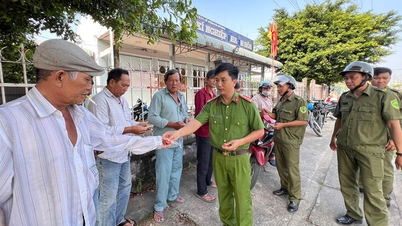
It can be said that social trust is largely formed from people's experiences in their daily interactions with public authorities, such as: whether administrative procedures are smooth, whether officials are dedicated and honest, whether the provision of public services is transparent, and whether the voices of the people are listened to and responded to seriously.
Therefore, building and operating a provincial-level social trust index helps measure the level of public trust while creating a mechanism to promote a more robust, transparent, and accountable political system; and simultaneously creating a foundation for social consensus and solidarity – a decisive factor for the sustainable development of the country. When the assessment results are used effectively, they become the basis for administrative procedure reform.
Source: https://baophapluat.vn/niem-tin-xa-hoi-nen-tang-kien-tao-mot-nen-quan-tri-liem-chinh.html

![[Photo] Two flights successfully landed and took off at Long Thanh Airport.](/_next/image?url=https%3A%2F%2Fvphoto.vietnam.vn%2Fthumb%2F1200x675%2Fvietnam%2Fresource%2FIMAGE%2F2025%2F12%2F15%2F1765808718882_ndo_br_img-8897-resize-5807-jpg.webp&w=3840&q=75)




























































































Comment (0)