

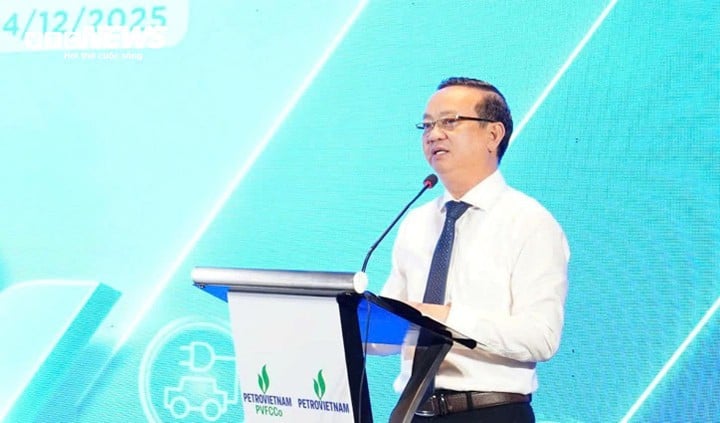
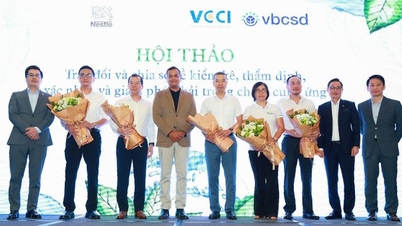
Speaking at the workshop "Reducing pollution from diesel vehicle emissions in the Southeast region" on December 4, Mr. Bui Minh Thanh, Vice Chairman of the Ho Chi Minh City People's Committee, affirmed that environmental pollution is a challenge for the Southeast economic region and Ho Chi Minh City.
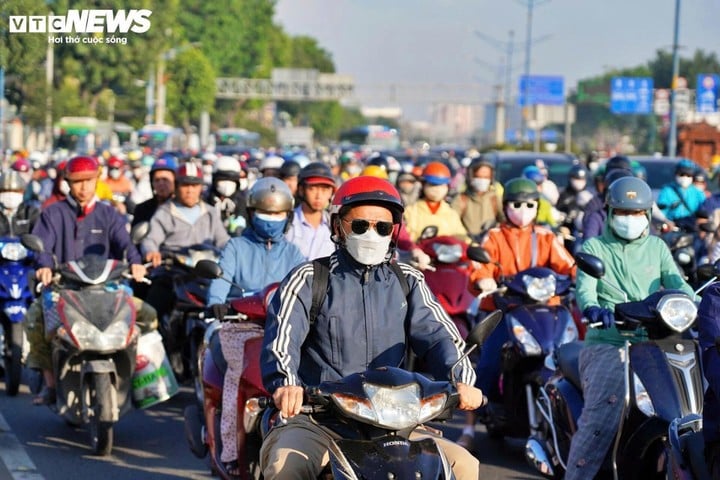
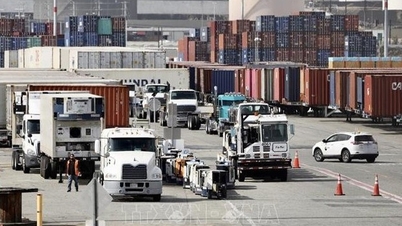
This economic locomotive has the highest density of freight, passenger, inter-provincial and waterway transport, resulting in great pressure on traffic emissions.
4 groups of pollution control solutions
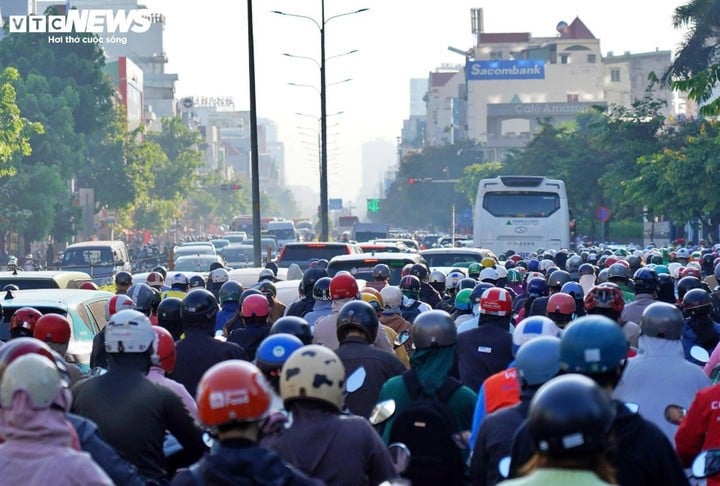
Ho Chi Minh City currently has 12.7 million cars and motorbikes of all kinds, of which 1.4 million are cars and 11.3 million are motorbikes. Scientific analysis shows that vehicles using gasoline and oil are the main source of emissions into the environment, affecting public health and the living environment.
In Ho Chi Minh City, scientific analysis shows that diesel-powered vehicles are one of the main sources of PM2.5, NOx and SOx emissions – agents that directly harm public health and urban environmental quality.
Mr. Bui Minh Thanh said the city has proposed four groups of solutions to speed up traffic pollution control. The first is to improve institutions and emission standards. Ho Chi Minh City is reviewing and updating standards, strengthening vehicle monitoring, and improving environmental discipline in transportation activities.
The second is to promote the application of clean technology and environmentally friendly fuels, encourage businesses to convert engines, equip exhaust gas treatment systems, apply clean fuels and emission reduction solutions that meet international standards.
Third is developing a green logistics ecosystem. Ho Chi Minh City is restructuring its transport infrastructure, prioritizing low-emission vehicles, optimizing routes and management technology.
Fourth is to mobilize social resources and regional cooperation, connect localities in the Southeast region to implement inter-regional emission control programs, and promote the public-private partnership (PPP) model in environmental technology investment.
Mr. Le Xuan Huyen, Deputy General Director of Vietnam National Energy Industry Group, said that this unit is making efforts to innovate technology and develop solutions to reduce NOx emissions from vehicles.
The company is expanding production and supplying products that contribute to supporting localities – first of all Ho Chi Minh City and the Southeast region – in controlling air pollution, improving people’s quality of life and ensuring sustainable growth.
What standards must cars use from March 1, 2026?
According to MSc. Bui Hoc Phi, Southern Environmental Protection Department, Department of Environment, regarding the current situation of diesel emissions in the Southeast, the factors causing high levels of urban air pollution are NOx and PM2.5.
Research data shows that the rate of old and outdated vehicles is still high, while emission control activities have not met expectations, creating a big challenge for environmental management.
On November 28, the Prime Minister issued Decision 43 stipulating the roadmap for applying national technical regulations on emissions from automobiles participating in road traffic, effective from March 1, 2026.
Accordingly, there are 5 emission levels specified in the National Technical Regulations for automobiles participating in road traffic, issued by the Ministry of Agriculture and Environment.
The roadmap for application is as follows: Cars manufactured before 1999 apply Level 1 (equivalent to Euro 1 standards), cars manufactured from 1999 to the end of 2016 apply Level 2 (equivalent to Euro 2 standards). Cars manufactured from 2017 to the end of 2021 apply Level 3 (equivalent to Euro 3 standards).
Cars manufactured from 2017 to the end of 2021 participating in traffic in Hanoi and Ho Chi Minh City will apply Level 4 (equivalent to Euro 4 standards) from January 1, 2027.
Cars manufactured from 2022 participating in traffic in Hanoi and Ho Chi Minh City will apply Level 5 from January 1, 2028.
From January 1, 2029, cars participating in traffic in Hanoi and Ho Chi Minh City must meet emission regulations from Level 2 or higher.
Cars manufactured from 2022 will apply Level 5 (equivalent to Euro 5 standard) from January 1, 2032.
Thus, from March 1, 2026, all cars manufactured from 2022 must apply Level 4 emission standards (equivalent to Euro 4 standards).
Mr. Phi also said that currently, vehicle inspection facilities and maintenance points are also starting to pay attention to these emission standards.
Analyzing the mechanism of diesel engine exhaust formation, especially NOx and fine particle emissions, Dr. Pham Huu Tuyen, Hanoi University of Science and Technology, said that exhaust from transportation vehicles, especially gasoline vehicles, contains many components that are toxic to health and the environment.
Dr. Tuyen said there are technical solutions to help reduce emissions from cars and motorbikes, including highly effective exhaust treatment solutions (up to over 90%).
For new vehicles, most apply exhaust treatment solutions combined with engine optimization to meet current emission standards. For older vehicles in circulation, if there is no exhaust treatment system, it can be equipped to reduce emissions.
Mr. Tran Vinh Loc, Deputy Director of PVFCCo Research and Application Center, said that one solution for exhaust gas treatment is DEF solution, which is capable of treating over 90% of NOx from diesel engines.
DEF consumption depends on many factors such as vehicle type, engine size, terrain, exhaust gas flow, applicable emission standards, etc. but is only used with recently manufactured vehicles.
Experts expect the market to have more effective solutions to support Ho Chi Minh City and the Southeast region to accelerate the process of reducing emissions from gasoline vehicles, meeting the new emission roadmap and improving air quality in a sustainable way, reducing vehicle conversion costs...
Source: https://baolangson.vn/o-nhiem-tu-xe-xang-dang-lo-ngai-tp-hcm-dua-4-nhom-giai-phap-kiem-soat-5067097.html

![[Photo] National Assembly Chairman Tran Thanh Man attends the VinFuture 2025 Award Ceremony](/_next/image?url=https%3A%2F%2Fvphoto.vietnam.vn%2Fthumb%2F1200x675%2Fvietnam%2Fresource%2FIMAGE%2F2025%2F12%2F05%2F1764951162416_2628509768338816493-6995-jpg.webp&w=3840&q=75)

![[Photo] 60th Anniversary of the Founding of the Vietnam Association of Photographic Artists](/_next/image?url=https%3A%2F%2Fvphoto.vietnam.vn%2Fthumb%2F1200x675%2Fvietnam%2Fresource%2FIMAGE%2F2025%2F12%2F05%2F1764935864512_a1-bnd-0841-9740-jpg.webp&w=3840&q=75)




































































Comment (0)