

The advantages of forests are reflected in their large area, large coverage, unique climate and rich ecosystem, suitable for many types of crops. From medicinal plants, fruit trees, short-term industrial crops to specialty crops, forests provide ideal natural conditions for implementing high-tech agriculture . When combined with modern technical solutions such as greenhouses, drip irrigation systems, environmental sensors and management software, farmers can monitor and adjust all growth factors of crops. As a result, productivity and product quality increase significantly, reducing the risk of crop loss due to weather or pests, while saving resources such as water, fertilizers and pesticides.
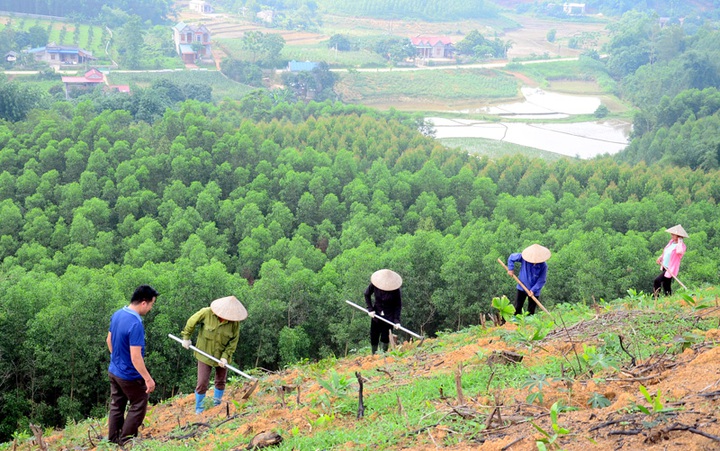
Promoting forest advantages to develop high-tech agriculture.
High technology also helps build a synchronous and efficient production chain. From seed selection, planting, care, harvesting to processing, preservation and consumption, every process can be monitored and optimized based on real data. This not only increases the added value of agricultural products but also helps products meet food safety standards, traceability and suitability for domestic and international markets. These models are creating the premise for modern agriculture, helping farmers proactively access the market, increase competitiveness and build clean product brands.
In addition to economic goals, developing high-tech agriculture associated with forests also helps preserve biodiversity and raise awareness of environmental protection. Forest areas combined with modern agriculture can become a highlight for eco-tourism and community tourism, where visitors experience the forest, visit high-tech tree planting models, enjoy clean products and learn about sustainable production processes. This is a harmonious combination of economic development, environmental education and tourism development.
However, exploiting forest advantages to develop high-tech agriculture is not without challenges.
Land use planning and demarcation of conservation forests and production forests must be strictly implemented to avoid deforestation and damage to the ecosystem. Applied technology must be suitable to actual conditions, from climate, land to farmers' management capacity. Human resource training and technology transfer are key factors for people to master technology, grasp the process from planting, caring to harvesting and processing. In addition, building a production - processing - consumption chain is also an important condition for the model to develop sustainably, avoiding fragmentation and small-scale.
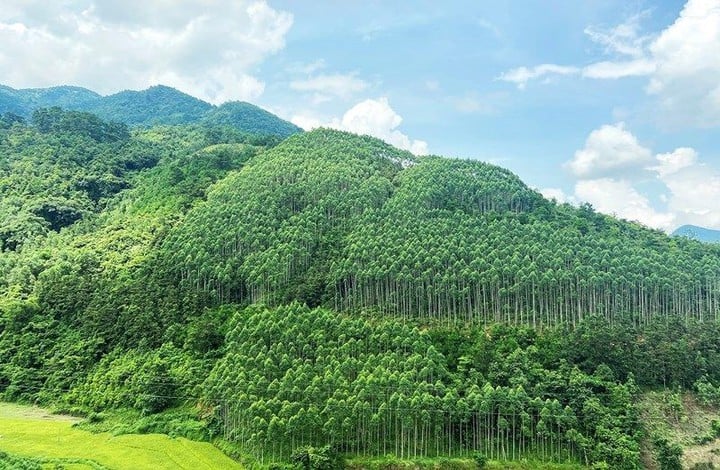
Mountainous areas, old forests, and production forests, if well managed and combined with high-tech agriculture, will create dual value: both increasing agricultural productivity and protecting the environment. Special agricultural and forestry products such as medicinal plants, highland fruits, or short-term industrial crops not only bring stable income but also create conditions for developing clean, high-quality agricultural product brands, expanding domestic and international markets.
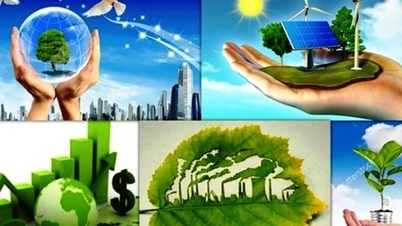
For sustainable development, localities need to develop long-term strategies, combining high-tech agricultural and forestry development, biodiversity conservation, forest environmental services development and ecotourism . The application of advanced technology, data management, quality control and the construction of a synchronous value chain will help forest agriculture not only be a livelihood but also a driving force for green economic growth.
Promoting forest advantages to develop high-tech agriculture is a strategic direction. When applied synchronously, scientifically and sustainably, this will be the key to opening up prospects for improving productivity and product quality, creating stable livelihoods for people, while contributing to environmental protection, developing green and modern agriculture, towards a sustainable future for mountainous and midland regions.
Source: https://mst.gov.vn/phat-huy-loi-the-rung-de-phat-trien-nong-nghiep-cong-nghe-cao-197251130213347775.htm

![[Photo] Cat Ba - Green island paradise](/_next/image?url=https%3A%2F%2Fvphoto.vietnam.vn%2Fthumb%2F1200x675%2Fvietnam%2Fresource%2FIMAGE%2F2025%2F12%2F04%2F1764821844074_ndo_br_1-dcbthienduongxanh638-jpg.webp&w=3840&q=75)





































![[VIMC 40 days of lightning speed] Da Nang Port: Unity - Lightning speed - Breakthrough to the finish line](https://vphoto.vietnam.vn/thumb/402x226/vietnam/resource/IMAGE/2025/12/04/1764833540882_cdn_4-12-25.jpeg)































Comment (0)