


With the special influence of Bollywood in the cultural life of India and many regions in the world , the above signal is expected to expand the spread of tourism if there is proactive improvement in the capacity to receive and effectively exploit cooperation.
Vietnam is becoming an attractive destination for Indian film producers. After the success of the project “Love in Vietnam” (Vietnamese name: “Thousands of miles of love”), the film “Silaa” and a number of projects continue to be deployed with many scenes filmed in Quang Tri, Ninh Binh, Cao Bang , Quang Ninh… Besides creating attraction thanks to aesthetic frames, projects such as “Love in Vietnam” also exploit the context in sync with local culture to help viewers feel Vietnam in a more complete living space.
Compared to many previous international projects, which only came to Vietnam to take pictures of the scenery, while domestic human resources stayed out of the production process, Indian projects have had the participation of Vietnamese actors, contributing to shaping the emotional rhythm and content of the film; the film crew also agreed to produce a clip promoting Vietnamese tourism to be shown in advance at all screenings at 1,000 theaters in India.
Quang Tri is currently becoming the center of attention when the film crew of “Silaa” chose Son Doong, En Cave and the Tu Lan Cave system, Phong Nha Cave as the main setting. Unlike the time when the film “Kong: Skull Island” chose the setting in Ninh Binh and had some items but did not have time to take advantage of the promotional effect, this time Quang Tri closely coordinated with the Ministry of Culture, Sports and Tourism; Phong Nha Ke Bang National Park Management Board and private enterprises to welcome the film crew in a more professional way, making the most of the opportunity.
Recently, at the International Conference “Ninh Binh - a strategic destination for tourism, cinema and high-end weddings”, many Bollywood directors and producers commented that many localities in our country have all the elements to become major film studios in the region. Deputy Minister of Culture, Sports and Tourism Ho An Phong also highly appreciated the potential and affirmed that the selection of some localities as backdrops by film powers will contribute to increasing the number of international visitors, especially from the Indian market.
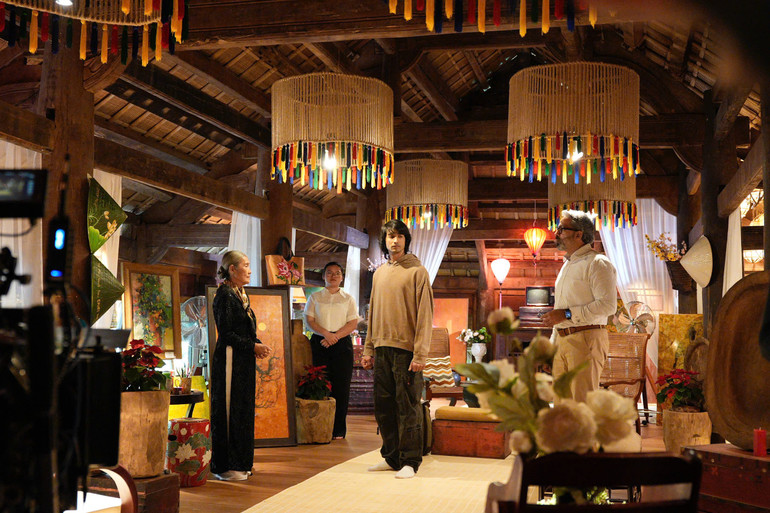
Many provinces and cities are actively preparing film studio infrastructure, tourism spaces, and support services to welcome the wave of film production. This is also a long-term strategy to link cinema with sustainable tourism development. Deputy Minister Ho An Phong emphasized: "When Vietnamese scenes appear through the sophisticated perspective of Bollywood cinema, it is the fastest, most effective, and most sustainable way to promote."
According to Indian film experts, Bollywood produces about 1,500 films each year and has a large audience in South Asia, the Middle East, Africa and parts of Europe. Therefore, each film shot in Vietnam can be considered a large-scale media campaign that would be extremely expensive if purchased with a traditional advertising budget.
With its unique natural landscapes ranging from caves, forests, mountains, rivers to cultural and historical heritages, Vietnam possesses a rare advantage to become a natural film studio in the region. Competitive production costs, increasingly professional local teams and active support from local authorities also help score points in the eyes of international producers.
Along with the opportunities, there are still significant challenges that require Vietnam to make systematic, long-term preparations. Specifically, the incentive mechanism for international film crews is not really competitive compared to many countries in the region; licensing procedures in some locations still take time; studio infrastructure, film production and post-production services are still lacking in synchronization. Some scenes are located in conservation or heritage areas with limited carrying capacity, requiring strict monitoring processes to avoid negative impacts on the environment.
To maximize the opportunities from foreign film projects and overcome current limitations, it is necessary to synchronously deploy many solutions. First of all, the culture and tourism sectors need to coordinate to build competitive incentive policies, including studying tax refund mechanisms or supporting film crew costs similar to Thailand and Korea to create real attraction.
Director of Vietnam National Administration of Tourism Nguyen Trung Khanh
After each film project, the exploitation of the “movie trail” effect to develop tourism has not been commensurate with its potential, leading to intermittent communication effectiveness. These challenges need to be seen as a driving force for the tourism and film industries to coordinate more closely, from perfecting policies to developing products, in order to turn Vietnam into an attractive and sustainable destination for international film crews and create momentum for new steps of tourism development in the coming time.
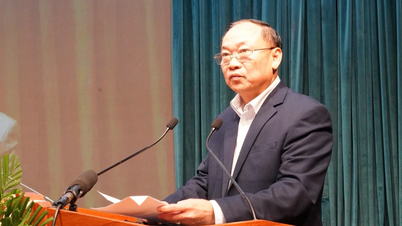
Director of the Vietnam National Administration of Tourism Nguyen Trung Khanh commented: “To maximize the opportunities from foreign film projects and overcome current limitations, it is necessary to synchronously implement many solutions. First of all, the culture and tourism sectors need to coordinate to build competitive incentive policies, including studying tax refund mechanisms or supporting film crew costs similar to Thailand and Korea to create real attraction.
Along with that, procedures for licensing filming, using technical equipment, accessing heritage and conservation areas need to be simplified, transparent and unified among localities, helping to shorten preparation time and create peace of mind for international producers. Vietnam needs to develop infrastructure to serve the film industry, including modern studios, post-production centers, international standard equipment warehouses and professional and safe technical and production teams...
Experts emphasize that in the tourism sector, localities with selected contexts need to proactively design “movie-based” tourism products, develop thematic tours, check-in points, behind-the-scenes exhibitions and performances associated with the film to prolong the media effect. Promotional campaigns also need to be implemented synchronously, taking advantage of the actors, directors and film crew as image ambassadors, while promoting digital communication in key markets such as India, the US and South Korea.
Another important solution is to focus on environmental and heritage protection, especially in sensitive areas such as caves, forests, mountains or world heritage sites. Criteria for film crew management, on-site supervision, waste treatment, and filming safety need to be strictly applied to ensure sustainability and preserve the original landscape.
It is necessary to establish an inter-sectoral coordination mechanism between the Ministry of Culture, Sports and Tourism, localities, tourism and film enterprises and international partners to build a long-term vision. When cinema and tourism are strategically linked, Vietnam will not only become an attractive destination for international filmmakers but also create a strong driving force to promote the country's image, making a practical contribution to economic growth and spreading cultural values.
Source: https://nhandan.vn/quang-ba-viet-nam-qua-dien-anh-an-do-post928126.html
![[Photo] Cat Ba - Green island paradise](/_next/image?url=https%3A%2F%2Fvphoto.vietnam.vn%2Fthumb%2F1200x675%2Fvietnam%2Fresource%2FIMAGE%2F2025%2F12%2F04%2F1764821844074_ndo_br_1-dcbthienduongxanh638-jpg.webp&w=3840&q=75)















![[Video] Vietnam pioneers in building a legal framework for artificial intelligence](https://vphoto.vietnam.vn/thumb/402x226/vietnam/resource/IMAGE/2025/12/05/1764896569407_1764674648895-jpg.webp)





















































Comment (0)