

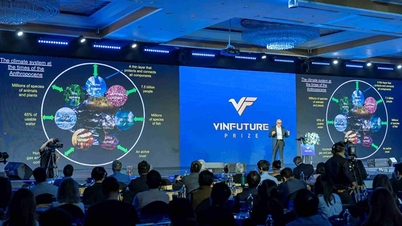
Professor Tan Yap Peng - President of VinUni University shared on the sidelines of VinFuture 2025 Science and Technology Week with reporters about the future of the AI industry in Vietnam and the strategy that VinUni is training.
AI and robotics are VinUni's key development strategies.
Reporter: Your research areas include machine learning, AI, computer vision... As the principal of VinUni, what is the new direction in research and even teaching that you will lead VinUni in the coming years?
Professor Tan Yap Peng: VinUni has a number of strategic areas that we will focus on developing. AI and robotics are two of them. Besides AI, we will also promote research in areas such as green technology, health sciences, digital transformation, biomedical engineering and cultural heritage. These are areas where we believe Vietnam has a “unique environment” to conduct research that will benefit the country and the world .
AI will certainly continue to change the country and society. Therefore, at VinUni, AI is an area where we will continue to enhance students' capacity - from knowledge, skills to the ability to apply AI in learning and research.
In addition, as mentioned, Vingroup 's ecosystem offers many opportunities for lecturers and students to solve practical research problems together. Units such as VinFast, VinMotion, VinRobotics... are all companies that are very active in research and production, creating an industrial environment for VinUni teachers and students to cooperate, thereby forming solutions closely related to the practical needs of society.

Professor Tan Yap Peng shared at the Seminar on "Robots and Intelligent Automation".
Reporter: VinUni aims to join the group of elite world-class universities. In your role as the president of VinUni University, can you share what pillars will determine the university's ability to make a breakthrough in the next decade?
Professor Tan Yap Peng: VinUni's development will be based on three core pillars.
First, the school continues to attract outstanding students and faculty who share its mission of addressing societal problems and challenges. This is the most important foundation.
Second, VinUni will expand international cooperation. Through collaboration with prestigious universities and research institutes around the world, the school can work with them to solve difficult and specific problems of Vietnam.
Third, VinUni prioritizes promoting interdisciplinary research, revolving around three major axes - the 3 Ps: People, Planet and Prosperity. By working together on these problem sets, the school can exploit the "living laboratory" and unique data sets that Vingroup owns - resources that help VinUni solve problems that many other places find difficult to do.
These will be the three strategic pillars that VinUni will focus on in the next 5-10 years.
Reporter: What the Professor shared shows that VinUni's educational philosophy and direction are different from other universities in the region. Could the Professor share more about VinUni's current university governance philosophy?
Professor Tan Yap Peng: VinUni’s leadership believes that excellence must come with accountability. Over the next five years, Vingroup has committed to funding more than $350 million (VND9,300 billion) for the university. With this funding, the VinUni Council is given full autonomy in its use. Deans and directors of research centers are also responsible for using the funding effectively and for the right purposes for research, teaching and academics.
VinUni operates under a governance model based on solid internal systems. The school also sets clear goals, which are benchmarked against international standards and periodically evaluated.
Thanks to this transparency and clear policy system, VinUni professors have the best conditions to develop their capacity in both research and teaching.
Reporter: In the context of technology and AI being increasingly developed as it is today, according to the Professor, what do we need to do to connect VinUni and other universities more effectively in teaching and research?
Professor Tan Yap Peng: I believe that any cooperation must be based on mutual benefits and substantial contributions from both sides. Therefore, for VinUni to continue to cooperate with international partners, we must also bring the values that partners need.
I believe that VinUni and Vietnam have a pool of top talent, excellent students and challenging problems that are not only unique to Vietnam but also attract the attention of many other countries. We have the data, the leading edge, the resources and the people to work with our partners to solve those problems. These are the factors that international professors and researchers appreciate because they help them advance their research.
However, we ourselves must be careful in determining what we really need. As I said, cooperation must be mutually beneficial. Therefore, VinUni needs to clearly understand the mission of each partner university: do they want to become an elite university, a research-oriented university or a teaching-oriented institution? Only when we clearly understand that mission can we choose the most suitable partners.
With such a win-win cooperation approach, I believe that VinUni can move faster and achieve better results in international cooperation.
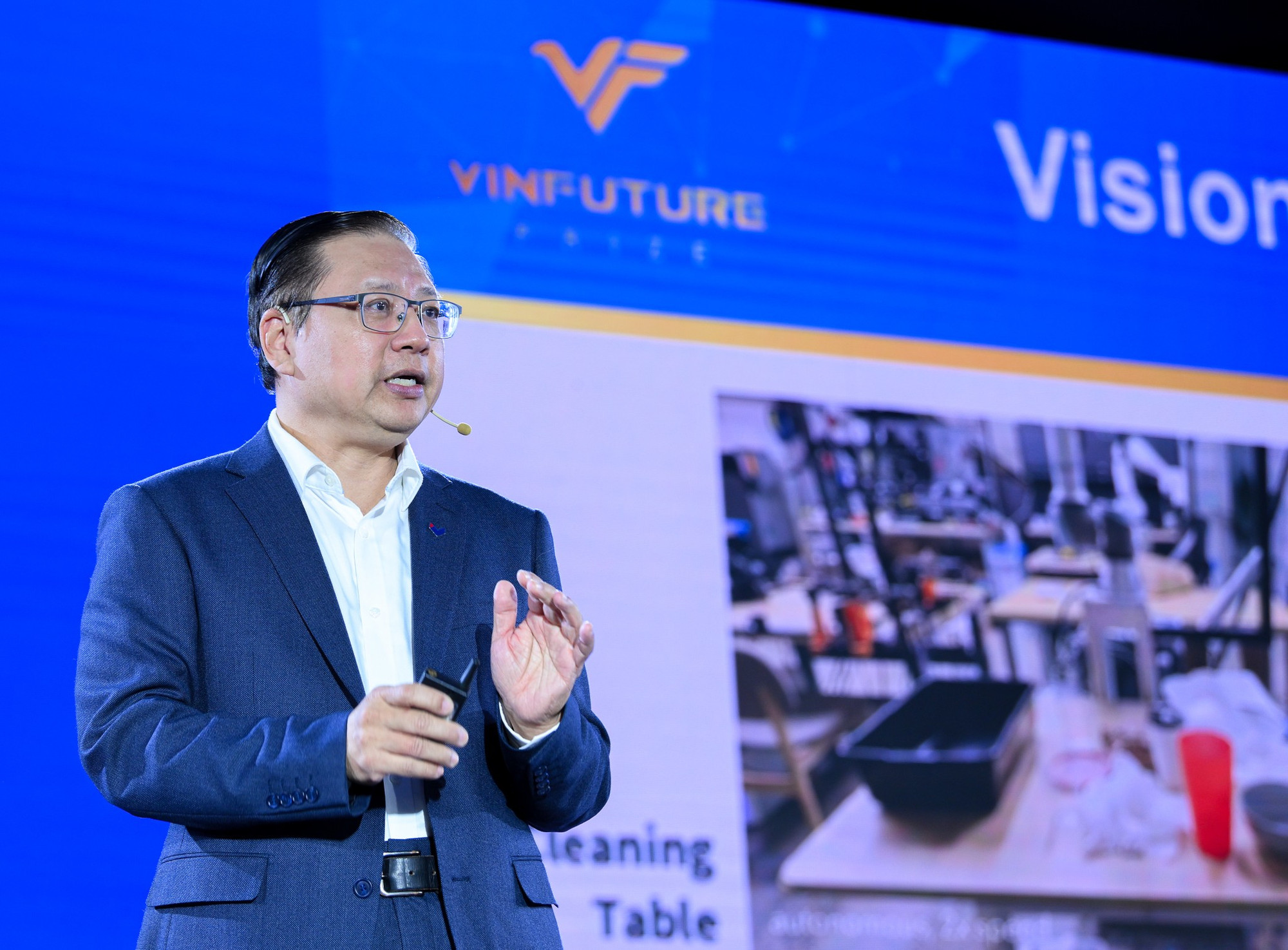
"I have high expectations that Vietnamese scientists will lead many fields in the near future."
Reporter: At the VinFuture Science and Technology Week 2025, we can see many presentations from Vietnamese professors and researchers. How do you evaluate the quality of the presentations as well as the quality of their research works and projects?
Professor Tan Yap Peng: I was really impressed with the quality and presentation of Vietnamese scientists participating in VinFuture Week 2025. This shows that Vietnamese researchers are now on par with international researchers. The problems they are solving are not only national, but also international challenges.
Therefore, with the progress and efforts that the country and universities have invested, I have high expectations that Vietnamese scientists will lead many fields in the very near future.
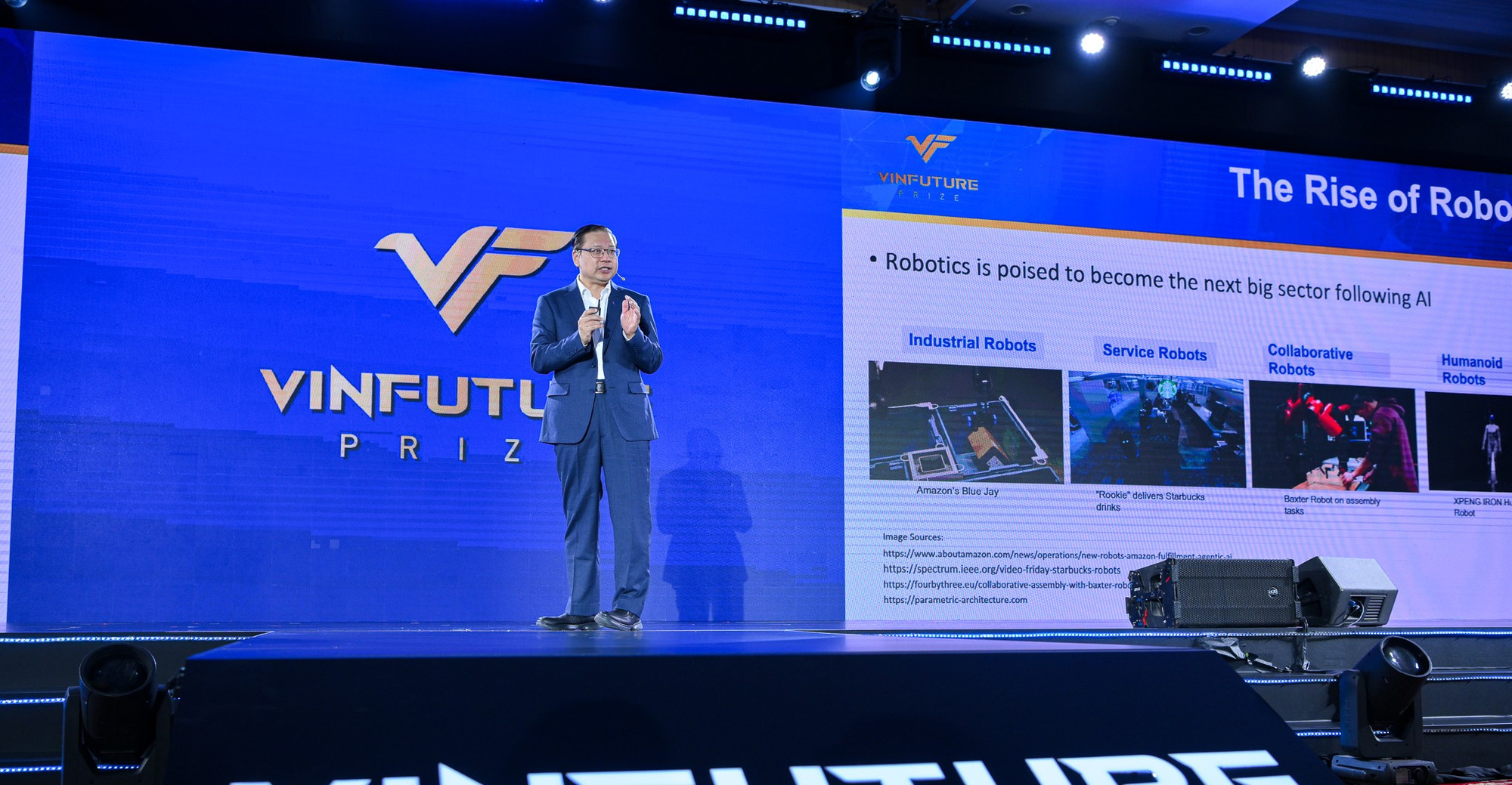
Reporter: The recent discussion revolved around robots and automation - and as you know, in Vietnam there are a number of companies and organizations conducting research and development of humanoid robots, typically VinMotion. However, compared to the United States or China, we are still behind. So, in your opinion, what recommendations does Vietnam need and what strong efforts or steps should be taken to close the gap with other countries in the field of AI and robots?
Professor Tan Yap Peng: I think AI has changed many fields and opened up possibilities for a range of future technologies, including robotics. While other countries may have invested in this field very early, AI is now open – a lot of technology and knowledge has become accessible and available for Vietnam to research.
I think that being “late” is an advantage for Vietnam. We do not have to depend on old systems and models that have become rigid in other countries. Of course, no country can solve all problems. But according to forecasts, by 2030, nearly 50% of the robot market will be in Asia. If you look at China or Japan, they are making a lot of progress.
Therefore, Vietnam needs to choose areas where we can create different values and are truly important to the country. There are many opportunities, because robotics is still a fast-growing industry, and no country can claim to have solved all the problems.
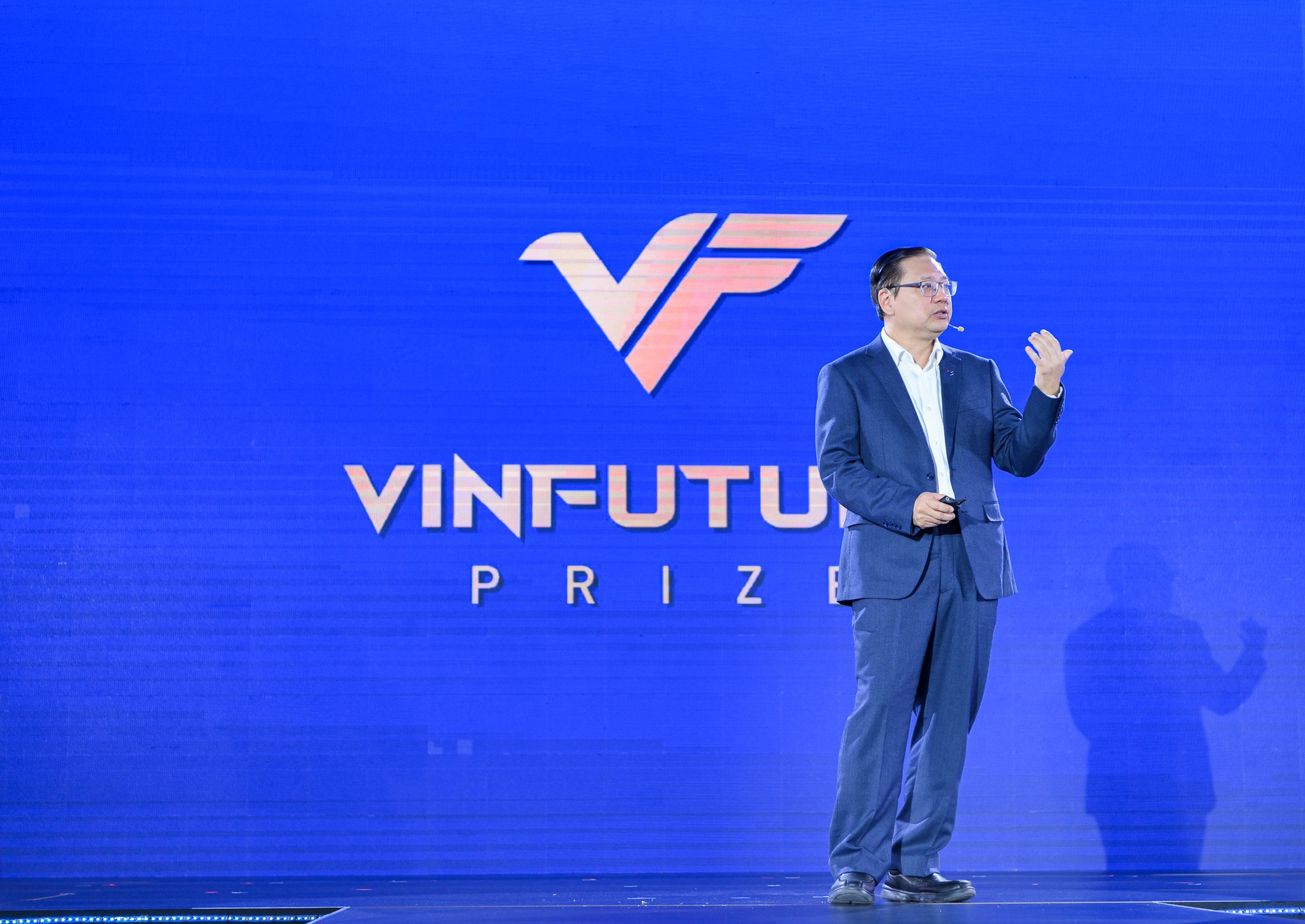
Like humanoid robots, for example - although some robots today look very similar to humans, that is only the "hardware" part. As for software, AI algorithms, robot applications in production, healthcare, education, green transformation... there are still countless gaps for Vietnam to develop specialized robots, solving problems specific to Vietnam.
I see a lot of potential. VinMotion, the robotics researchers here, are at the world level with continuous publications at prestigious conferences and journals. The important thing is that we need to choose the right focus areas where Vietnam can make its mark. Then the opportunity to break through and make a difference is completely fair and feasible.
Reporter: What will the professor do to train a group of excellent human resources for AI research at the school?
Professor Tan Yap Peng: At VinUni, we have courses that equip students with basic knowledge and skills in AI, and this is just the beginning. AI is changing education very quickly. VinUni has the advantage of being a young university, able to adapt and develop its curriculum, as well as its approach and teaching methods for students.
We have the advantage of being a “latecomer”. Old, rigid programs with fixed timetables, teaching methods and implementation methods are unlikely to be effective. Meanwhile, flexible, competency-based methods allow VinUni to adjust time, space, assessment and teaching methods, thereby bringing better results.
I believe that at VinUni, as well as at many other universities in Vietnam, updating the curriculum to integrate AI really opens up a lot of opportunities. In fact, today's young generation is often more tech-savvy than the previous generation, so being a young, dynamic school gives VinUni a big advantage in adopting new technology. We just need to ensure that in the classroom, the curriculum and the entire education system, there are conditions for students to be encouraged to use new technology, while still having reasonable regulations to control and guide.
I believe that Vietnam, with its resources and interest, will find areas where we can make effective contributions. These could be electric vehicle automation, AI control, manufacturing environment, robotics, and many other areas.
However, many technologies only become truly successful when they are put into practice. Think of the next generation AI (Gene AI). Why is AI so popular today? Because people find ChatGPT useful, not because they can't use it.
I believe that when we develop robots or AI technologies that truly meet the needs and preferences of users, these technologies will become a driving force in themselves and create real demand. This is how we can build the capacity for research, technology development and talent training in these areas.
Vingroup units, such as VinMotion or VinFast, are doing just that - trying to identify key challenges for Vietnam to focus on researching and developing suitable solutions.
If you think about it, even for international partners, many of them are attracted to Vietnam because of these unique challenges. They all want to solve difficult problems that cannot be found elsewhere. With the resources and ecosystem that we have in Vietnam, I believe that working with them will help us train a generation of AI researchers in Vietnam, capable of competing internationally.
Thank you Professor Tan Yap Peng!
Prior to joining VinUni, Professor Tan spent more than two decades at Nanyang Technological University (NTU), Singapore, where he held key leadership roles such as Head of the School of Information Engineering, Vice-Dean (Academics), and Head of the Department of Electrical and Electronic Engineering. He was subsequently appointed Vice-Dean and Acting Dean of the School of Engineering, as well as Vice-President (Lifelong Learning - Postgraduate Programmes).
His research interests include image-video processing, computer vision, pattern recognition, machine learning, artificial intelligence, and data analytics. He is also a member of the Institute of Electrical and Electronics Engineers (IEEE).
THAO LE-THIEN LAM

![[Photo] National Assembly Chairman Tran Thanh Man attends the VinFuture 2025 Award Ceremony](/_next/image?url=https%3A%2F%2Fvphoto.vietnam.vn%2Fthumb%2F1200x675%2Fvietnam%2Fresource%2FIMAGE%2F2025%2F12%2F05%2F1764951162416_2628509768338816493-6995-jpg.webp&w=3840&q=75)



![[Photo] 60th Anniversary of the Founding of the Vietnam Association of Photographic Artists](/_next/image?url=https%3A%2F%2Fvphoto.vietnam.vn%2Fthumb%2F1200x675%2Fvietnam%2Fresource%2FIMAGE%2F2025%2F12%2F05%2F1764935864512_a1-bnd-0841-9740-jpg.webp&w=3840&q=75)





















![[Video] Law on Digital Transformation: Perfecting institutions, creating a digital national platform](https://vphoto.vietnam.vn/thumb/402x226/vietnam/resource/IMAGE/2025/12/06/1764982971590_avatar-of-video-1031222-png.webp)




























































Comment (0)