

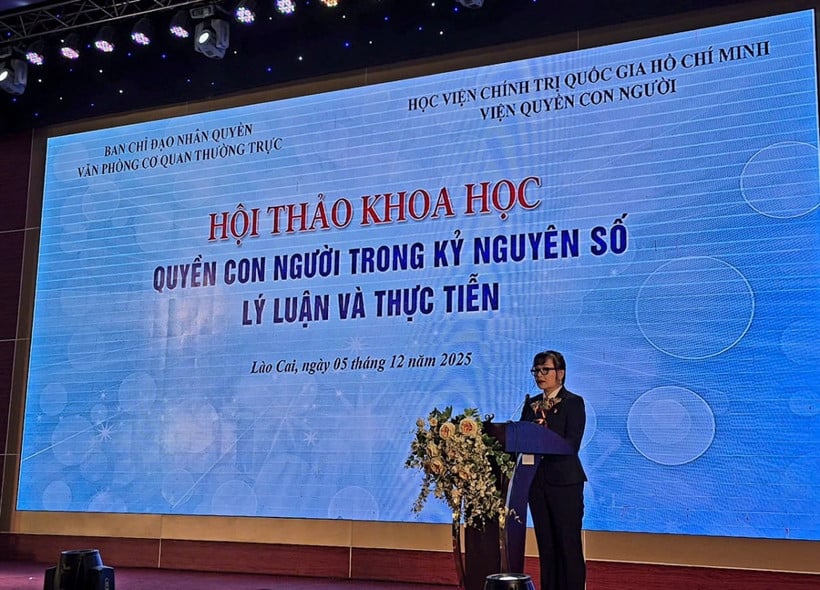
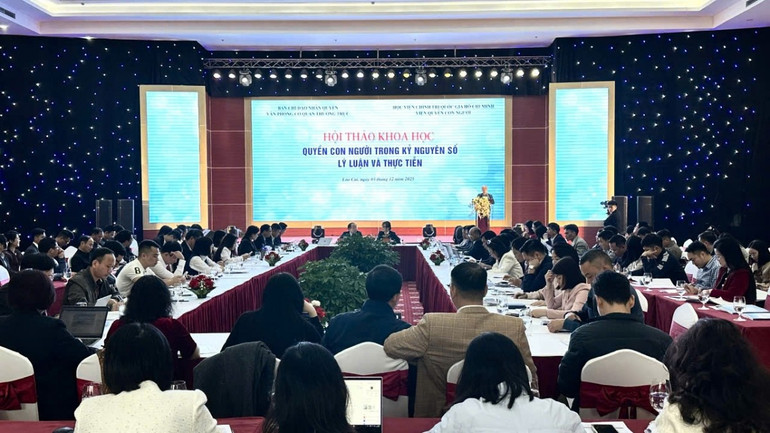
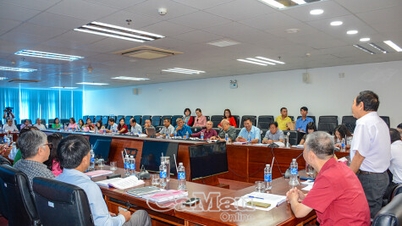
With the participation of more than 200 delegates including scientists , legal experts, leaders of state agencies, representatives of ministries and social organizations, the workshop not only affirmed Vietnam's commitment to protecting human rights but also proposed specific and strategic solutions to balance technological development and respect for basic human rights values.
In her opening speech, Colonel Nguyen Thi Thanh Huong, Head of the Human Rights Section, Office of the Standing Body of the National Steering Committee on Human Rights, emphasized: “Improving the mechanism for protecting human rights in the digital environment is one of Vietnam’s top priorities in the new period”. This is in line with one of Vietnam’s eight priorities during its term as a member of the United Nations Human Rights Council (2026-2028), focusing on ensuring human rights in the context of climate change and digital transformation.
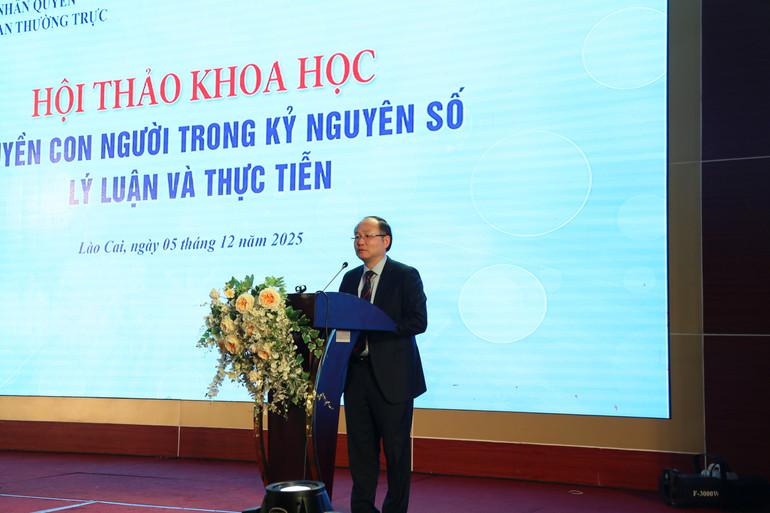
The introductory report, presented by Associate Professor Dr. Tuong Duy Kien, Director of the Institute of Human Rights, provided a comprehensive view of basic theoretical issues, while emphasizing the need for new and innovative approaches to deal with challenges from digital technology .
After the opening session, the Workshop was divided into four main working sessions, focusing on theoretical, legal, practical aspects and current issues. The presentations and discussions did not only stop at analyzing risks but also proposed specific solutions, contributing to perfecting the national and regional legal framework. With an internet access rate of 78.8% and more than 76.2 million social network users in Vietnam, this event became even more urgent, affirming the country's proactive position in international integration on human rights.
The current context of digital transformation in Vietnam is a comprehensive process of bringing digital technology into all areas of life - from state administration, economy, education, healthcare to public services - to create a new operating structure based on data, connectivity and automation. This has created many opportunities and at the same time many new challenges for the realization of human rights.
Dr. Tran Thi Hong Hanh, Institute of Human Rights
In their presentations at the workshop, many experts warned that the trend of abusing recognition technology, smart surveillance devices, and large-scale data collection and analysis could lead to violations of basic rights if there is a lack of appropriate legal and monitoring mechanisms. Associate Professor Dr. Tran Quang Dieu, Director of the Information Technology Center, Ho Chi Minh National Academy of Politics, analyzed that although facial recognition and behavior analysis using artificial intelligence help enhance security, support management and public services, if not strictly controlled, it could affect privacy, undermine social trust and create risks that people cannot fully anticipate.
Many arguments at the workshop agreed that protecting personal data is protecting human rights in the digital environment - a viewpoint that has been strongly emphasized by management agencies in recent forums. This requires the issuance of sufficiently strict and transparent legal standards, along with a process of assessing human rights impacts in technology projects, smart cities, shared data systems or population databases.
In addition, cyber security continues to be considered a major challenge. A delegate from the Department of Cyber Security and High-Tech Crime Prevention (Ministry of Public Security) said that the number of cyber attacks, data theft, identity fraud, and online fraud is increasing rapidly, directly affecting property rights, privacy rights, and personal safety rights. Balancing national security and protecting personal freedom and freedom of expression is always a difficult problem. If management is too tight, there is a risk of restricting citizens' legitimate rights; but if loosened, cyberspace can become a place where bad groups can take advantage to spread false information, incite, cause disorder, and threaten social security. Therefore, the workshop emphasized the need to develop a "twin rhythm" policy: Strengthening cyber security while ensuring human rights standards, transparency, accountability, and avoiding extreme measures that are inconsistent with international law.
One issue that many scholars mentioned is the right to freedom of expression and access to information in the digital environment. Technology opens up the possibility of wide access to knowledge, but also facilitates the spread of fake news, distortions, and incitement of hatred - factors that can directly violate the human rights of others. Therefore, building a healthy information environment is a dual responsibility: the State establishes a transparent legal corridor; digital platforms increase censorship responsibility; and people raise awareness and ethics in using information. The workshop agreed that a safe digital society is not an over-controlled society, but a society in which rights and responsibilities are maintained in balance, and all subjects clearly understand their limits.
From the theoretical and practical analysis at the workshop, many recommendations can be drawn: First , it is necessary to continue to improve the legal framework on personal data protection, ensuring the principles of transparency, limiting purposes and accountability. Second , it is necessary to create a mechanism for assessing human rights impacts in large technology projects, especially large-scale data collection projects. Third , continue to strengthen the cybersecurity ecosystem, focusing on human resource training, enhancing international cooperation and strongly implementing communication campaigns to raise public awareness. Fourth , closely combine the protection of human rights and the protection of national interests, ensuring that fundamental rights are respected not only on paper but also in real life.
The scientific conference “Human Rights in the Digital Age - Theory and Practice” is not only a scientific forum but also a place to clearly affirm Vietnam's viewpoint: Protecting human rights in the digital age is an inevitable trend, a commitment to sustainable development and also a measure of national governance capacity. When technology changes faster than ever, putting people - with their dignity, rights and freedoms - at the center will determine the success of the digital transformation process. This is a direction in line with the Party and State's policies, and at the same time meets the international community's expectations of a developed, civilized Vietnam that respects human rights in all circumstances.
Source: https://nhandan.vn/bao-dam-quyen-con-nguoi-trong-ky-nguyen-so-post928382.html



![[Photo] National Assembly Chairman Tran Thanh Man attends the VinFuture 2025 Award Ceremony](/_next/image?url=https%3A%2F%2Fvphoto.vietnam.vn%2Fthumb%2F1200x675%2Fvietnam%2Fresource%2FIMAGE%2F2025%2F12%2F05%2F1764951162416_2628509768338816493-6995-jpg.webp&w=3840&q=75)
![[Photo] 60th Anniversary of the Founding of the Vietnam Association of Photographic Artists](/_next/image?url=https%3A%2F%2Fvphoto.vietnam.vn%2Fthumb%2F1200x675%2Fvietnam%2Fresource%2FIMAGE%2F2025%2F12%2F05%2F1764935864512_a1-bnd-0841-9740-jpg.webp&w=3840&q=75)


















































































Comment (0)