

Accordingly, the amended Press Law regulates the types of media in the new context; supplements policies for media development and ensures the resources for implementation, from financial mechanisms to infrastructure investment and tax incentives, in a more feasible manner.
The law also clarifies the conditions for journalistic operation, licensing mechanisms, and organizational structure; and identifies key multimedia news agencies, representative offices, and resident correspondents.
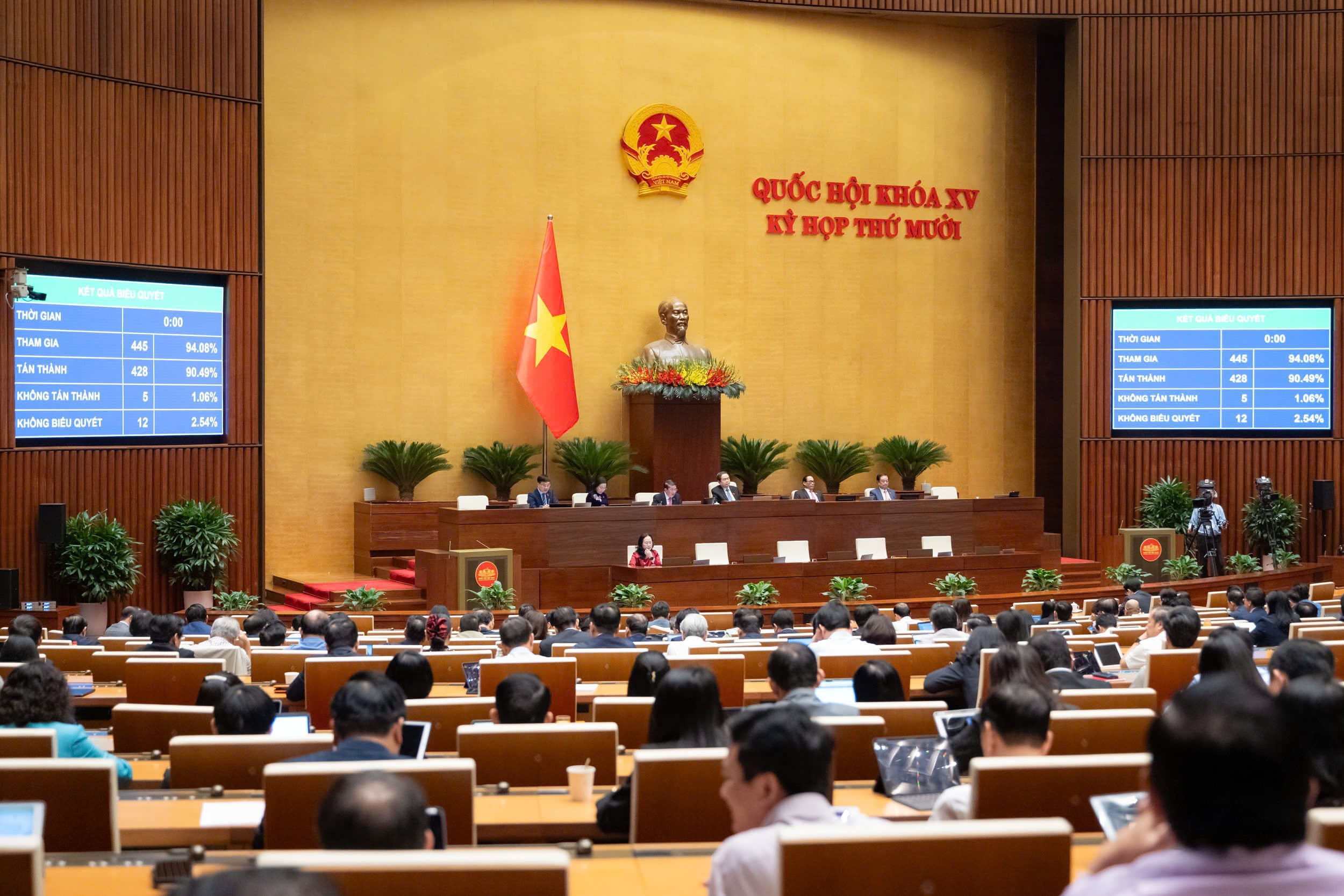
Regulations concerning leading multimedia news agencies
Regarding press agencies, the law stipulates that leading multimedia press agencies have various types of media and affiliated press agencies; have a specific financial mechanism; and are established in accordance with the strategy for developing and managing the press system approved by the Prime Minister .
Newspaper and radio/television agencies under provincial and city Party committees have many types of media and journalistic products.
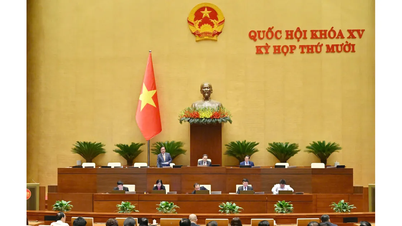
Earlier, presenting the report on the acceptance and explanation of feedback, the Chairman of the Committee on Culture and Society, Nguyen Dac Vinh, stated that, in response to the opinions of the delegates, the Standing Committee of the National Assembly had directed the revision of the phrase "leading multi-media communication agency" to "leading multi-media press agency".
Regarding some suggestions to pilot a model of a multi-media media conglomerate or corporation in Hanoi and Ho Chi Minh City, the Government has directed the Ministry of Culture, Sports and Tourism to summarize the planning for the development and management of the press, and is expected to propose to the competent authorities to continue implementing some of the planning's viewpoints and add new viewpoints.
This includes content about Hanoi and Ho Chi Minh City establishing their own major multimedia news agencies.
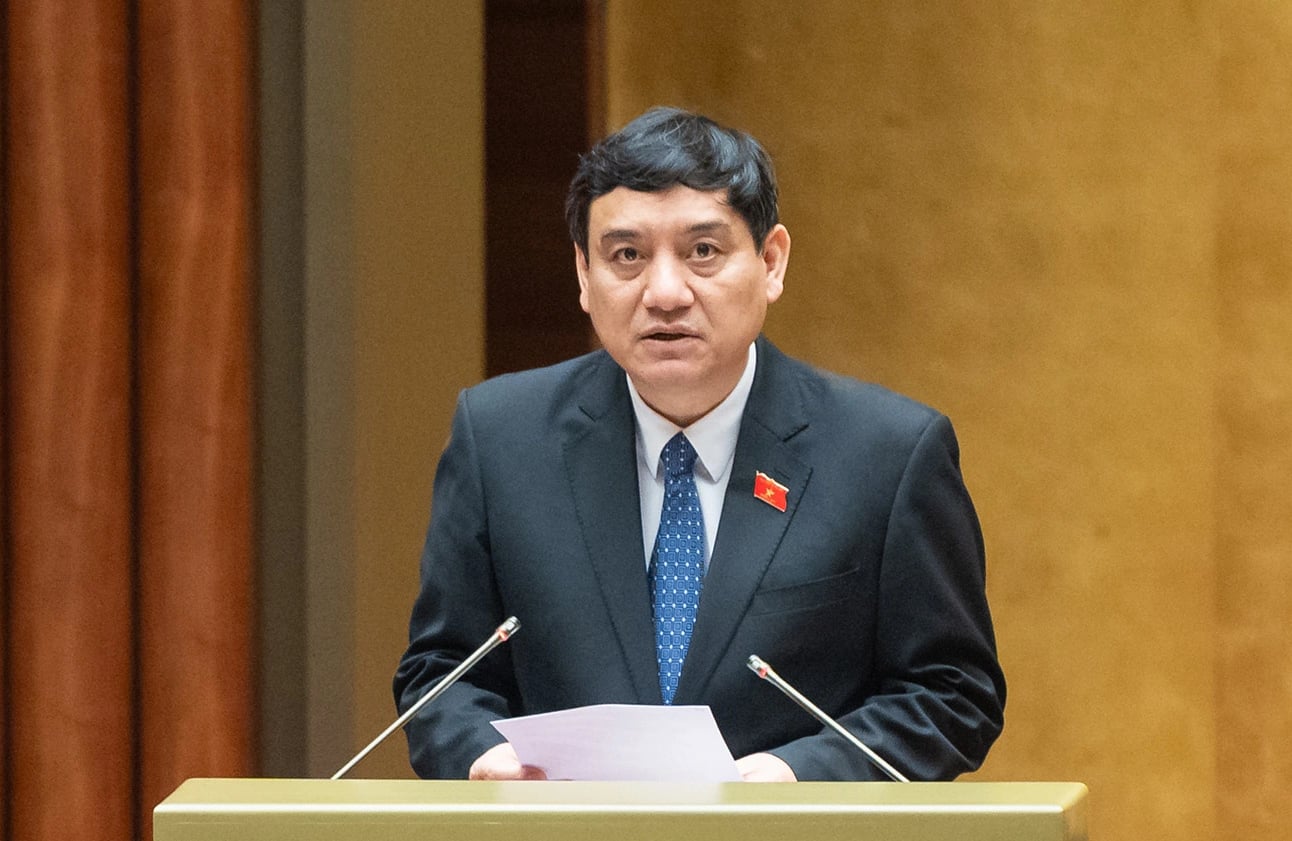
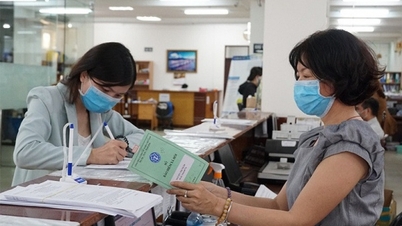
Journalists must attend a professional ethics course before being issued their first press card.
According to the new law, in the case of issuing a journalist's card for the first time, the applicant must have worked continuously at the requesting media agency for at least two years up to the time of application and have completed a training course on journalism skills and professional ethics.
However, this condition does not apply to leaders of media agencies who have already received written approval from the Ministry of Culture, Sports and Tourism for appointment.
During the law-making process, there were suggestions to exempt individuals with a bachelor's degree in journalism or higher from attending the journalism training course when they are first issued a press card.
The Standing Committee of the National Assembly stated that currently, a segment of reporters and journalists are seriously violating professional ethics, affecting the reputation of journalism, and causing public outrage. This stems from lax management and the moral and lifestyle degradation of some journalists.
To standardize the profession, protect reputation, and provide a solid foundation for young journalists, the draft law stipulates that those granted a journalist's card for the first time, regardless of whether they majored in journalism or not, must participate in a professional training course on professional skills and ethics.
The new law also stipulates that press agencies and journalists have the right and obligation not to disclose the source of information, except in cases where there is a written request from the Chief Prosecutor of the People's Procuracy, the Chief Justice of the People's Court at the provincial level and equivalent or higher, the head of the investigative agency of the Ministry of Public Security, or the head of the investigative agency of the provincial police, for the purpose of investigating, prosecuting, and adjudicating crimes.
Journalist cards will not be issued to individuals working at scientific journals.
Regarding who is eligible to be issued a journalist's card, the new law excludes those working at scientific journals.
Regarding this issue, some have suggested that the possibility of issuing press cards to those working at scientific journals should not be ruled out, as this would create inequality and negatively impact their ability to work.
The Standing Committee of the National Assembly stated that those working at scientific journals only perform editing and peer review of scientific articles and do not participate in journalistic activities; therefore, they do not need to be issued press cards.
The draft law also clearly defines that scientific journals operate on a scientific basis, not journalistic principles.
Currently, there are approximately 5,200 science and technology organizations authorized to establish scientific journals, each with an editorial board composed of scientists, but they are not permitted to engage in journalistic activities.
Therefore, the Standing Committee of the National Assembly believes that the refusal to issue press cards does not affect the professional activities of this magazine.
Source: https://ttbc-hcm.gov.vn/quoc-hoi-thong-qua-luat-bao-chi-sua-doi-quy-dinh-moi-ve-co-quan-bao-chi-chu-luc-1020178.html


















![[Video] The craft of making Dong Ho folk paintings has been inscribed by UNESCO on the List of Crafts in Need of Urgent Safeguarding.](https://vphoto.vietnam.vn/thumb/402x226/vietnam/resource/IMAGE/2025/12/10/1765350246533_tranh-dong-ho-734-jpg.webp)






















































Comment (0)