

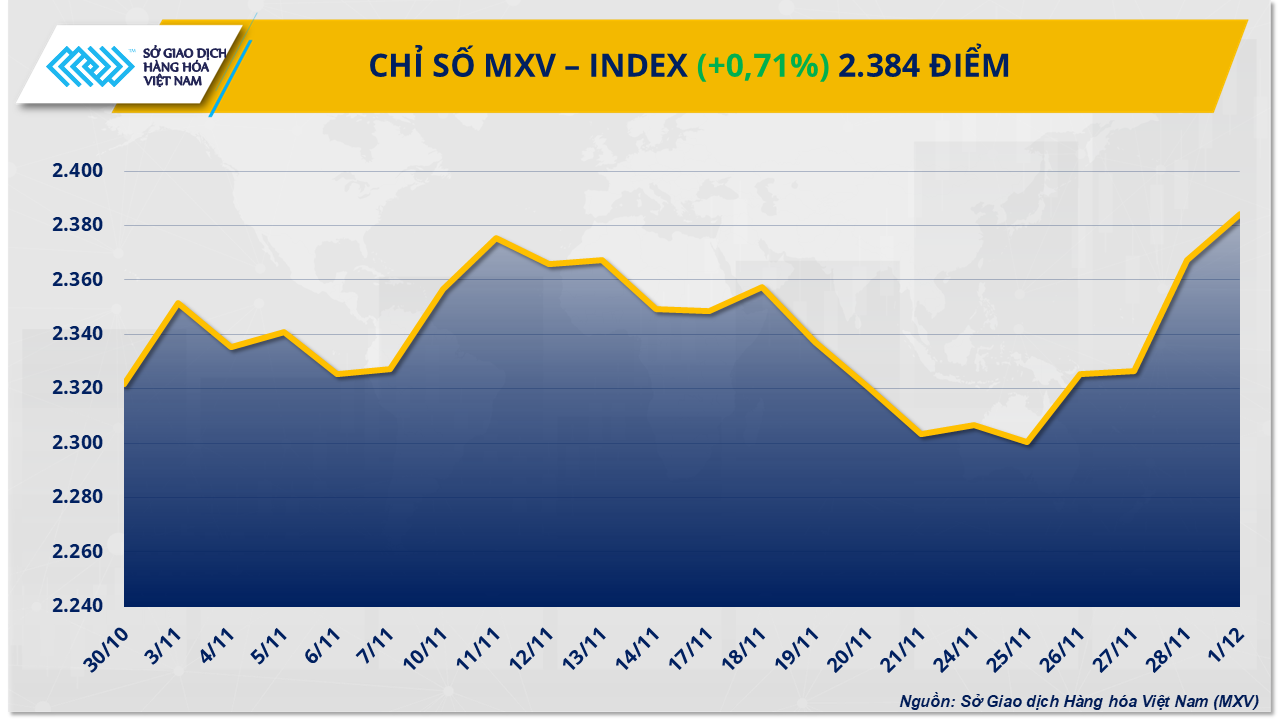
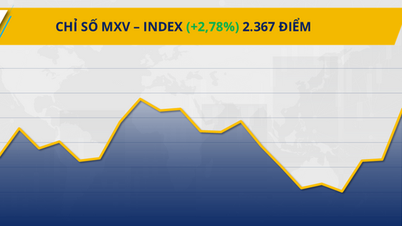
Green covered the energy group when 4/5 items increased in price, while industrial materials led the weakening of the whole market. The buying pressure at the end of the session prevailed, pushing the MXV-Index up more than 0.7% to 2,384 points.
Oil prices recover as supply risks increase
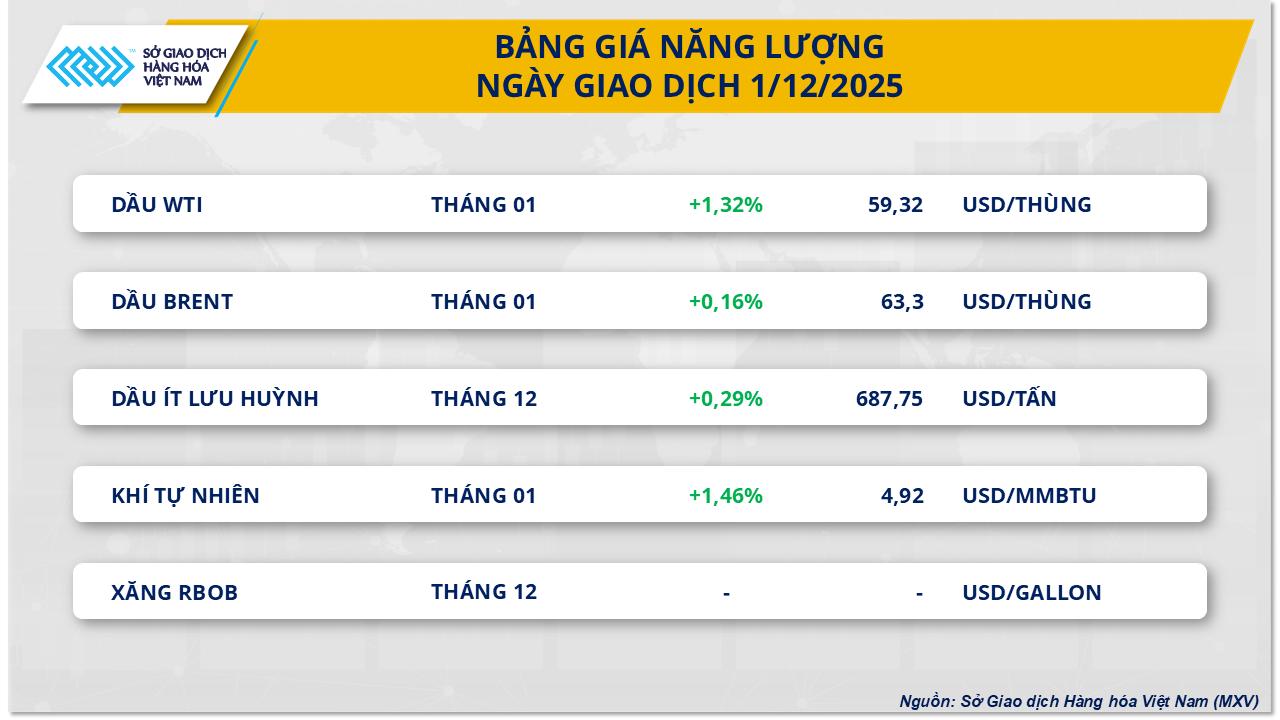
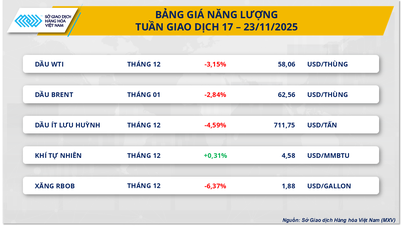
According to the Vietnam Commodity Exchange (MXV), the energy group started the new trading week with a positive trend. At the end of the session, WTI oil price increased by more than 1.3% to 59.3 USD/barrel, while Brent oil recorded an increase of 0.16%, to 63.3 USD/barrel.
MXV said the crude oil market recovery was driven by a series of volatile developments related to global supply. Notably, Ukrainian drone attacks on Russian oil and gas infrastructure. The attack on a port belonging to the Caspian Pipeline Consortium (CPC), which transports more than 1% of global oil supplies, damaged a mooring point in Novorossiysk, forcing some operations to be suspended. Ukraine also attacked two oil tankers in the Black Sea, raising concerns about shipping safety in the region.
In addition, tensions between the US and Venezuela continue to raise supply risks. President Donald Trump announced the closure of Venezuela's airspace, a move that could disrupt exports from the South American country - one of the important sources of supply for the Asian market.
In addition, the Organization of the Petroleum Exporting Countries and its allies, including Russia (OPEC+), maintained their decision not to increase production in the first quarter of 2026, maintaining the cut of about 3.24 million barrels/day, also creating significant support for oil prices. This move is considered a signal of prioritizing market stability, after the alliance has pumped back nearly 3 million barrels/day since April.
However, the pressure to adjust remains as Kuwait increases its heavy crude offerings due to the Al-Zour plant incident, while Saudi Arabia is expected to cut its official selling prices to Asian customers. While the outlook for oil consumption in 2026 is controversial, current data suggests that demand will continue to grow steadily, supporting expectations of further price increases in the near term.
Sugar market shock
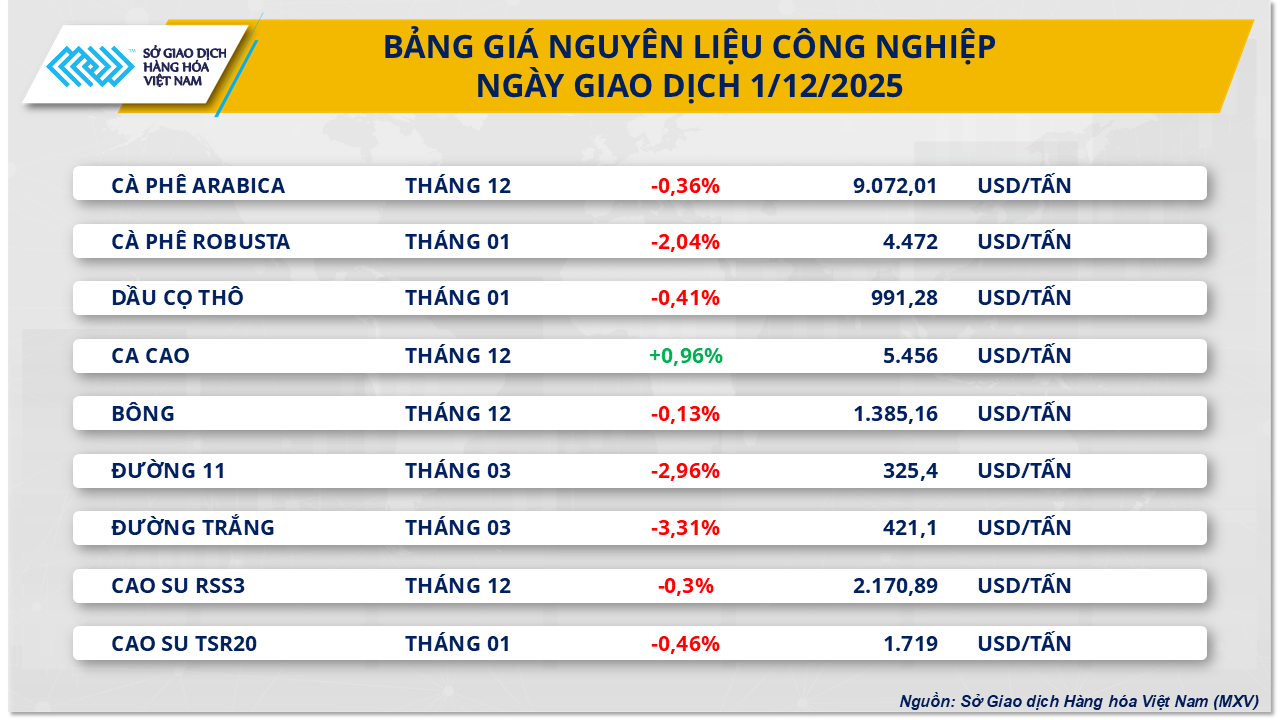
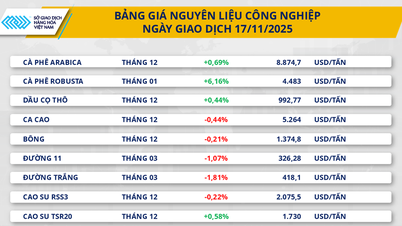
On the other hand, the industrial raw materials group witnessed red covering 8 out of 9 commodities being traded in the group. The highlight was the sugar market when the prices of both commodities being linked on the Exchange simultaneously dropped shockingly. Closing, the price of raw sugar futures No. 11 lost nearly 3%, to 325 USD/ton; white sugar fell even deeper, over 3.3%, to 421 USD/ton.
According to MXV, the sharp increase in supply while consumption has decreased has become the main cause of pressure on world sugar prices, causing this commodity to remain in a low price range for a long time.
According to the International Sugar Organization (ISO) forecast for the 2025-2026 crop year, the world will have a sugar surplus of about 1.63 million tons, mainly due to a global production increase of more than 3% to 181.7 million tons. Meanwhile, consumption demand only increased slightly by 0.6% to 180.14 million tons. This imbalance in supply and demand makes it difficult for sugar prices to increase in the short term.
On the supply side, the latest report from Unica shows that in the first half of November, the Central - South region of Brazil recorded a sharp increase in sugar production of about 8.7% compared to the same period last year, reaching 697,000 tons, contributing a total of more than 39 million tons since the beginning of the crop, up 2% over the same period.
In the Northern Hemisphere, India has also started the 2025-26 season at a rapid pace, with 165 mills operating as of November 27, surpassing production of 1.51 million tonnes, much faster than the same period last year. China has also contributed to the glut, with October production rising more than 36% to 883,000 tonnes.
On the consumption side, figures from Eurostat show that EU sugar imports in the first nine months of the year fell sharply by nearly 18%, reaching just over 1 million tonnes. Meanwhile, major consuming countries such as China and Indonesia, after sharply increasing imports in previous months, have now slowed down their purchases to prioritize the consumption of domestic supplies in the harvest season, causing international trade flows to stagnate.
In the domestic market, the Quang Nam and Da Nang areas have abundant supply of informal sugar, traders are actively offering, accompanied by a slight downward trend in prices. Specifically, RS Kon Tum sugar factory maintains a stable selling price of around 16,700 - 16,900 VND/kg, fluctuating depending on the volume of orders and customers. An Khe sugar factory also maintains a stable price for customers in neighboring areas.
Source: https://baotintuc.vn/thi-truong-tien-te/rung-lac-tren-thi-truong-hang-hoa-mxvindex-sap-cham-vung-2400-diem-20251202091040309.htm

![[Photo] Worshiping the Tuyet Son statue - a nearly 400-year-old treasure at Keo Pagoda](/_next/image?url=https%3A%2F%2Fvphoto.vietnam.vn%2Fthumb%2F1200x675%2Fvietnam%2Fresource%2FIMAGE%2F2025%2F12%2F02%2F1764679323086_ndo_br_tempimageomw0hi-4884-jpg.webp&w=3840&q=75)


![[Photo] Parade to celebrate the 50th anniversary of Laos' National Day](/_next/image?url=https%3A%2F%2Fvphoto.vietnam.vn%2Fthumb%2F1200x675%2Fvietnam%2Fresource%2FIMAGE%2F2025%2F12%2F02%2F1764691918289_ndo_br_0-jpg.webp&w=3840&q=75)



























































































Comment (0)