

While the USD exchange rate recorded a notable surge in the first week of April 2024, the Vietnamese stock market experienced a rather prolonged period of decline.
Beware of the rising exchange rate.
The VND/USD exchange rate at banks started the first week of the second quarter of 2024 with a significant milestone: surpassing the psychological threshold of 25,000 VND/USD and setting new historical highs. While it increased by 0.6% for the week, looking back over the past three months, the VND/USD exchange rate has risen by over 2.9%, equivalent to the increase of the previous year.
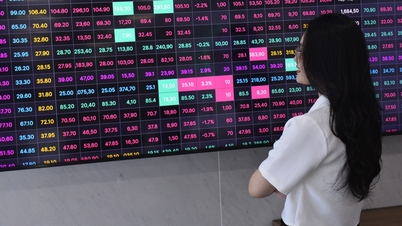
Also during the first week of the second quarter, the stock market witnessed an unsuccessful attempt to "buy the dip" on Friday (April 5th). The attempt to reverse the trend was thwarted by strong selling pressure, especially during the closing auction (ATC). According to Mr. Dinh Quang Hinh, Head of Macroeconomics and Market Strategy, Analysis Division, VNDirect Securities Joint Stock Company, this signal serves as a cautionary warning for investors.
The VN-Index's correction this week occurred amid growing concerns about exchange rate risks. Prior to this, through open market operations (OMO), specifically the offering of treasury bills, the State Bank of Vietnam (SBV) withdrew a net total of over VND 170,000 billion. This volume is nearly half of the total value of treasury bills issued from September 21st to November 8th, 2023 (VND 360,345 billion). However, the short-term treasury bill adjustment to reduce excess liquidity has not yet shown a positive impact on the exchange rate as it did in the third quarter of 2023.
Despite the same old measures, the VND/USD exchange rate at banks has not shown any clear signs of cooling down. The exchange rate fluctuations, along with the issuance of treasury bills in Q3 2023, negatively impacted investor sentiment due to concerns about a potential reversal of monetary policy (which did not materialize). The fear of a repeat of the past, with the exchange rate surging, significantly affected investor sentiment in the stock market and may have triggered the sell-off last week.
“The VN-Index is in short-term downward momentum and may correct to the support zone of 1,230 points (+/- 10 points). However, investors should not rush to buy at the bottom given that the exchange rate is still volatile and market fluctuations are at a high level,” Mr. Hinh advised.
The DXY uncertainty and the timing of the Fed's interest rate cut.
Looking back at the developments in the first week of April 2024, not only Vietnam, but also many other Southeast Asian currencies against the USD increased by 0.5 to 0.7%, notably the Lao kip (+0.67%), Myanmar kyat (+0.61%), Philippine peso (+0.58%), Thai baht (+0.49%), etc.
 An exchange rate increase of over 3% will impact the economy.
 If the VND/USD exchange rate can remain relatively stable, increasing by less than 2%, it will not have a significant impact and will support exports, especially in the context of many currencies depreciating sharply. However, if the exchange rate increases by more than 3%, it will affect the economy as import-export businesses face greater disadvantages due to exchange rate differences. Furthermore, strong exchange rate fluctuations will immediately affect foreign capital flows trading in the Vietnamese stock market, potentially causing foreign investors to withdraw capital.

Mr. Tran Hoang Son, Market Strategy Director, VPBank Securities Joint Stock Company
The DXY index (a measure of the USD's strength, reflecting its correlation with six other currencies) remained high above 104 points. Simultaneously, the strength of the USD at the same time as the US Federal Reserve (Fed) lowered interest rates is a key unknown factor of great interest to global investors.
CME Group's FedWatch tool – which displays estimates forecasting increases or decreases in the benchmark interest rate at Federal Open Market Committee (FOMC) meetings – unexpectedly recorded a significant change following statements from FOMC members last week.
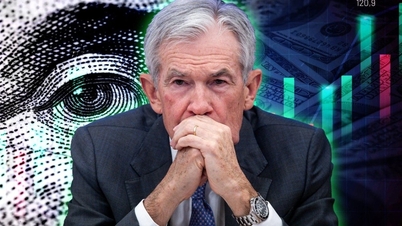
Fed Chairman Powell has emphasized that monetary policymakers will wait until there is more evidence that inflation is truly under control, especially as the US economy is growing at a solid pace and the job market remains very strong, with the number of jobs added in March being the highest in 10 months.
The odds of the Fed cutting its benchmark interest rate by 25 basis points at its mid-June 2024 meeting have fallen to 46.2%, after consistently maintaining a "oversold" position in recent months. Meanwhile, the probability of the Fed keeping interest rates unchanged has surged to 51.8%, significantly higher than the 39.6% recorded a week ago.
This week, investors are focusing heavily on the European Central Bank's (ECB) interest rate meeting, seeking clearer signals about the possibility of an ECB rate cut as early as June. Slowing inflationary pressures and a dovish stance support this view. However, any divergence in monetary policy at the two major central banks (if any) could also put pressure on the DXY.
Against a backdrop of uncertainty and with pressures in the international market still unknown, the State Bank of Vietnam has other tools to manage the situation, such as considering increasing the maturity of treasury bills or inspecting foreign exchange trading at banks.
At the recent regular government press conference, Mr. Dao Minh Tu, Deputy Governor of the State Bank of Vietnam (SBV), affirmed that the SBV considers exchange rate management as one of its most important and focused tasks. “In the coming period, the SBV will continue to manage exchange rates with a highly flexible mechanism, ensuring that the exchange rate fluctuates in line with the general trend and guarantees the goal of stability, harmony, and balance of foreign currency for the legitimate needs of the economy,” the Deputy Governor emphasized.
Source

![[Photo] Two flights successfully landed and took off at Long Thanh Airport.](/_next/image?url=https%3A%2F%2Fvphoto.vietnam.vn%2Fthumb%2F1200x675%2Fvietnam%2Fresource%2FIMAGE%2F2025%2F12%2F15%2F1765808718882_ndo_br_img-8897-resize-5807-jpg.webp&w=3840&q=75)






























































































Comment (0)