

Speaking at the group discussion session on the draft Law on the Capital City (amended) on the afternoon of November 10th, National Assembly Chairman Vuong Dinh Hue assessed that this is a draft law of special importance, because Hanoi is a special urban area and also the capital of the whole country.
"There may be many special urban areas, but there is only one capital city," the Speaker of the National Assembly said.
Resolution No. 15 dated May 5, 2022, of the Politburo on the direction and tasks for the development of Hanoi Capital City until 2030, with a vision to 2045, has identified the Capital City as the national political and administrative center, a major center for economy, culture, education and training, science and technology, and international integration.
“Hanoi’s economic scale is growing larger, and Ho Chi Minh City, with its port, has higher import and export revenues. During my time as Secretary of the Hanoi Party Committee, the city had an income of 18,000 - 19,000 billion VND, and its domestic revenue was very large, the largest in the country,” Chairman Vuong Dinh Hue said.
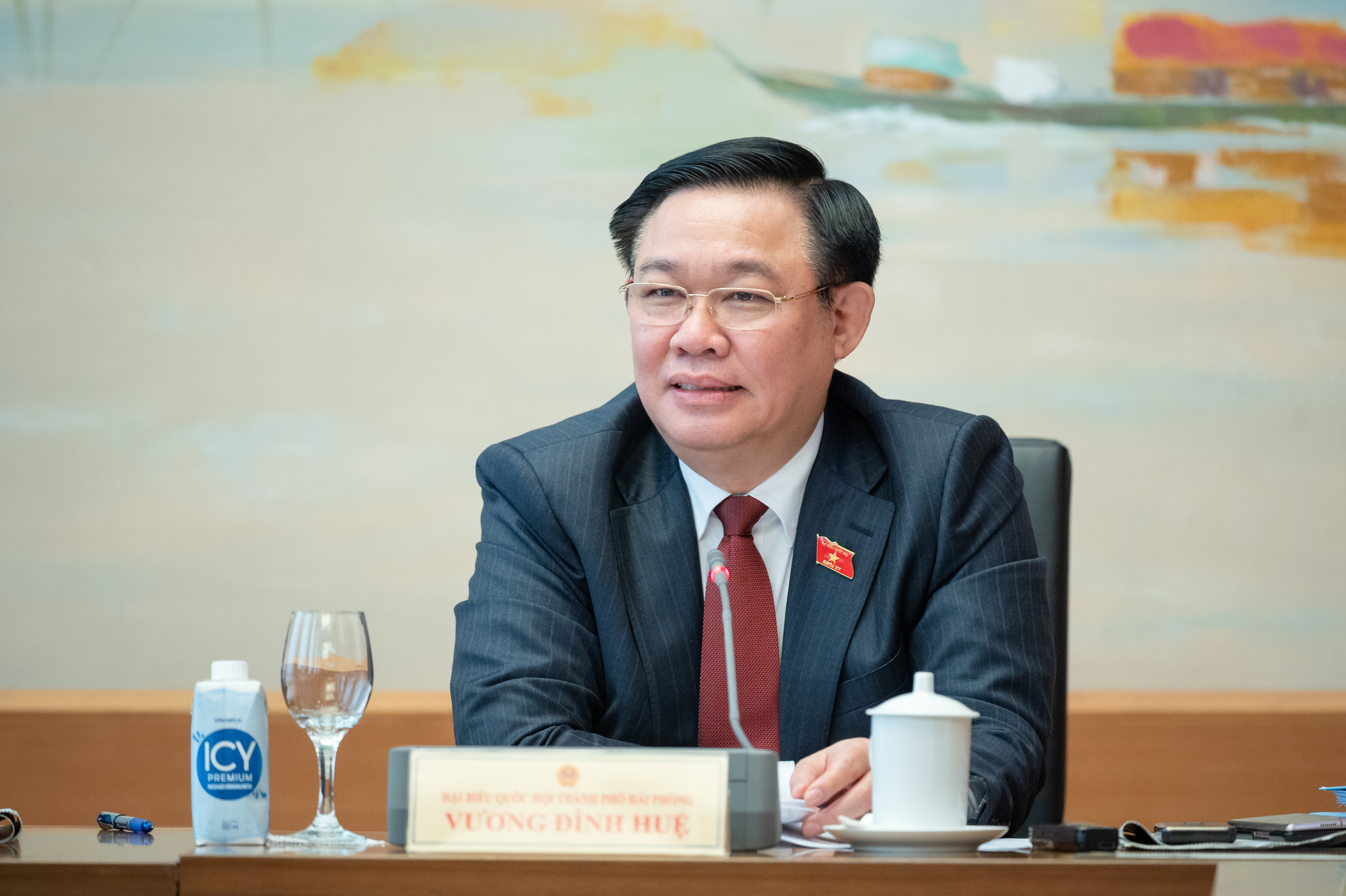
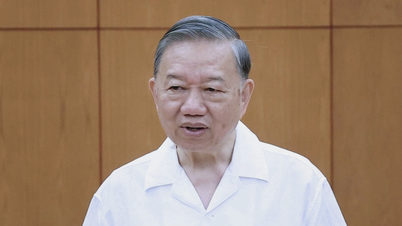
Speaker of the National Assembly Vuong Dinh Hue.
The Speaker of the National Assembly emphasized that Hanoi is the brain, the face, the heart—that is, the embodiment of all the best qualities; it is a city for peace and has even been awarded the title of Creative City by UNESCO.
Accordingly, this revised Capital City Law institutionalizes the Central Committee's Resolution on the position, role, orientation, and development tasks of Hanoi up to the middle of the century. This will then promote and create momentum for development for the entire region and the country.
"The drafting of the Capital City Law is not only for the Capital City but for the whole country, in the spirit of 'Hanoi for the whole country, together with the whole country'," the Speaker of the National Assembly shared.
The Chairman of the National Assembly assessed that the Party Committee and the people's government of Hanoi have invested heavily in this draft law. Many delegates also commented that, although it is the first time it has been presented, the quality of the draft law is quite good, aiming to overcome the "framework law, general law" nature of the 2012 Law on the Capital City.
This revised law adds 3 chapters and 27 articles compared to the current law, with very clear normative regulations that can be applied effectively. "The Capital City Law is essentially a law on special mechanisms, a law on delegating power, decentralizing authority, and assigning responsibilities, along with supervision and inspection," he said.

The Law on the Capital City is being drafted not only for the capital city but for the whole country, in the spirit of "Hanoi for the whole country, together with the whole country" (Photo: Huu Thang).
According to Chairman Vuong Dinh Hue, this revision also has the advantage of the National Assembly having issued a specific resolution for Ho Chi Minh City, with 44 policies, including 27 policies that are completely new compared to other localities nationwide, allowing for appropriate concretization for the capital city.
Regarding the organizational model of Hanoi's government, there are differences compared to those of Ho Chi Minh City and Da Nang. Based on the pilot program's evaluation, Hanoi's urban government model seems more suitable because it only abolishes the People's Councils at the ward level, while rural governments retain the People's Councils and People's Committees; and urban governments retain the People's Councils at the district and county levels. Therefore, after the evaluation, there is a desire to codify this sufficiently mature model into law.
Regarding the number of representatives in the Hanoi City People's Council, the draft law proposes increasing it from 90 to 125 representatives. Upon review, this proposal is entirely consistent with the Central Committee's resolution because abolishing ward-level People's Councils would reduce Hanoi's number of representatives by 6,000, while the proposed increase is only 35 for the city-level People's Council.
"Regarding the duties and powers of the Standing Committee of the City People's Council, the decentralization and delegation of power to the City People's Council is necessary as a pilot program for later review and evaluation. Going forward, it is necessary to study and institutionalize certain specific powers, appropriate to the Standing Committee of the People's Council," the National Assembly Chairman stated .
Source
![[Photo] General Secretary and President To Lam presides over a meeting with the Central Organizing Committee.](https://vphoto.vietnam.vn/thumb/1200x675/vietnam/resource/IMAGE/2026/06/03/1780482764658_a1-bnd-4741-3342-jpg.webp)
![[Photo] Secretary of the National Assembly Party Committee, Chairman of the National Assembly presides over the meeting of the Standing Committee and Executive Committee of the National Assembly Party Committee.](https://vphoto.vietnam.vn/thumb/1200x675/vietnam/resource/IMAGE/2026/06/03/1780480353201_ndo_br_bnd-2585-jpg.webp)

![[Photo] First session of the 14th Congress of the Vietnam Trade Union](https://vphoto.vietnam.vn/thumb/1200x675/vietnam/resource/IMAGE/2026/06/03/1780465947883_ndo_br_img-3852-jpg.webp)








































![[Video] Sunset at Lap An Lagoon – Where the sun sets over the fishing nets](https://vphoto.vietnam.vn/thumb/1200x675/vietnam/resource/IMAGE/2026/05/31/1780192137701_beach-landscape-sea-water-nature-grass-745871-pxhere-com.jpeg)























Comment (0)