

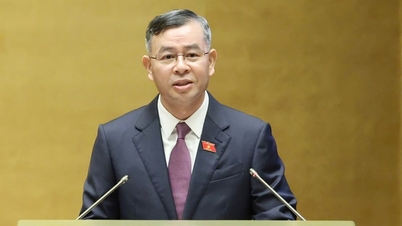
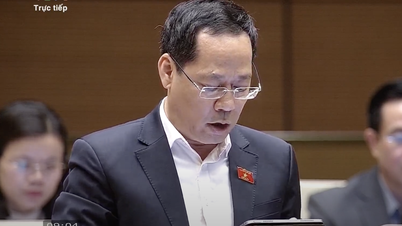
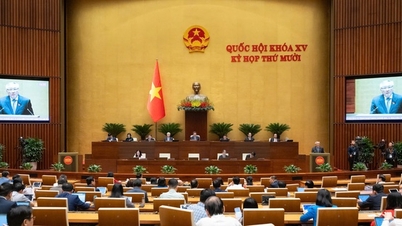
On December 1, the National Assembly voted to approve the adjustment of the 10th session agenda, adding amendments and supplements to a number of articles of Resolution No. 98 on piloting a number of specific mechanisms and policies for the development of Ho Chi Minh City. It is expected that on the afternoon of December 3, Minister of Finance Nguyen Van Thang will present the draft Resolution.
Resolution No. 98 has opened up a special mechanism for the city to make a breakthrough in development in the past period. However, after more than two years of implementation, the content on strategic investors still has many shortcomings such as the list of priority fields and projects to attract investors is still narrow; the process of selecting investors is still complicated; the criteria for determining strategic investors do not reflect the actual capacity of investors; incentives are not competitive enough; and there is no flexible planning mechanism for investment projects in the priority list.
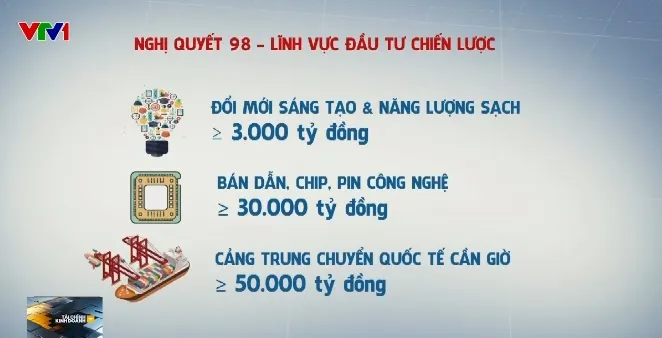
According to the current Resolution 98, strategic investors are only allowed to participate in 3 main categories, including: Innovation and high technology, clean energy, with a total scale of 3,000 billion VND or more; Semiconductor technology, chips, new technology batteries with a scale of 30,000 billion VND or more; and Can Gio international transit port with a scale of 50,000 billion VND or more.
For each of these categories, investors must have a minimum charter capital of VND500 billion, VND5,000 billion, VND9,000 billion respectively and must disburse within 5 years. At the same time, they must have experience implementing similar projects before. Not only must they meet the requirements on investment fields and capital, strategic investors must also commit in writing to training, human resource development, ensuring national security and environmental protection in Vietnam.
Strategic investors need to be identified
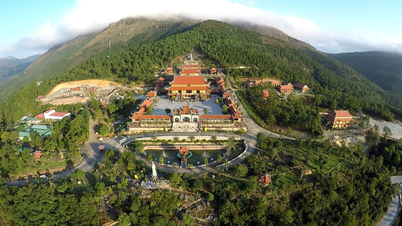
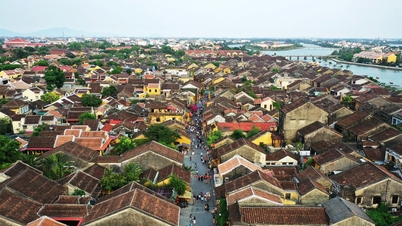
According to Ho Chi Minh City’s proposal this time, the strategic investor’s field will expand to include construction, urban development, environment, wastewater treatment, or green parks. At the same time, after completing the merger, Ho Chi Minh City can also invest in exploiting new potentials in culture and tourism .
Regarding capital capacity, according to the draft law, in cases where specialized laws do not clearly stipulate, the minimum capital contribution must reach 15% of the total investment capital of the project. Obviously, determining who the strategic investor is is still an important content, playing a key role in the process of shaping the institution.
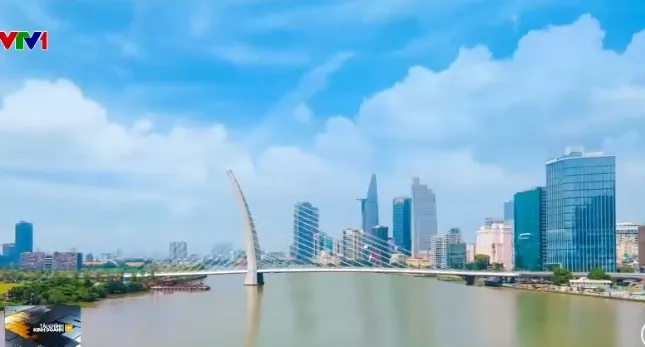
The National Assembly is considering amending Resolution 98 to remove obstacles and expand special mechanisms for Ho Chi Minh City to attract strategic investors and create a new development push.
Strategic investors not only invest capital, but also accompany and lead in many different fields according to each goal of the city. Not only high technology and AI, but also a green industrial park for the textile and footwear industry, or a sports complex - also requires strategic investors. Therefore, in terms of investment, many opinions believe that there should not be a listed closing limit.
Dr. Tran Du Lich - Chairman of the Advisory Council for the implementation of Resolution 98 commented: "The list of attracting strategic investors should not be closed but should be open and delegated to the City People's Council to supplement and update."
With such a strategic investor stature, the approach to them also requires initiative, instead of just putting out a bid to select.
Dr. Nguyen Dinh Cung - Former Director of the Central Institute for Economic Management (CIEM) said: "Strategic investors never let us go to bidding to consider and select strategic investors, but must gather a list of dozens, hundreds, even thousands of potential strategic investors. Then we evaluate, classify and proactively invite people."
Not only proactively calling for investment, but also needing to have true one-stop agencies, with staff who have foreign languages, capacity and are authorized to handle all procedures for each strategic investment project.
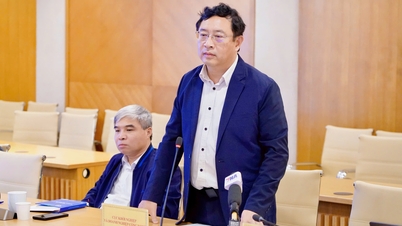
"This agency is not a focal agency but the only agency with enough capacity and authority to handle procedures according to a unified process and procedure, approached from the perspective of investment projects, not from the perspective of State management, which means fragmenting according to sectors and fields," said Mr. Phan Duc Hieu - Economic and Financial Committee of the National Assembly.
In that spirit, some opinions proposed a "companionship and co-creation" mechanism in city and ecosystem development with 20-50 leading corporations in the world in strategic fields.
Ho Chi Minh City needs to be empowered to design mechanisms.
Identify strategic investors and areas that need investment, then proactively invite them and create the most open and transparent legal corridor possible. However, there are still concerns about incentive mechanisms. Because in reality, competition for incentives is an extremely fierce competition, even with megacities such as Tokyo, Seoul or Shanghai, Beijing, Chongqing, Shenzhen.
This requires a change in thinking in approaching and perceiving incentives for strategic investors. To achieve this, many opinions agree that it is necessary to build Ho Chi Minh City into an "institutional laboratory", strongly empowering with outstanding mechanisms, worthy of international standards.
Instead of placing rigid constraints in the resolution such as tax incentives or disbursement deadlines, some opinions suggest that the city should be empowered to design its own mechanism for each strategic investor and each project.
Dr. Nguyen Xuan Thanh - Lecturer at Fulbright School of Public Policy and Management commented: "Incentives are linked to specific projects, based on expected impacts, projected impacts of specific projects and it should be given to the authority of the City People's Council to decide".
Many opinions agree on the establishment of a specific agency of the city, with enough capacity and authority to access and handle all procedures from AZ with strategic investors.
Prof. Dr. Vu Minh Khuong - Lee Kuan Yew School of Public Policy, Singapore said: "For example, Resolution 98 allows the establishment of the Ho Chi Minh City Development Agency, similar to the Reform Committee of Shanghai, China, or the EDB - Development Agency of Singapore or Ireland, they have made miraculous progress, with very high power".
In addition to a transparent and predictable policy environment, to retain strategic investors, the city also needs a breakthrough in planning to build an ideal working, cultural and living environment.
Mr. Arnaud Ginolin - Member of the Board of Boston Consulting Group said: "It is necessary to re-plan the city to have a specialized area with full office buildings, housing, and entertainment to attract strategic investors. Like in London there is Canary Wharf, New York or Shanghai too. This requires some land mechanisms, like in Shanghai there is a resettlement mechanism for this purpose".
"Normally, good engineers who do research will bring their whole family to live here. How can we create a social development environment where people feel secure and trustworthy?", Mr. Nguyen Trung Chinh - Executive Chairman, CMC Technology Group shared.
From a management mindset that focuses on compliance, it is necessary to shift to an governance mindset that focuses on the future. A mechanism for risk monitoring and periodic assessment, but without interfering in operations, will contribute to making Ho Chi Minh City the "institutional laboratory" of the whole country.
After the group meeting at the National Assembly on December 3, it is expected that the draft Resolution amending and supplementing Resolution 98 will continue to be discussed at the plenary session on December 8 and voted on for approval on December 11 at this session.
Only with appropriate mechanisms can Ho Chi Minh City fulfill its role as a growth pole and the largest economic center of the country, contributing over 23% of the national GDP.
Source: https://vtv.vn/sua-nghi-quyet-98-de-thu-hut-nha-dau-tu-chien-luoc-100251203065705539.htm
![[Photo] Worshiping the Tuyet Son statue - a nearly 400-year-old treasure at Keo Pagoda](/_next/image?url=https%3A%2F%2Fvphoto.vietnam.vn%2Fthumb%2F1200x675%2Fvietnam%2Fresource%2FIMAGE%2F2025%2F12%2F02%2F1764679323086_ndo_br_tempimageomw0hi-4884-jpg.webp&w=3840&q=75)
![[Photo] Parade to celebrate the 50th anniversary of Laos' National Day](/_next/image?url=https%3A%2F%2Fvphoto.vietnam.vn%2Fthumb%2F1200x675%2Fvietnam%2Fresource%2FIMAGE%2F2025%2F12%2F02%2F1764691918289_ndo_br_0-jpg.webp&w=3840&q=75)


































































Comment (0)