


Since the revised Personal Income Tax (PIT) Law Project was submitted by the Government to the National Assembly, it has become one of the most concerned economic topics, attracting the attention of millions of workers and the business community. In the context of the global economy facing many instabilities, inflationary pressures and rising living costs, adjusting tax policies towards supporting people is considered a timely, humane and strategic move by the management agency.
According to the latest information from the Ministry of Finance , based on the review and discussion opinions of the National Assembly deputies at the 10th Session, the draft law has been completed with outstanding changes to ensure fairness, rationality and better suitability with the reality of social life; impact on the middle-income class to create a comprehensive picture of the role of fiscal policy in the economic recovery period. This change is not only a technical adjustment but also a commitment of the State to ensure social security and create momentum for sustainable development.
Expanding financial space for the middle-income class
The most fundamental and groundbreaking change in this draft is the strong adjustment of the family deduction level, a key factor determining the tax burden of the people. Specifically, the National Assembly Standing Committee has passed a Resolution to increase the deduction level for the taxpayer himself from 9 million VND to 15.5 million VND/month, and for each dependent from 3.6 million VND to 6.2 million VND/month. Economic experts all agree that this is a significant increase, demonstrating the State's support for the people in dealing with escalating living costs, which have increased in recent years due to the impact of the global supply chain and inflation.
According to the Ministry of Finance's in-depth analysis, this new deduction has widened the taxable income threshold, bringing direct benefits to a large number of workers. An individual without dependents, with an income of up to 17 million VND/month, will not have to pay tax. Similarly, a family with one dependent will have a non-taxable income of 24 million VND/month, and if there are two dependents, this number increases to 31 million VND/month. "This adjustment is not just a number, but a significant improvement in "real income", helping workers to accumulate and consume better. This is an automatic mechanism to pump money directly into the economy through the consumption channel, an extremely important factor to boost domestic aggregate demand in the context of many export difficulties," the leader of the Tax Department emphasized.

All taxpayers receive a reduction in their tax liability compared to the current tax schedule.
In addition to increasing family deductions, reforming the progressive tax schedule is also an important highlight. The current tax schedule has seven tax rates from 5% to 35% and the income gap between the rates is still narrow, often leading to a situation where individuals only need to increase their income a little to jump to a higher tax rate ("sudden tax increase"), causing psychological pressure and complicated calculations. The draft Law proposes to shorten the tax schedule to only five rates, while widening the income gap between the rates. For example, the first rate will apply to incomes up to 10 million VND/month (tax rate 5%); the second rate from over 10 million to 30 million VND/month (tax rate 15%). This adjustment thoroughly solves the problem of "tax rate trap" in low-middle income levels.
The Ministry of Finance is currently studying the possibility of adjusting the tax rates at the second and third levels down to 10% and 20% (instead of 15% and 25% as originally proposed). According to the preliminary assessment, with the proposed new tax plan, all taxpayers will have their tax obligations reduced compared to the current tax schedule. The reduction of the number of levels and the widening of the gap, combined with the reduction of tax rates at the middle income levels, creates a more transparent, understandable and fair tax mechanism. This is especially important in encouraging high-income earners to make more efforts, as they will no longer worry about "paying a lot of tax" suddenly, thereby encouraging transparency in income declaration.
In addition, the draft also adds provisions on tax exemption and reduction for some specific incomes, such as income from voluntary pension insurance funds, wages for night work, overtime, severance/unemployment benefits paid by enterprises, and interest on local government bonds. Notably, the proposal allows taxpayers to deduct some medical and educational expenses before calculating tax. These are essential expenses, often accounting for a large proportion of family spending, and if deducted, will significantly reduce the financial burden, demonstrating a convergence with advanced tax practices in the world, where essential living expenses are carefully considered when calculating tax obligations.
Multidimensional impact
Economic experts affirm that these adjustments are an important step in modernizing tax policy and promptly meeting the requirements of the economy. The increase in family deductions is considered to be in line with the trend of increasing living costs, contributing to improving real income and reducing financial pressure for workers.
"Shortening the progressive tax schedule and widening the income gap between levels is a reasonable approach to ensure transparency and reduce complexity in application. The proposal to reduce tax rates at some levels not only helps reduce tax obligations, but also creates incentives for skilled workers to improve productivity, thereby contributing more to the economy. These adjustments are in line with the international trend of improving the tax environment to support the middle-income class, which plays an important role in consumption and economic growth," Dr. Nguyen Minh Phong analyzed.
For the business community, reducing personal income tax obligations is considered an indirect but extremely effective support move, bringing two main benefits: reducing personnel pressure and stimulating market purchasing power. Dr. Mac Quoc Anh, Vice President and General Secretary of the Hanoi Association of Small and Medium Enterprises, expressed his opinion that the personal tax reduction policy is a direct financial support for employees, helping them maintain a better standard of living without businesses having to suddenly increase wages. This indirectly helps businesses stabilize personnel costs and reduce competitive pressure on wages in retaining talent. When employees are more satisfied with their actual income, labor productivity and commitment to the company are also significantly improved, creating a more positive working environment for the long-term development of the business.

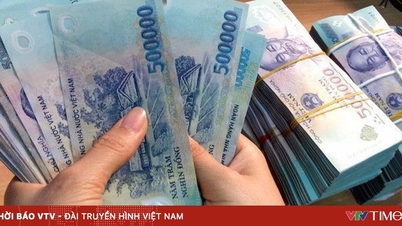
When taxes are reduced, people have more "fresh money" to spend, especially the middle class.
From a market perspective, economist Tran Manh Hung further analyzed that when taxes are reduced, people will have more "fresh money" to spend, especially the middle class. This increase in purchasing power will create strong domestic demand, stimulating production and business for most industries, from fast-moving consumer goods to services, tourism and real estate. This is a much more important macroeconomic lever than conventional credit support packages, because it has a direct, rapid and widespread impact on the entire supply chain and domestic market.
In particular, the draft Law also shows concern for individual business households, an important component of the economy. "The proposal to collect taxes based on actual income - revenue minus expenses instead of just based on revenue is a move we have long awaited. A household that sells food or services has very large raw material and operating costs, so imposing taxes based on revenue ratio often creates an unfair burden. Applying this new method will encourage us to account more transparently, move towards a business model, help manage better, and at the same time reduce the actual burden for businesses with high expense ratios. This is the most fairness and practical support," said Ms. Do Thi Xuan, a garment business owner (Hanoi).
The Ministry of Finance plans to report to the Government a plan to collect income tax (revenue minus expenses) for all individuals with revenue above the non-taxable threshold, instead of only based on the current revenue ratio. Specifically, business households with revenue under VND3 billion will pay tax at the tax rate corresponding to the corporate income tax applicable to small enterprises. This proposal has taken into account the opinions of delegates and experts, creating more fairness, encouraging business households to account transparently and move towards the enterprise model, helping the State manage taxes more effectively, while minimizing the burden on business households with large expenses.
It can be seen that this adjustment plan is a step to perfect the tax policy in the direction of fairness, synchronization and high predictability. If passed, the Law project will contribute to expanding resources for the people, creating a solid foundation for economic recovery and development in the coming period, affirming the role of fiscal policy in supporting businesses and workers to overcome economic challenges./.
Source: https://vtv.vn/giam-ganh-nang-thue-co-hoi-vang-nang-thu-nhap-cho-hang-trieu-nguoi-lao-dong-100251202225249046.htm


![[Photo] Worshiping the Tuyet Son statue - a nearly 400-year-old treasure at Keo Pagoda](/_next/image?url=https%3A%2F%2Fvphoto.vietnam.vn%2Fthumb%2F1200x675%2Fvietnam%2Fresource%2FIMAGE%2F2025%2F12%2F02%2F1764679323086_ndo_br_tempimageomw0hi-4884-jpg.webp&w=3840&q=75)

![[Photo] Parade to celebrate the 50th anniversary of Laos' National Day](/_next/image?url=https%3A%2F%2Fvphoto.vietnam.vn%2Fthumb%2F1200x675%2Fvietnam%2Fresource%2FIMAGE%2F2025%2F12%2F02%2F1764691918289_ndo_br_0-jpg.webp&w=3840&q=75)

















































































Comment (0)