

Millions of years ago, giant squid like the Cameloceras dominated the ancient oceans with shells up to 8 meters high.
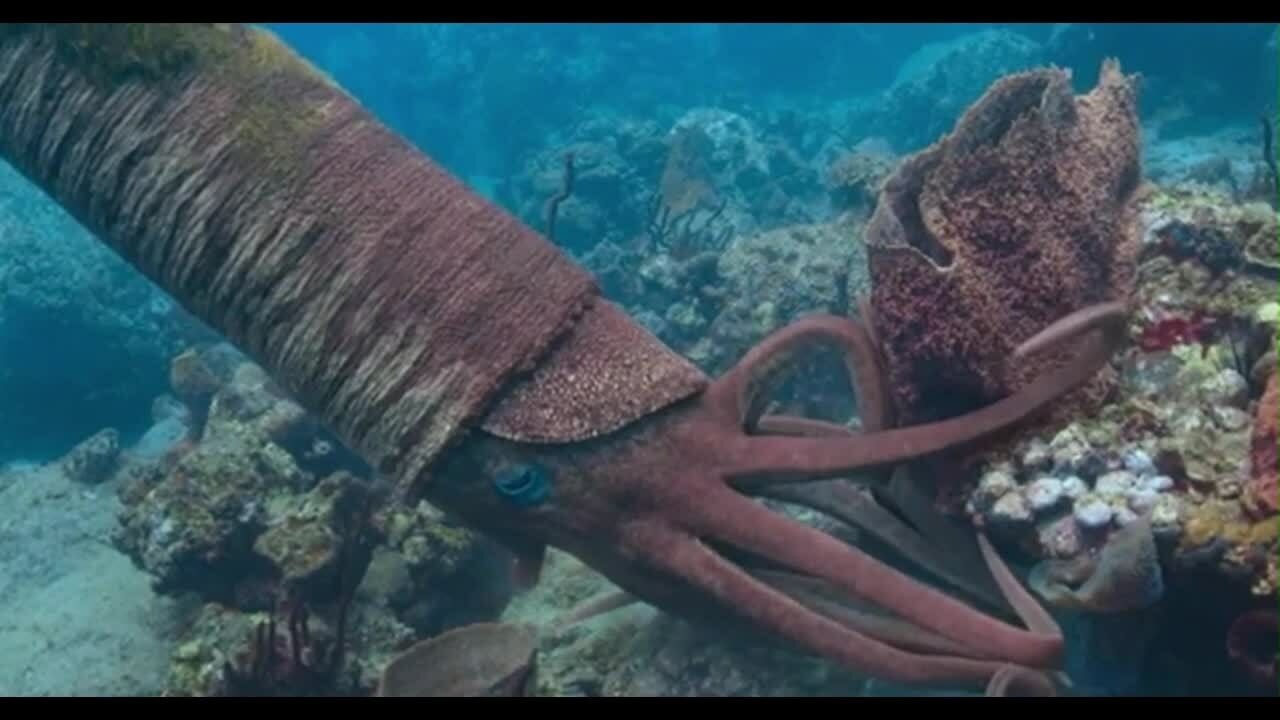
Camelocera hunts on the seabed. Video : Netflix
In the Netflix nature documentary Life on Our Planet, filmmakers recreate the hunting methods of ancient giant squids in unprecedented detail, Newsweek reported on October 24. According to Tom Fletcher, the program's science advisor, ancient cephalopods (a class of marine animals that includes squid and octopuses) like Cameloceras and their relatives were cone-shelled monsters that floated and drifted across the seabed in search of prey. Cameloceras had massive shells, much larger than their face-like heads, large eyes, and long tentacles, and they specialized in scavenging between rocks to capture prey.
This giant, tentacled creature lived 470 million years ago and became extinct about 30 million years later. "Their more modern descendants, the nautilus, are quite small and harmless. In contrast, the fossils we have of them are shell fragments so visually clear that they reveal just how large Cameroceras were," Fletcher said. Cameroceras fossils have been found in China, Europe, and North America, but displaying their soft, tentacled bodies is a difficult task. Fletcher and his colleagues had to search for modern or extinct relatives of Cameroceras to reconstruct the missing parts because fossils of soft tissues such as tentacles and internal organs of this animal are very rare.
The research team also looked at modern cephalopods such as cuttlefish, octopuses, and squid to learn more about how Cameroceras moved and their intelligence. "Cameroceras' closest living relatives, nautilus, have remained virtually unchanged for millions of years. That gives us some clues," Fletcher said. In the video, Cameroceras moves across the seabed hunting for prey. It extends its long tentacles through crevices in the coral reef and successfully catches what appears to be a horseshoe crab.
In the program, pioneering experts use a system called time-travel filming, which helps visual effects blend seamlessly with natural history. Tapster hopes the program will give viewers a new perspective on prehistoric life on Earth, while also highlighting the importance of protecting the creatures living on the planet today.
An Khang (According to Newsweek )
Source link




























































































Comment (0)