

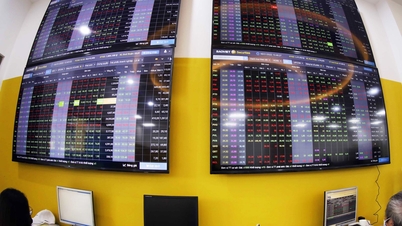
Following a sharp correction in early April 2025 that caused industrial real estate stocks to plummet across the board, the stock market quickly recovered strongly and continuously reached new highs.
However, shares of Saigon VRG Investment Company (stock code SIP) have moved in the opposite direction, consistently trading below the 200-day moving average (MA200). This indicates that the downtrend remains dominant.
From July 24th to November 11th, SIP shares fell 20.6%, from VND 68,400 to VND 54,300 per share. If calculated from the beginning of 2025, the decrease amounts to 31.3% compared to the peak of VND 79,020 (March 26th).
According to data from SSI Securities Corporation, this stock is currently trading at a P/E ratio of 10.61 times - significantly lower than the industry average of 17.81 times. Between 2018 and 2023, the stock's valuation fluctuated between 7.03 and 27.41 times, indicating that the stock is currently at a significant discount.
The stock price movement went against the general trend, despite the continued positive business results of Saigon VRG Investment. In 2024, revenue reached VND 7,078 billion, showing stable growth compared to the same period. Of this, the provision of utility services such as electricity, water, and other utilities accounted for 90.7% of total revenue, while land leasing after infrastructure development only reached VND 389 billion, equivalent to 5%. This structure continued in the first nine months of 2025, with utility revenue reaching VND 5,617 billion (89.1%) and land leasing revenue reaching only VND 310 billion (4.9%).
Despite its focus on industrial real estate development, Saigon VRG Investment's revenue structure leans towards operational utilities – a sector that generates more consistent and stable cash flow. The company provides electricity, water, waste treatment, and infrastructure operation services to thousands of businesses leasing land in industrial parks. This is a recurring annual revenue stream, creating a long-term cash flow advantage.
Conversely, the industrial land leasing segment recorded low revenue due to its specific accounting method. Saigon VRG Investment chose to allocate revenue over 50 years, corresponding to the land lease term, instead of recognizing it all at once. This accurately reflects the nature of long-term contracts, but makes the short-term financial statements less impressive compared to comparable companies that typically recognize the entire contract value at once.
As of the end of 2024, the factory occupancy rate in the three industrial parks of Dong Nam, Le Minh Xuan 3, and Phuoc Dong reached 95.13%. Specifically for industrial land, Phuoc Dong (Area A) achieved 96% occupancy; Dong Nam reached 89%, while Phuoc Dong (Area B) only reached 24% (685.28 hectares remaining); Phuoc Dong Phase 2 reached 43% (290.95 hectares remaining), Phase 3 is yet to be developed (394.33 hectares remaining); Le Minh Xuan 3 reached 32% (106.06 hectares remaining) and Loc An - Binh Son reached 67% (117.46 hectares remaining). This indicates that the company still has significant room for expansion in its leasing operations in the coming years.
Besides possessing potential land resources, the company also has a solid financial capacity. As of September 30, 2025, Saigon VRG Investment had VND 5,913 billion in cash, accounting for 20.8% of total assets, and was also recording VND 12,822.5 billion in unearned long-term revenue (land lease payments received in advance), accounting for 45.1% of total capital. This is a significant reserve that will gradually be accounted for in the coming years.
According to KB Securities Vietnam, Saigon VRG Investment currently owns approximately 1,189 hectares of land with completed legal procedures, achieving a land clearance rate of 78%. The company can lease 50-60 hectares annually during the 2025-2026 period, while maintaining a stable cash flow from providing amenities to existing customers.
However, the short-term outlook remains challenging in the context of global trade, particularly with reciprocal tariff policies increasing barriers to attracting FDI in high-tech industries, including electronic components/equipment, AI, and semiconductors – sectors that have seen significant shifts in recent years. This indirectly puts competitive pressure on Saigon VRG Investment's ability to attract clients. Therefore, in the second half of 2025 and in 2026, Saigon VRG Investment's leased area is projected to slow down compared to 2024.
Nevertheless, its highly defensive business model, stable cash flow from industrial park amenities, and large clean land bank make Saigon VRG Investment a company with the potential to maintain sustainable growth in the long term.
Source: https://baodautu.vn/tam-ly-de-chung-cua-nha-dau-tu-voi-co-phieu-cua-vrg-d439085.html


![[Image] Close-up of the newly discovered "sacred road" at My Son Sanctuary](/_next/image?url=https%3A%2F%2Fvphoto.vietnam.vn%2Fthumb%2F1200x675%2Fvietnam%2Fresource%2FIMAGE%2F2025%2F12%2F13%2F1765587881240_ndo_br_ms5-jpg.webp&w=3840&q=75)
































































Comment (0)