

A sharp decline in traditional markets.
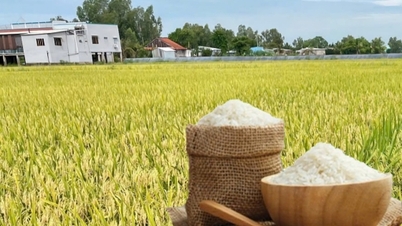
The Philippines is currently the world's largest rice importer, with imports of nearly 4.8 million tons in 2024. It is also Vietnam's largest rice importer, with 3.6 million tons (accounting for 40% of total rice exports) in 2024. However, the proportion of rice exports to the Philippines is expected to decrease sharply in 2025 due to the Philippines temporarily suspending imports of Vietnamese rice for the last four months of the year (starting September 1, 2025). According to data from the Vietnam Customs Department, the volume of rice exported to the Philippines decreased by 18.5% in 2025, reaching only 2.96 million tons in the first 10 months. In addition, several other markets also showed declines compared to the same period, such as Indonesia (down nearly 96.38%) and Malaysia (down 32.5%).
The latest statistics show that in the first 11 months of 2025, rice exports reached over 7.53 million tons with a value exceeding US$3.85 billion, a decrease of 10.9% in volume and 27.4% in value compared to the same period in 2024 – the highest rice export year ever. The Vietnam Food Association (VFA) forecasts that rice exports in 2025 will decrease by approximately 11.5% compared to 2024, down to 8 million tons, mainly due to a sharp decline in the Philippine market.
However, a positive aspect of Vietnam's rice exports in 2025 is the timely shift and expansion of markets, with exporting businesses successfully reaching other markets, notably China and Africa. This contributes to market diversification, reducing dependence on traditional markets and mitigating risks from policy fluctuations. Specifically, rice exports increased to markets such as Ghana (up 52.64%), China (up 165.14%), Bangladesh (up 238.48 times), and Senegal (up approximately 73 times)... This could enable Vietnam to export 8 million tons of rice in 2025, potentially ranking second in the world.
According to the Ministry of Industry and Trade 's assessment, the increase in African and Chinese markets has offset the significant decline in markets such as the Philippines, Indonesia, Cuba, and Malaysia. Notably, as of October 2025, Vietnam's rice exports focused on high-quality white rice and various fragrant rice varieties, accounting for 69% of total rice exports. However, Vietnam's rice exports still face many difficulties as global trade and investment recover slowly.
We need to build a brand for Vietnamese rice for export.
Mr. Tran Quoc Toan, Deputy Director of the Import-Export Department (Ministry of Industry and Trade), commented that rice exports in 2026 will have many positive impacts, such as the Philippines' expected return to importing rice from January 2026, despite changes in rice import taxes and potential changes in rice import regulations. This will still be a factor boosting Vietnam's rice exports in 2026; the return of imports from rapidly growing markets such as China, Bangladesh, and Africa; market signals from rice trade agreements between Vietnam and other countries; and the increasingly improved quality of Vietnamese exported rice, enhancing its competitiveness in the global market.
Meanwhile, the Vietnam Food Association (VFA) believes that the reopening of the Philippines in January 2026 could create short-term opportunities for Vietnamese rice, but the new tariffs, along with the import period lasting only one month, will affect the competitiveness of Vietnamese businesses. Amidst fluctuating global rice prices, intense competition from Thailand and India, and the accumulation of stocks from the end of 2025 and the start of the winter-spring harvest, Vietnamese rice prices could be pressured in the first quarter of 2026.
Recently, at a conference on rice exports, the Vietnamese Trade Office in the Philippines advised rice exporters to be cautious in transactions and contract negotiations with Philippine businesses, as the Philippines is still temporarily suspending imports despite many sources indicating that the Philippine government will resume imports in January 2026. In addition, the Trade Office suggested that traders focus on ensuring the quality of exported rice, quarantine procedures, packaging, and thoroughly researching specific information about importing businesses and payment practices to ensure profitable exports.
To facilitate rice exports amidst the challenging global market, Mr. Le Thanh Tung, Vice Chairman of the Vietnam Rice Industry Association, proposed that rice should be identified as a special commodity requiring close monitoring to ensure both domestic consumption and food security, while also being effective in exports; There is a need to establish a stable raw material area that meets food safety requirements, traceability, quality stability, and brand building; and production should be determined to meet the requirements, standards, and quantities of importing countries.
Based on that, the Vice President of the Vietnam Rice Industry Association proposed that VFA and its member enterprises cooperate with the Vietnam Rice Industry Association to pilot the development of several raw material areas that meet the criteria of the 1 million hectare project; and that enterprises support and actively participate in building raw material areas according to the Project "Sustainable development of one million hectares of high-quality and low-emission rice cultivation associated with green growth in the Mekong Delta by 2030".
Source: https://baophapluat.vn/da-dang-hoa-thi-truong-giup-gao-viet-nam-giu-vung-vi-tri-top-3.html

























![[Image] Close-up of the newly discovered "sacred road" at My Son Sanctuary](/_next/image?url=https%3A%2F%2Fvphoto.vietnam.vn%2Fthumb%2F1200x675%2Fvietnam%2Fresource%2FIMAGE%2F2025%2F12%2F13%2F1765587881240_ndo_br_ms5-jpg.webp&w=3840&q=75)
















































Comment (0)