

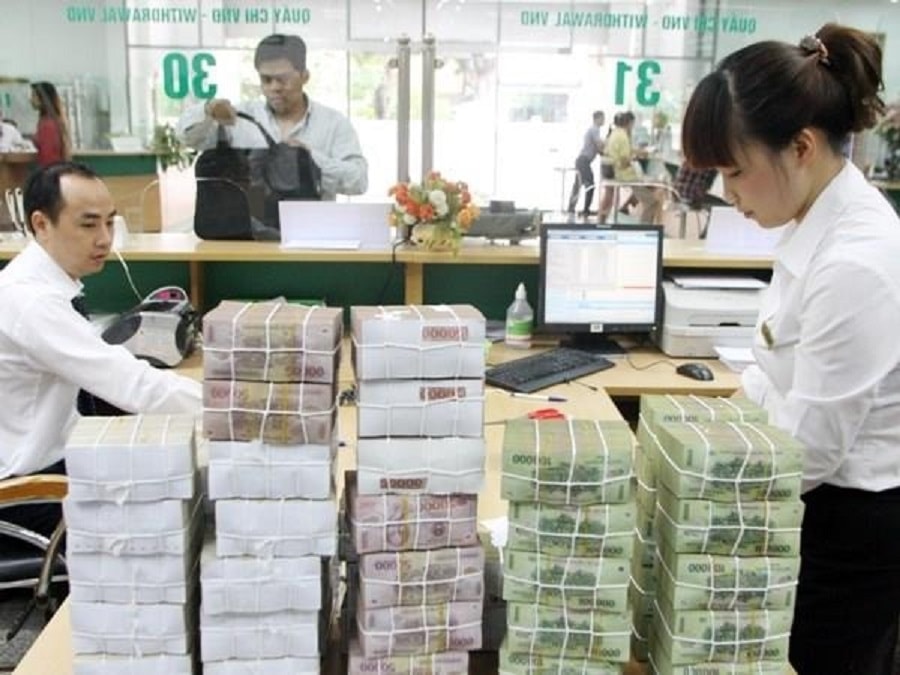
In the context of increasingly sophisticated high-tech crimes, anti-money laundering efforts have become a crucial pillar in protecting the financial system and strengthening confidence in Vietnam's digital economy.
According to Deputy Governor of the State Bank of Vietnam, Nguyen Ngoc Canh, perfecting the legal framework for anti-money laundering is a key task in the National Action Plan being implemented by the Government. Circular No. 27/2025/TT-NHNN of the State Bank of Vietnam , guiding the implementation of some provisions of the Law on Anti-Money Laundering, effective from November 1, 2025, is considered a major step forward in this process. The Circular stipulates that financial institutions and payment intermediaries must report transactions of VND 500 million or more domestically or USD 1,000 or more internationally, while strengthening mechanisms for monitoring, reviewing, and suspending suspicious transactions. The transition to fully electronic reporting enhances transparency and reduces risks associated with manual processing.
Along with refining regulations on reporting and monitoring transactions, the government is also expanding its regulatory framework to the digital asset sector – an area at high risk of being exploited for money laundering. Specifically, Resolution 05/2025/NQ-CP on piloting the cryptocurrency market requires strict compliance with anti-money laundering regulations. This is considered a timely step to create a legal framework and affirm the determination to tightly control digital asset transactions – an area with many potential risks of cross-border money laundering.
Dr. Nguyen Thai Ha, Head of the Law Faculty at the Banking Academy, noted that Vietnam's legal system for preventing and combating money laundering has approached international standards, but still lacks uniformity, particularly in regulating virtual assets and digital transactions – loopholes that criminals can exploit to launder money.
"In particular, the fact that we don't yet have a proper legal framework for virtual assets is the biggest loophole that can be exploited by money laundering activities," emphasized Dr. Nguyen Thai Ha.
According to the expert, to improve the effectiveness of anti-money laundering efforts, Vietnam needs to synchronize its legal system; enhance enforcement effectiveness; and further improve the skills of stakeholders involved in anti-money laundering activities so that they can quickly identify suspicious transactions, including those carried out using new methods and tactics.
As the legal framework is strengthened, technology will play a crucial supporting role in enforcement, helping authorities detect unusual transactions early and increase the effectiveness of supervision.
Dr. Nguyen Thai Ha suggested that Vietnam needs to accelerate the application of modern technologies such as artificial intelligence (AI) and big data analytics in its transaction monitoring system. Relevant agencies, from the State Bank of Vietnam and the Ministry of Public Security to the Ministry of Information and Communications, need to build a close inter-agency coordination mechanism to ensure that information on transactions, identities, and money flows is shared promptly.
He also emphasized the deterrent factor: "Timely detection and strict handling of all violations of anti-money laundering laws are essential to creating a deterrent effect on those involved."
On the international stage, Vietnam's hosting of the signing ceremony of the United Nations Convention against Cybercrime demonstrates its commitment to working alongside the international community in data sharing, coordinated financial tracing, and preventing cross-border crime.
It is clear that simultaneously improving legislation, applying surveillance technology, and strengthening international cooperation are the three pillars that help Vietnam consolidate its "shield" against money laundering. In the context of hosting the signing ceremony of the United Nations Convention against Cybercrime, Vietnam is affirming its determination not only to protect national financial security but also to contribute to global efforts to combat cross-border crime in the digital age.
According to VNASource: https://baohaiphong.vn/tang-suc-de-khang-tai-chinh-truc-nguy-co-rua-tien-524550.html





























![[Video] The craft of making Dong Ho folk paintings has been inscribed by UNESCO on the List of Crafts in Need of Urgent Safeguarding.](https://vphoto.vietnam.vn/thumb/402x226/vietnam/resource/IMAGE/2025/12/10/1765350246533_tranh-dong-ho-734-jpg.webp)

























































Comment (0)