

 |
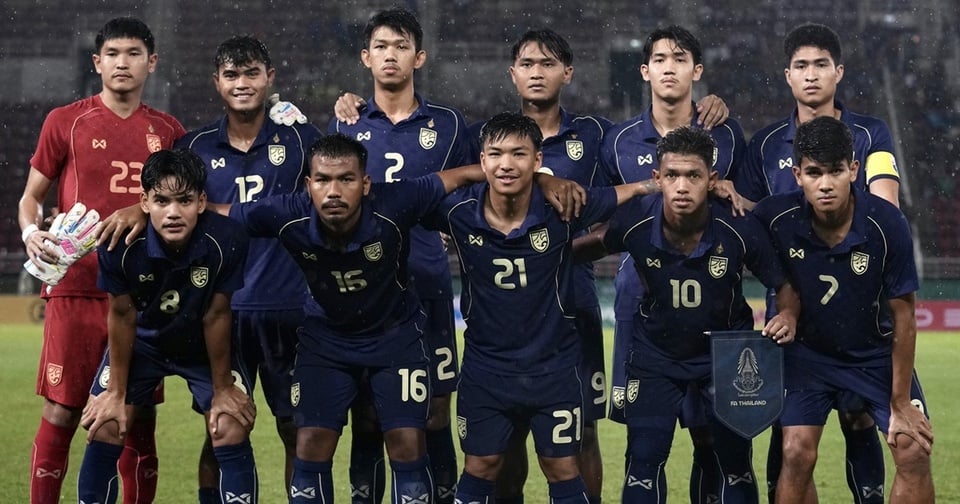
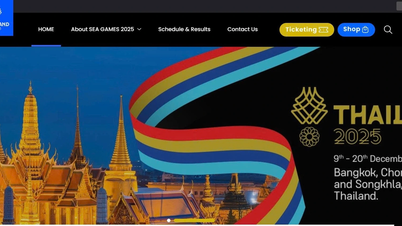
Thailand prepares to compete at the SEA Games. |
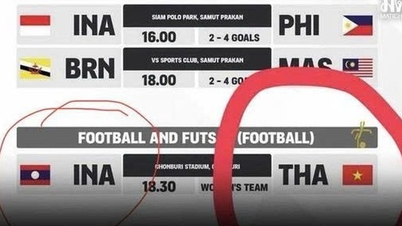
After Cambodia withdrew, instead of re-grouping to ensure fairness, Thailand chose to move Singapore from Group C to Group A, creating three groups with three teams. Although the reason given was “mechanical and convenient”, the regional public questioned whether the Thais were avoiding the risk of an early clash with Vietnam, the most difficult opponent at the youth level at present.
Cambodia withdraws, Thailand handles "quickly" but controversially
Cambodia has suddenly withdrawn from 9 of the 21 sports registered for the 33rd SEA Games, including men's football. The main reason is due to tensions along the Thai-Cambodian border, which has caused concern for the security of athletes. The decision disrupts the entire structure of the pre-prepared group stage. Group A only has host Thailand and Timor Leste, while Group B includes Vietnam, Laos, Malaysia; Group C has Indonesia, Myanmar, Philippines and Singapore.
This situation should have forced the organizers to redraw the lots to ensure the principles of seeding as well as the balance of expertise. Instead, the Sports Authority of Thailand (SAT) Director General, Mr. Kongsak Yodmanee, proposed moving Singapore, the weakest seeded team, from Group C to Group A. This would create a system of three groups of three teams each, and would allow the schedule to be changed less.
 |
Thailand is not afraid to meet Indonesia early. |
However, this quick solution was immediately met with backlash. Many Indonesian fans argued that if Cambodia, the team in Pot 2, withdrew, the most suitable replacement team in Group A would be the Philippines (Pot 3), not Singapore, which was in Pot 4. When Singapore was promoted to Group A, the situation became too unequal: Thailand only had to face Timor Leste and Singapore, the two weakest teams in the seed groups, while in Group C, Indonesia faced Myanmar (Pot 2) and the Philippines (Pot 3).
On the sporting level, it would be fairer to redraw the draw. However, Thailand chose the most convenient way, making the story not only an organizational issue but also a psychological and tactical one.
Afraid to meet Vietnam early in the semi-finals?
One hypothesis is that Thailand does not want to mess with the draw because they are worried about the possibility of facing Vietnam in the semi-finals. According to the current schedule, Thailand is the default seed in Group A and is almost certain to compete for the top spot. The branching mechanism also stipulates that the winner of Group A will meet the winner of Group C or the runner-up of Group B/C, but cannot meet the winner of Group B. That means that if everything remains the same, Thailand will almost certainly avoid Vietnam in the final.
But if the draw is redrawn, Vietnam could be moved to Group C and then the chance for the two teams to meet in the semi-finals would be very high. This is probably something that Thai football does not want, especially after a series of memorable defeats against Vietnamese youth teams in recent years.
At the U22/U23 level, Vietnam is showing unprecedented stability in the region. Not relying on naturalized players, Vietnam has continuously won the U23 AFF Championship three times in a row, including 2022 when it defeated Thailand in both matches (group stage and final) in Cambodia. At the SEA Games, Vietnam won twice in 2019 and 2021, including a victory over Thailand in the 2021 final.
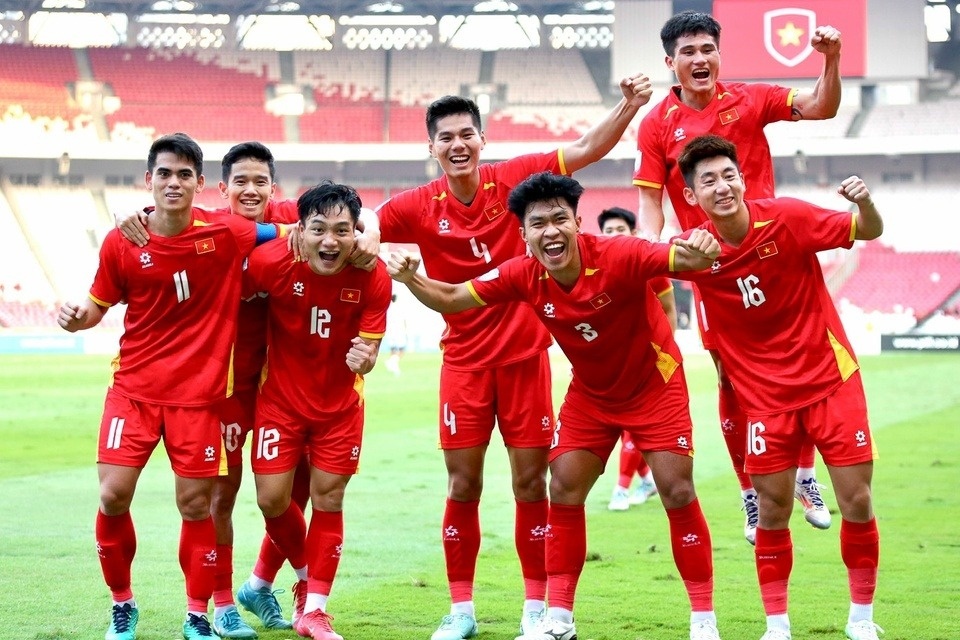 |
Young Vietnamese players have repeatedly brought sadness to Thailand. |
Even in continental tournaments, Vietnam has also made its mark by passing the group stage in 3/4 recent Asian tournaments, including eliminating Thailand in the group stage of the 2022 AFC U23 Cup. While Indonesia has emerged with a generation of players playing in Europe and once ranked fourth in the Asian U23, the Thai mentality of "fearing Vietnam" in youth football is still well-founded. Vietnam is not noisy, but very unpredictable: playing disciplined, pressing well and adapting quickly to short tournaments like the SEA Games.
Therefore, although the Thai organizers cited “convenience” as the reason, many believe that technical and psychological factors also play a significant role. In a tournament where the chance of winning the championship is decided by one or two knock-out matches, avoiding strong opponents for as long as possible is always a realistic option.
It can be said that the decision not to redraw the lot is not only a technical matter, but also reflects how Thailand views its biggest rival at the moment. And in the eyes of the Thai people, that rival is no longer Indonesia, which is rising rapidly with European talents, but Vietnam, a young, stable, brave and experienced team in decisive matches.
Source: https://znews.vn/thai-lan-khong-boc-tham-lai-vi-ngai-gap-u22-viet-nam-som-post1608054.html



![[Photo] Parade to celebrate the 50th anniversary of Laos' National Day](/_next/image?url=https%3A%2F%2Fvphoto.vietnam.vn%2Fthumb%2F1200x675%2Fvietnam%2Fresource%2FIMAGE%2F2025%2F12%2F02%2F1764691918289_ndo_br_0-jpg.webp&w=3840&q=75)
![[Photo] Worshiping the Tuyet Son statue - a nearly 400-year-old treasure at Keo Pagoda](/_next/image?url=https%3A%2F%2Fvphoto.vietnam.vn%2Fthumb%2F1200x675%2Fvietnam%2Fresource%2FIMAGE%2F2025%2F12%2F02%2F1764679323086_ndo_br_tempimageomw0hi-4884-jpg.webp&w=3840&q=75)



























































Comment (0)