

At the 10th session of the 15th National Assembly, contributing comments to the draft Law on Press (amended), delegate To Ai Vang - National Assembly Delegation of Can Tho City proposed that the drafting agency add binding responsibilities to press agencies, journalists and related organizations and individuals when using artificial intelligence (AI) technology in press activities.
According to the delegate, in the context of artificial intelligence technology being increasingly widely applied in the production, editing and distribution of information, the risk of some subjects taking advantage of AI to create false, distorted, defamatory, fraudulent content or violating national security is real. Although the draft law currently only regulates agencies, organizations and individuals participating in domestic press activities, in response to practical requirements, the delegate said that it is necessary to add regulations on the responsibility of AI users and a mechanism to control AI-generated content. This is to ensure professionalism, ethics and safety in press activities.
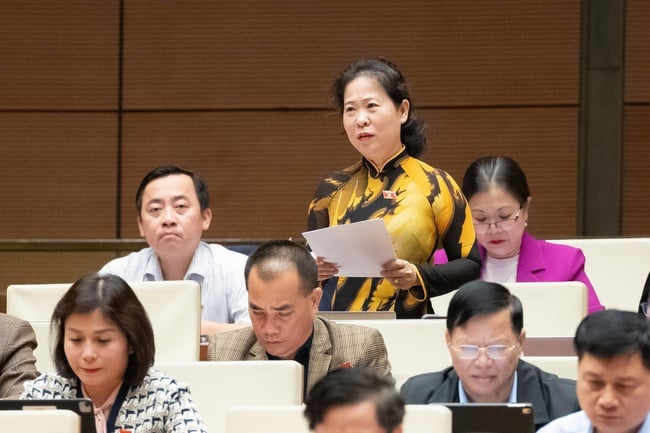
Delegate To Ai Vang - National Assembly Delegation of Can Tho City contributed comments on the draft Press Law (amended)
Second, according to delegate To Ai Vang, in Article 45 on providing radio and television services, Clause 2 stipulates that the unit providing radio and television broadcasting services must ensure the quality of transmission and broadcasting of channels serving the political tasks and essential information and propaganda of the country and locality. However, the actual operation of commune-level radio stations is currently facing many difficulties.
Previously, the district-level radio station played a key role in managing and operating the broadcasting system; at the same time, it maintained daily broadcasting, directed content, oriented and guided commune stations, as well as carried out management, supervision, equipment and repair.
After the merger, the majority of commune-level radio staff are part-time, lack expertise, and have not been properly trained in journalism and broadcasting. Equipment in many places is old, outdated, asynchronous, and degraded; funding for maintenance and repair is limited; many localities have not yet converted to modern information technology and telecommunications. Royalties and allowances for radio workers are still low, while the main activity is still rebroadcasting and rebroadcasting programs from higher levels, with few self-produced local programs; one-way transmission does not meet the requirements of the digital media environment.
However, over the years, the grassroots radio system has still played a positive role, promptly conveying the Party's guidelines and policies, the State's laws and policies to the people; providing information on weather forecasts, irrigation, storms and floods, helping farmers minimize damage caused by natural disasters. Through grassroots radio stations, people have full and timely access to official information on economics, culture, society, security and national defense.
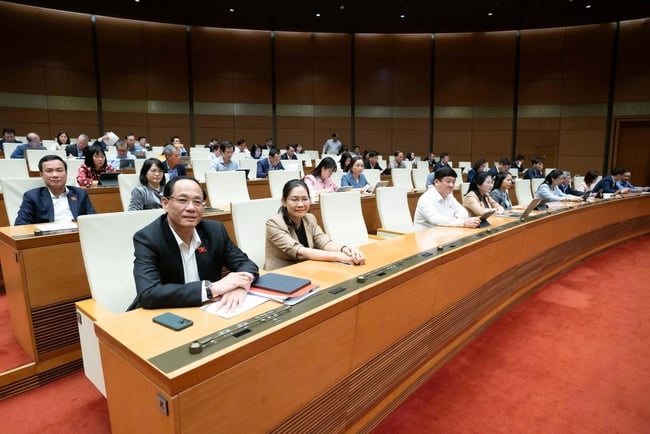
National Assembly deputies discuss the draft Press Law (amended)
From the above practice, delegate To Ai Vang made four recommendations to the Drafting Committee for consideration.
Firstly, it is necessary to clearly define job positions, title standards and stable full-time or part-time staffing instead of the current part-time staffing.
Second, there should be regulations on the state budget to ensure regular operations; investment in facilities and technical equipment for commune-level radio stations. At the same time, it is necessary to determine a framework for appropriate royalties and remuneration for radio workers at the grassroots level.
Press Law (amended): Focus on removing bottlenecks, ensuring press development
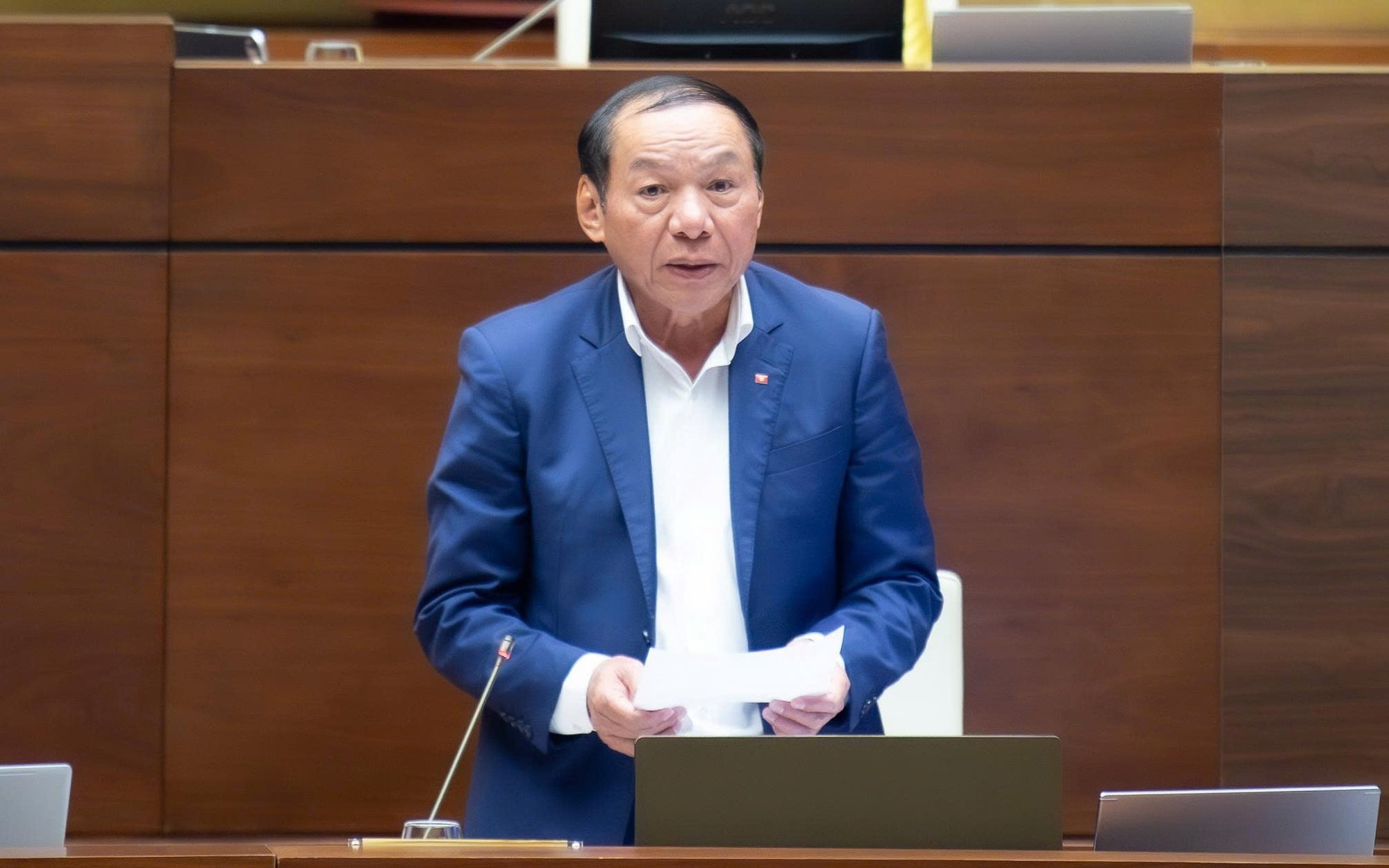
Third, institutionalize the digital transformation policy, prescribe a roadmap and policies to encourage commune-level radio stations to apply information and telecommunications technology according to the smart radio system in production and broadcasting, improve sound quality, save operating costs, manage more centrally and effectively, in line with the general development trend of digital media.
Fourth, in addition to rebroadcasting, it is necessary to create a legal corridor to allow and encourage commune-level radio stations to proactively produce programs with rich, practical content, suitable to local characteristics such as information on agriculture, natural disaster prevention and control as well as policies and laws related to people and the community, especially urgent issues such as storms, floods, natural disasters or epidemics.
"Currently, the Ministry of Science and Technology has pointed out that the remaining signal dips are one of the nine existing problems affecting communication activities in communes, especially communes in remote areas, in addition to communes in remote, border and island areas. Therefore, we would like to recommend that relevant ministries and branches soon coordinate with localities and telecommunications enterprises to review and soon have a plan to eliminate signal dips according to the roadmap," the delegate proposed.
Source: https://bvhttdl.gov.vn/bo-sung-nghia-vu-phap-ly-doi-voi-to-chuc-ca-nhan-su-dung-ai-trong-hoat-dong-bao-chi-2025120312134866.htm


![[Photo] Cat Ba - Green island paradise](/_next/image?url=https%3A%2F%2Fvphoto.vietnam.vn%2Fthumb%2F1200x675%2Fvietnam%2Fresource%2FIMAGE%2F2025%2F12%2F04%2F1764821844074_ndo_br_1-dcbthienduongxanh638-jpg.webp&w=3840&q=75)



































![[VIMC 40 days of lightning speed] Da Nang Port: Unity - Lightning speed - Breakthrough to the finish line](https://vphoto.vietnam.vn/thumb/402x226/vietnam/resource/IMAGE/2025/12/04/1764833540882_cdn_4-12-25.jpeg)


































Comment (0)