

Speaking at the conference on implementing banking tasks for 2024 on January 8th, Governor of the State Bank of Vietnam Nguyen Thi Hong stated that 2023 presented many difficulties and challenges for the government's management of macroeconomic and monetary policies.
Specifically, global inflation has decreased but remains high, leading many central banks around the world to continue tightening monetary policy; the US dollar, oil prices, and gold prices are fluctuating; and some banks in the US and Europe have collapsed…
Domestically, the real estate and corporate bond markets have improved but still face many difficulties and obstacles. Furthermore, the lingering effects of the mass withdrawal incident at SCB at the end of 2022 have significantly impacted liquidity and market sentiment, making banks more cautious in managing and balancing their credit capital.
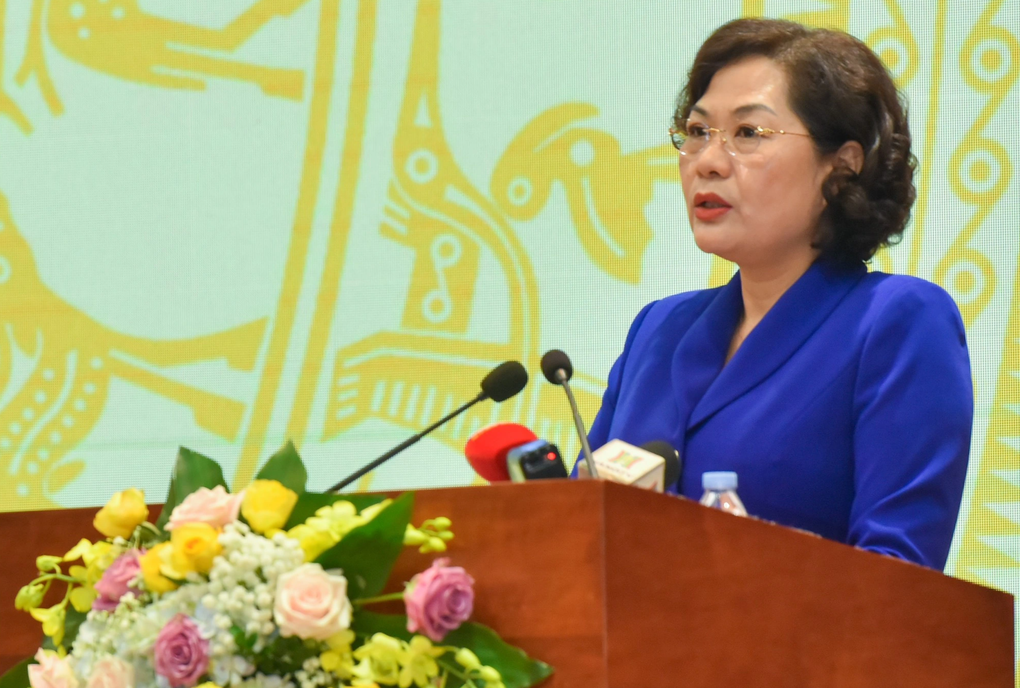
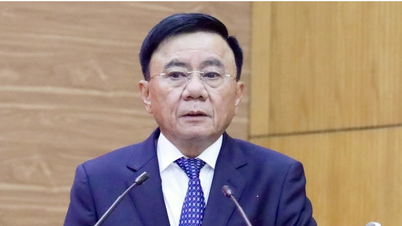
Governor of the State Bank of Vietnam, Nguyen Thi Hong, speaks at the Conference on the Implementation of Banking Tasks in 2024 on January 8 (Photo: SBV).
Nevertheless, Ms. Hong stated that the banking sector has achieved its set targets and objectives. These include contributing to inflation control and macroeconomic stability; the monetary and foreign exchange markets are basically stable; and interest rates have decreased, bringing them back to pre-Covid-19 levels.
"The VND is one of the stable currencies in the region and the world. In 2023, the VND depreciated by about 2.9%; banking operations were ensured, and digital transformation initiatives achieved the targets set in the banking sector's digital transformation plan," the Governor stated in his speech.
A representative from the State Bank of Vietnam stated that the global economic outlook and international markets continue to be complex this year. Domestically, the economy is expected to continue facing many difficulties and challenges.
In this context, monetary authorities are closely monitoring developments and the global and domestic economic situation to proactively, flexibly, and synchronously manage monetary policy tools, coordinating harmoniously and closely with other macroeconomic policies to support economic growth while controlling inflation, contributing to macroeconomic stability, the monetary and foreign exchange markets, and the banking system.
At the same time, the State Bank of Vietnam manages interest rates in line with market developments, macroeconomic conditions, and inflation; encourages banks to reduce costs, simplify credit granting procedures, and enhance the application of technology and digital transformation in credit granting processes…
The credit growth target for 2024 is approximately 15%, and the State Bank of Vietnam continues to direct credit institutions to focus lending on production and business sectors, priority areas, and growth drivers (investment, consumption, exports) in accordance with the Government 's policy; while strictly controlling lending to sectors with potential risks.
Simultaneously, this unit continues to implement the Project on restructuring the system of credit institutions associated with handling bad debts in the period 2021-2025; and effectively implement the plan to handle weak credit institutions.
The operator aims to keep the on-balance sheet non-performing loan ratio below 3% by 2024. Simultaneously, the unit will continue to promote digital transformation in banking operations, strengthening security and safety in payment and digital transformation activities.
Source

























![[Image] Close-up of the newly discovered "sacred road" at My Son Sanctuary](/_next/image?url=https%3A%2F%2Fvphoto.vietnam.vn%2Fthumb%2F1200x675%2Fvietnam%2Fresource%2FIMAGE%2F2025%2F12%2F13%2F1765587881240_ndo_br_ms5-jpg.webp&w=3840&q=75)



























































Comment (0)