

Despite improved investment and construction progress, real estate continues to attract capital.
Previously, a representative from the State Bank of Vietnam (SBV) stated that the growth rate of real estate loan outstanding balances in recent times is consistent with market developments as many projects are being resumed and investment and construction progress is improving.
According to Mr. Pham Chi Quang, Director of the Monetary Policy Department of the State Bank of Vietnam, in the past 10 months, the banking system has injected an additional 2.1 million billion VND into the economy . With this credit growth rate and the goal of supporting economic growth, credit growth in 2025 could reach 19-20%. As of September 29th, outstanding credit in the entire system reached 17.71 million billion VND, an increase of nearly 13.4% compared to the end of 2024.
Recent consolidated financial reports for the third quarter of 2025 from major lending banks indicate that real estate continues to play a key role in driving credit growth.
For example, at VPBank , real estate business activities account for a large proportion of the bank's total loan portfolio, reaching 22.97%. At MB, real estate business activities account for 10.42% of the bank's total loan portfolio, ranking only behind a few sectors such as: Wholesale, retail, repair of automobiles, motorcycles and other motor vehicles, and manufacturing...
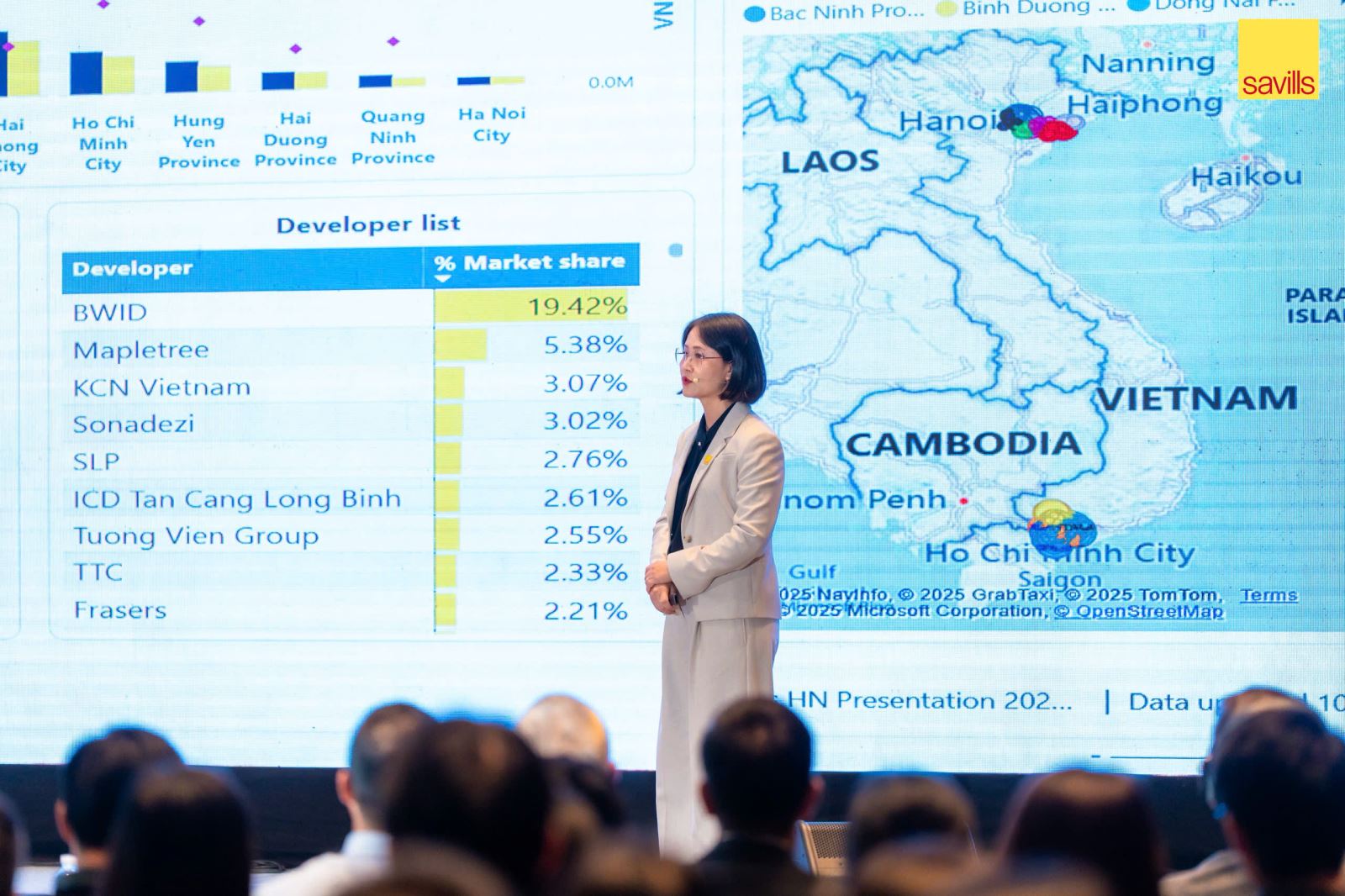
Speaking with a reporter from the newspaper Tin Tuc va Dan Toc (News and Nation), Ms. Do Thu Hang, Senior Director of Research and Development at Savills Hanoi, said that in recent times, the Government and various ministries and agencies have made great efforts to issue policies and directives to unblock the supply, helping people access housing at more affordable prices.
For example, the Hanoi apartment market in the third quarter of 2025 continued to witness a strong recovery, supported by significantly improved infrastructure, planning reforms, and strong demand. Accordingly, new supply in the quarter reached over 6,300 units, bringing the total for the first nine months of the year to over 20,000 units. "This is an impressive number compared to the Ho Chi Minh City market," said Ms. Do Thu Hang.
Savills experts predict that in the last months of the year, the Vietnamese market will see a new supply of 8,900 apartments. Over the next two years, the number of handed-over apartments will be abundant, mainly mid-range apartments, while the number of high-end apartments will continue to increase, but the supply of affordable apartments is unlikely to improve.
Many loan options available for homebuyers.
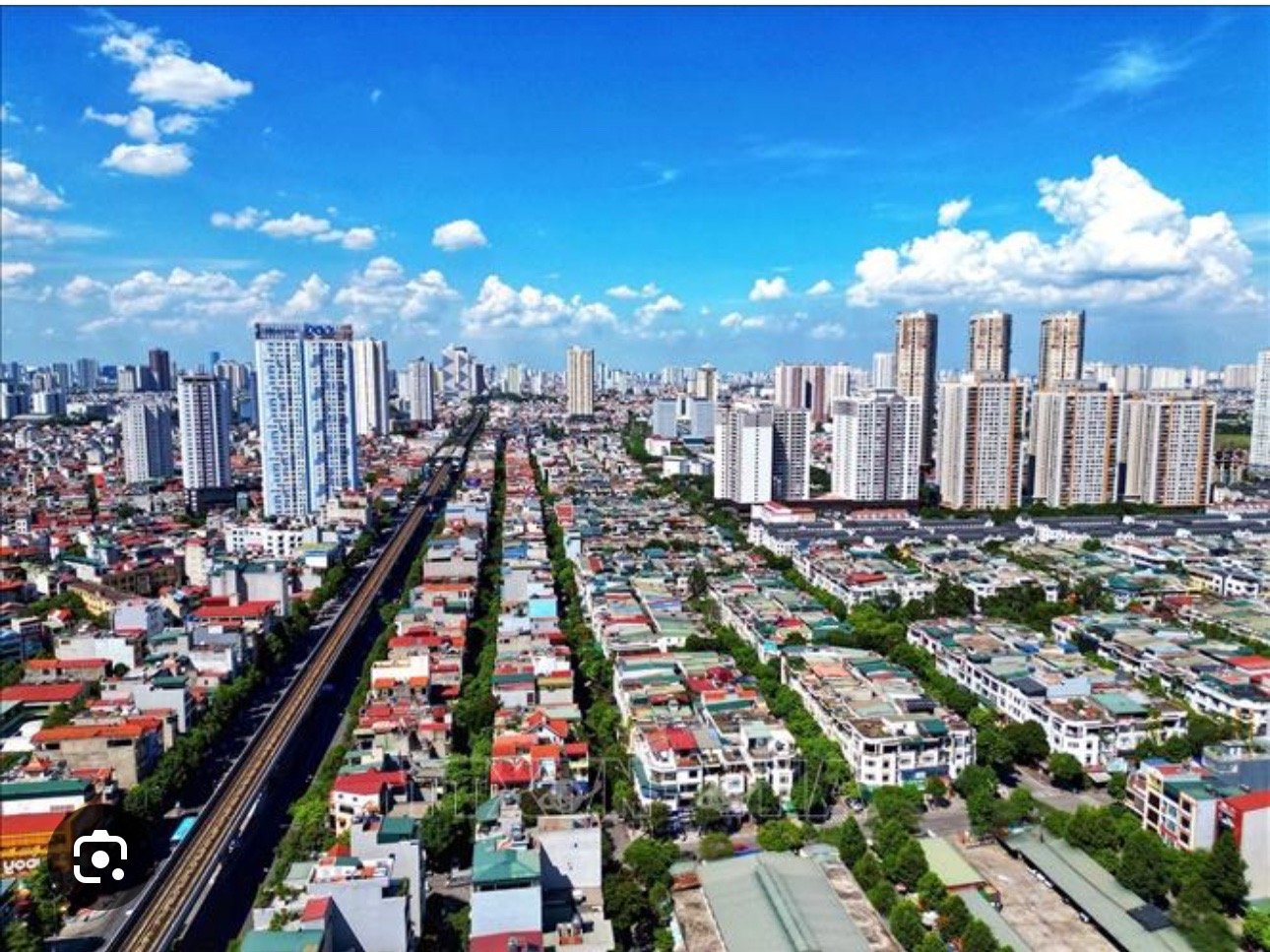
Interest rates for home loans in early October 2025 remained relatively stable, mainly fluctuating between 5.5% and 6.5% per year.
For younger customers, banks offer preferential interest rates; for example, HDBank offers a loan interest rate of 3.5%/year for the first 3 months, 6.5%/year for the first 12 months, and 7.5%/year for the first 24 months. After the fixed interest rate period ends, the bank will float the interest rate within a 4% margin, fluctuating around 11%/year.
LPBank offers a loan package worth VND 5,000 billion, with starting interest rates from just 3.88% per year for the first 3 months. Customers can borrow 100% of their capital needs, with a maximum loan term of 35 years and a 24-month grace period for principal repayment.
MSB is offering a preferential home loan package for young people with interest rates starting from only 4.5% per year, fixed for the first 6 months. The loan limit is high, up to 80% of the collateral value or 95% of the total loan amount. Notably, customers receive a grace period of up to 24 months for principal repayment and a waiver of early repayment fees up to VND 100 million per month.
The Big 4 banks also offer preferential interest rates for young people. Agribank, for example, offers a loan program with a fixed interest rate of 5.5% per year for the first three years. Customers can borrow up to 75% of their capital needs when using the asset acquired with the loan as collateral. Notably, if there is other collateral besides the asset acquired with the loan, customers can borrow up to 100% of their capital needs. The maximum loan term is 40 years. Customers are exempt from principal repayment for up to the first 60 months, helping to reduce initial repayment pressure.
According to Ms. Do Thi Thu Hang, regarding interest rates for home loans, for high-end commercial housing products, buyers will have to carefully consider their financial capacity and intended use. Meanwhile, for customer groups needing support, adjusting credit policies is essential to reduce the pressure of borrowing for home purchases.
“When interest rates are adjusted appropriately, buyers, developers, and lenders all benefit, helping the market develop more harmoniously. Importantly, it is necessary to diversify solutions and expand supply to suit each target group,” said the Senior Director, Research and Development, Savills Hanoi.
According to Ms. Do Thu Hang, market sentiment in the real estate sector has significantly improved after a period of concern over the new US tariff policies. Savills also observes that confidence has returned as tariff policies and guidelines have become clearer. This confidence is clearly reflected in the recent developments in the industrial real estate sector. Savills notes that the occupancy rate for industrial land is currently around 88%, continuing to remain high, although the volume of new leased area has slowed down somewhat. This puts less pressure on investors and developers to reduce rental prices…
Neil MacGregor, General Director of Savills Vietnam, commented: "Currently, the important foundations for the growth of the Vietnamese real estate market have been established. Vietnam has amended the Land Law, the Housing Law, and the Real Estate Business Law... creating a legal framework for healthier and more sustainable development."
“Thanks to this, the regulatory authorities can expedite project licensing, reduce supply pressure, and bring more new products to the market. This is an important prerequisite for maintaining stable growth, controlling price increases, and moving towards the sustainable development of Vietnam's housing market,” said the General Director of Savills Vietnam.
The Vietnamese real estate market is entering a new growth cycle. In 2025, alongside the gradual implementation and application of legal regulations, the monitoring and regulatory activities of state management agencies will become stricter to ensure the market develops on the right track. The projected stable economic growth and increasingly synchronized infrastructure investment will significantly contribute to the growth of the real estate market.
Simultaneously, new trends such as smart cities, the application of artificial intelligence to real estate technology platforms, and sustainable development are gradually shaping the market. Affordable housing is also a key focus, supported by mechanisms promoting public-private partnerships and enhanced comprehensive development.
Directing funds towards social housing and affordable housing.
Outstanding loans currently stand at approximately 4 trillion VND, accounting for about 24% of the total outstanding loans in the entire system. This is not high compared to many developed countries, which often reach 40%. The fundamental solution is to rationally redirect credit flows towards social housing and affordable housing segments, instead of concentrating them on speculation or high-end projects.
To achieve this, Vietnam should remove legal obstacles, expand supply, and improve preferential credit policies. Currently, the 145 trillion VND loan package for social housing is being disbursed slowly due to a small number of projects, difficult loan conditions, and high interest rates; therefore, adjustments are needed to ensure its effectiveness is realized quickly.
Source: https://baotintuc.vn/kinh-te/tin-dung-bat-dong-san-co-tin-hieu-tang-toc-20251107012438049.htm









































































































Comment (0)