

On December 10, Ho Chi Minh City Law Newspaper organized a discussion "Law training in Vietnam today: Challenges and opportunities".
In his opening remarks, journalist Nguyen Duc Hien, Deputy Editor-in-Chief of the Ho Chi Minh City Law Newspaper , emphasized the urgent need for high-quality legal personnel in the context of strong economic development, deep integration, and the rapid changes in the global legal environment.
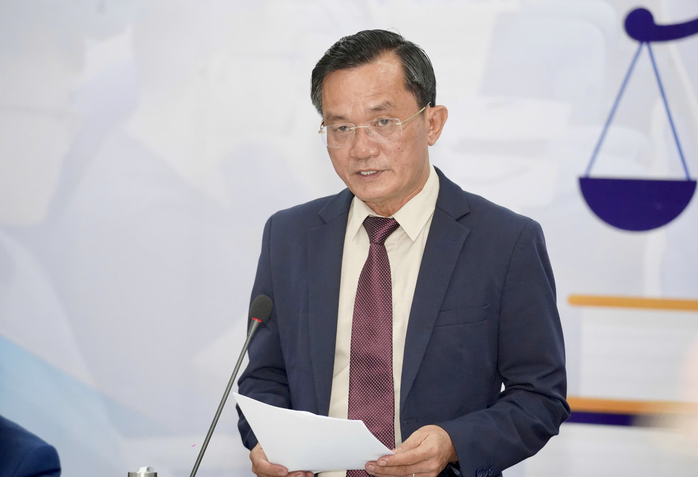
Journalist Nguyen Duc Hien - Deputy Editor-in-Chief of Ho Chi Minh City Law Newspaper
According to him, many big questions are being raised: Has the training program kept pace with new standards? How can we reconcile the academic foundation with the practical requirements of the profession, especially in the specialized field of law? And as the network of legal training expands and competition intensifies, ensuring quality and social responsibility becomes crucial.
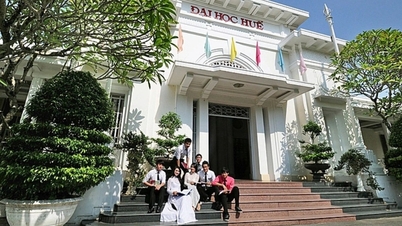
Associate Professor Dr. Doan Duc Luong, Rector of the University of Law - Hue University, stated that Vietnam currently has three models of legal education (specialized law schools, law faculties within multidisciplinary universities, and law departments within multidisciplinary universities). Each model has its own advantages and disadvantages and all need to be approached with a focus on standardization.
He pointed out four urgent requirements for current legal education: Promoting digital transformation, applying AI and big data in lawmaking and enforcement; Equipping with digital competencies: Information technology skills, computer law, cybersecurity, and data mining; Enhancing understanding of international law, cross-border thinking, and the ability to resolve international disputes; and Mastering the legal framework on the digital economy, personal data protection, e-commerce, and AI.
He also recommended standardizing the teaching staff, promoting research and international publications, unifying law training programs nationwide, supplementing specialized legal learning materials, and strengthening the link between training and practice.
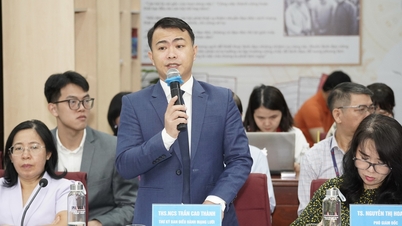
From another perspective, Associate Professor Bui Anh Thuy, Head of the Faculty of Law at Van Lang University, argues that the quality of legal education should not be judged by the name or model of the university, but rather by the curriculum, faculty, practical environment, experiences, and career opportunities available to students.
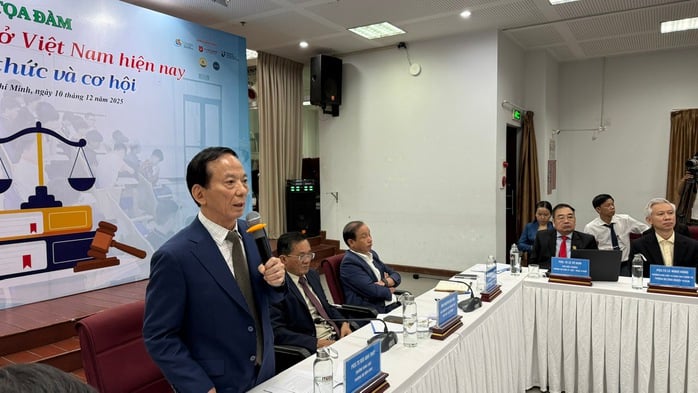
Associate Professor, Dr. Bui Anh Thuy shares at the seminar on law training
He asserted that legal training in multidisciplinary universities offers significant advantages: interdisciplinary nature, broad practical connections, and expanded career opportunities. Law graduates from multidisciplinary universities not only work in government agencies but also easily integrate into private businesses, banks, hospitals, etc. The idea of consolidating legal training into specialized law schools is inappropriate in the era of university autonomy, interdisciplinary education , and lifelong learning.

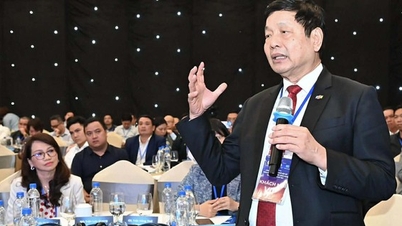
Lawyer Le Quang Y
Lawyer Le Quang Y, Head of the Dong Nai Provincial Bar Association, also stated that the demand for law graduates is very high. If limited to only a few specialized law training institutions, the supply will not be sufficient to meet market needs. "Legal professionals should have additional knowledge in another field before studying law to better apply the law to real-world situations," Mr. Y emphasized.
Source: https://nld.com.vn/yeu-cau-moi-cho-dao-tao-luat-trong-thoi-dai-so-196251210103939414.htm

![[Photo] The captivating scenery of the fragrant maple forest in Quang Tri](/_next/image?url=https%3A%2F%2Fvphoto.vietnam.vn%2Fthumb%2F1200x675%2Fvietnam%2Fresource%2FIMAGE%2F2025%2F12%2F10%2F1765353233198_lan09046-jpg.webp&w=3840&q=75)

![[Photo] Explore the US Navy's USS Robert Smalls warship](/_next/image?url=https%3A%2F%2Fvphoto.vietnam.vn%2Fthumb%2F1200x675%2Fvietnam%2Fresource%2FIMAGE%2F2025%2F12%2F10%2F1765341533272_11212121-8303-jpg.webp&w=3840&q=75)





















![[Video] The craft of making Dong Ho folk paintings has been inscribed by UNESCO on the List of Crafts in Need of Urgent Safeguarding.](https://vphoto.vietnam.vn/thumb/402x226/vietnam/resource/IMAGE/2025/12/10/1765350246533_tranh-dong-ho-734-jpg.webp)






















































Comment (0)