

VietNamNet newspaper, citing the book "Vietnamese Medicinal Plants and Herbs" by Professor Do Tat Loi, provides information on hundreds of medicinal plants. Among them are several types that are also familiar vegetables used in soups, such as sweet potato leaves, water spinach, jute leaves, amaranth, and chrysanthemum greens.
Sweet potato leaves
According to the Health & Life newspaper, Dr. Phan Bich Hang from the Traditional Medicine Department of Hanoi Medical University stated that, in Traditional Medicine, sweet potato leaves have a sweet and refreshing taste and a cooling nature, therefore they are often used to clear heat, detoxify, and cool the body, especially during hot and humid days.
In traditional medicine, using sweet potato leaves in remedies or daily meals can help reduce symptoms such as fever, thirst, and a feeling of internal heat. In addition, sweet potato leaves help promote urination, eliminating toxins from the body through urination.
With its sweet taste, cooling properties, and rich nutritional content, sweet potato leaves are not only a delicious food but also have many medicinal uses in traditional medicine.
Sweet potato leaves contain many important nutrients such as protein, fiber, vitamin C, vitamin K, calcium, and iron. In particular, the protein content in sweet potato leaves is much higher than in other green vegetables, providing essential amino acids for the body. The vitamin C content in sweet potato leaves is even higher than that of oranges or guavas, therefore sweet potato leaves are known by scientists as a very high source of vitamin C.
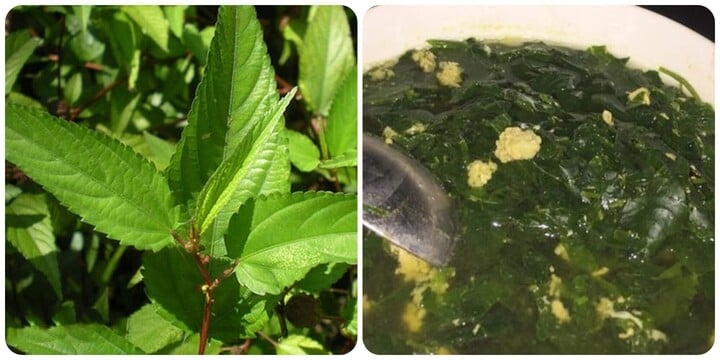
Jute leaves and sweet potato leaves are two types of vegetables that are good for health.
Spinach
According to Tuoi Tre newspaper, Dr. Huynh Tan Vu, a specialist in Traditional Medicine and lecturer at the University of Medicine and Pharmacy (Ho Chi Minh City), said that water spinach has a chemical composition of 92% water, 3.2% protein, 2.5% carbohydrates, and 1% cellulose.
In addition, water spinach has a very high mineral content, including 100mg% calcium, 37mg% phosphorus, and 1.4mg% iron. It also contains vitamins such as carotene, C, B1, PP, and B2, as well as a high mucilage content.
According to traditional medicine, water spinach has a sweet taste and a slightly cooling nature. Its uses include clearing heat, promoting urination and defecation, and detoxifying the body from harmful substances (poisonous mushrooms, poisonous cassava, etc.).
Because of its high fiber content, water spinach supports digestive function and helps reduce gastrointestinal problems. It acts as a laxative, beneficial for those suffering from indigestion or constipation. However, this food is not good for digestion if the spinach is not hygienically prepared.
Jute leaves
According to the Health & Life newspaper, Dr. Nguyen Van Tien from the National Institute of Nutrition stated that vegetables such as jute leaves, amaranth, and sweet potato leaves are highly nutritious, with consistent levels of carotenoids, vitamin C (179 - 64 - 52mg%), iron (2.8 - 2.5 - 2.1mg%), rich in minerals and trace elements, and containing 3-5 times more protein than other vegetables (3-6 g%).
Besides the well-known benefits of jute leaves such as aiding in constipation, promoting bowel movements, acting as a diuretic, increasing milk production, and detoxifying the body, jute leaves also have some "secrets." According to Dr. Yen Lam Phuc from the Military Medical Academy, jute leaves are among the top vegetables containing high levels of calcium (ranking 4th among edible vegetables), iron (ranking 1st), beta-carotene (ranking 4th), and vitamin C (ranking 3rd).
Jute leaves are low in calories and rich in important vitamins and minerals, including vitamins A and C, riboflavin, folate, and iron. Cooked jute leaves provide even higher levels of vitamins and minerals.
Besides its culinary uses, jute leaves have also been used for medicinal purposes in Ayurveda for centuries.
Malabar spinach
Malabar spinach, also known as Malabar morning glory, belongs to the Amaryllidaceae family. It is a climbing vine native to tropical Asia and Africa. In Vietnam, it grows wild or is cultivated as a hedge for its leaves. People harvest the stems and leaves of Malabar spinach in the summer and autumn.
Malabar spinach contains vitamins A and B3, mucilage, and iron. Ancient texts record that the vegetable has cooling properties, is diuretic, and treats constipation in young children and women with difficult childbirth. In some parts of China, Malabar spinach is used for detoxification.
Spinach
Amaranth comes in many varieties with different colors, such as common amaranth, spiny amaranth, and red amaranth, belonging to the Annona family. The plant grows commonly in many provinces; its leaves can be used in soups, and its bark and leaves are used in medicine. People use a decoction of the bark to treat irregular menstruation and anemia, a decoction of the leaves to treat rheumatic pain, and powdered bark or bark soaked in alcohol to treat malaria and as a tonic.
Chrysanthemum greens
Chrysanthemum greens, also known as chrysanthemum greens, are a type of chrysanthemum. They are widely cultivated, primarily as a vegetable, with a small amount used in medicine (either fresh or dried in the shade). It is believed to originate from Europe and northern Asia.
Chrysanthemum contains aromatic essential oils, many B vitamins, and a moderate amount of vitamin C. It can be used in remedies for chronic cough, eye pain, chronic headaches, and hemoptysis.
Source: https://vtcnews.vn/6-loai-rau-vua-nau-canh-an-hang-ngay-vua-lam-thuoc-chua-benh-ar906907.html


![[Image] Close-up of the newly discovered "sacred road" at My Son Sanctuary](/_next/image?url=https%3A%2F%2Fvphoto.vietnam.vn%2Fthumb%2F1200x675%2Fvietnam%2Fresource%2FIMAGE%2F2025%2F12%2F13%2F1765587881240_ndo_br_ms5-jpg.webp&w=3840&q=75)















































































Comment (0)