

On the evening of December 12th, rescue teams in Chonburi received reports of eight cases of food poisoning related to the SEA Games. The patients exhibited symptoms of abdominal pain, nausea, dizziness, and some cases of diarrhea.
According to investigations, all eight patients are athletes from the Thai Sports Delegation participating in the 33rd SEA Games. Immediately after receiving the news, the rescue team took them to Chonburi Hospital for treatment and to determine the cause of their condition.
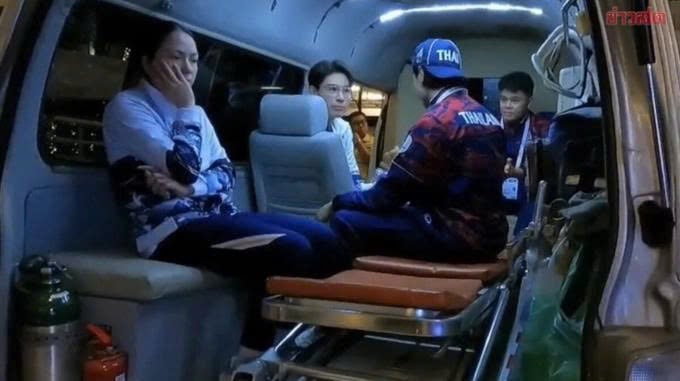
Thai athletes hospitalized due to food poisoning.
After this information emerged, public opinion erupted in controversy, with most criticizing the host country Thailand's organizational efforts.
By the afternoon of December 13th, Associate Professor and Doctor Sermsak Sumanon, head of the Thai medical team at the 33rd SEA Games, spoke out to vindicate the Organizing Committee of the 2025 Southeast Asian Games.
According to Sermsak Sumanon, 7 out of 8 athletes who suffered food poisoning were from the floorball team, and it's noteworthy that they did not eat the food provided by the Organizing Committee. Instead, this group of athletes went to a hotel not provided by the SEA Games Organizing Committee for lunch.
Sermsak Sumanon emphasized: "This meal is served before the athletes enter the official training camp and is not related to the food provided by the organizers."
Medical staff have confirmed this, and all seven athletes are being treated at Chonburi Hospital under the welfare program for national team athletes.
However, many believe that Sermsak Sumanon's statement was intended to cover up the mistakes of the SEA Games 33 organizing committee.
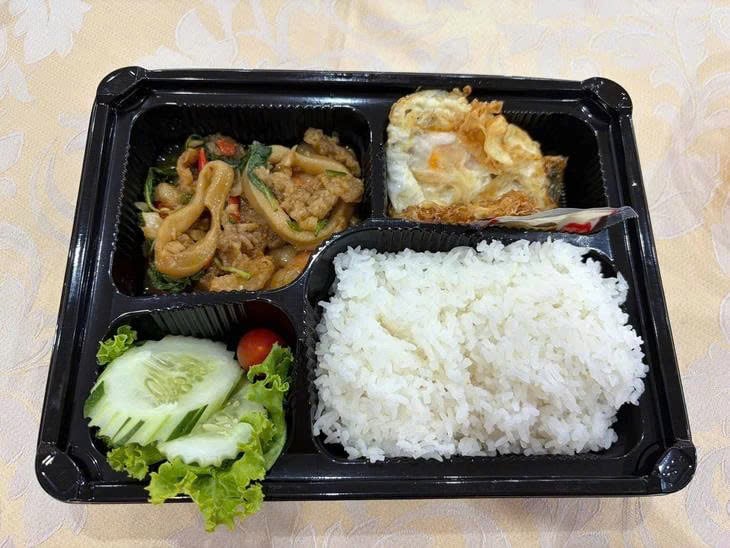
Lunch boxed meals on December 11th at the hotel for the Vietnamese women's futsal team (Photo: Provided by the team).
Since the start of the 33rd SEA Games, the Organizing Committee has received much criticism regarding the provision of food for the participating sports delegations.
For example, with the Vietnamese sports delegation, the football and futsal teams don't get enough to eat, so they have to buy extra food from outside to supplement their nutrition.
Even the Vietnamese women's futsal team, upon arriving in Thailand, had to spend two days eating boxed lunches at the hotel. Each player's lunchbox contained only a few dishes and was insufficient to provide the athletes with the necessary energy.
At noon on December 11th, each Vietnamese women's futsal player was given a lunchbox containing approximately one bowl of rice, a few slices of vegetables, an egg, and a few pieces of meat. Even for dinner, despite being a buffet, the players reported that there were only 4-5 dishes, which was quite limited and lacked sufficient nutrients.
Upon receiving the information, the Vietnam Football Federation (VFF) immediately instructed its logistics team to purchase raw food (beef, salmon, etc.) to prepare and cook for the football and futsal teams to eat at the hotel. In addition, the logistics team also ordered food from Vietnamese restaurants in Bangkok for the teams to consume.
But the controversy didn't stop at the food issue; the organizers of the 33rd SEA Games also faced numerous disputes related to the misidentification of the national flag. Even during the opening ceremony, they displayed a map of Vietnam that omitted many maritime territories.
Source: https://baoxaydung.vn/8-van-dong-vien-thai-lan-du-sea-games-33-nhap-vien-vi-ngo-doc-thuc-pham-192251213174835434.htm




































































Comment (0)