

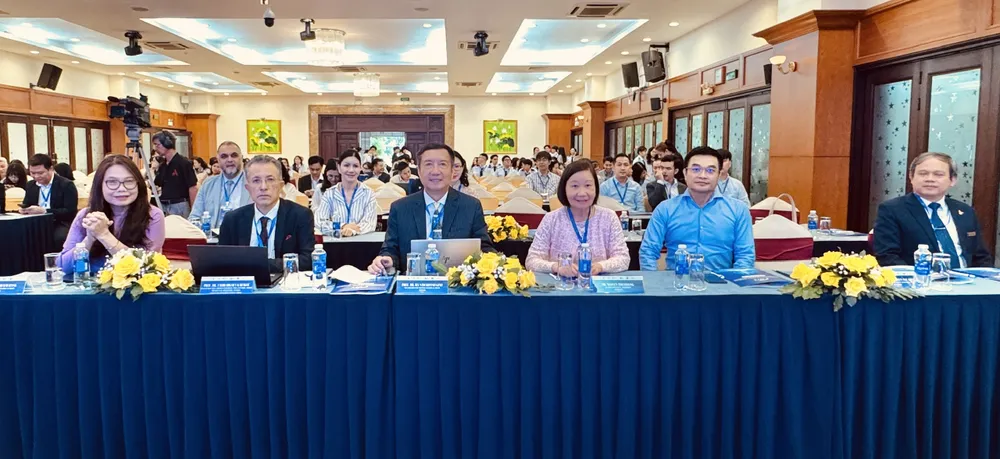
On the morning of December 10th, the 3rd International Conference on the Future of Aviation (AFCS 2025), themed “The Future of Aviation: Challenges and Solutions,” opened in Ho Chi Minh City.

The event, organized by the Vietnam Aviation Academy (VAA) in collaboration with Worms University of Applied Sciences (Germany), Singapore Institute of Technology (SIT), Piri Reis Maritime University (Turkey), and the International Association for Sustainable Energy and Aviation Research (SARES), brought together experts, scientists, and managers from Germany, Singapore, Canada, Australia, South Korea, the United States, Japan, and Taiwan (China).
In her opening remarks, Dr. Nguyen Thi Hai Hang, Director of VAA, emphasized the pioneering role of universities in leading innovation. “Aviation progress does not come from isolated efforts but from cross-border, cross-sectoral, and cross-generational collaboration. VAA is committed to promoting research and connecting global knowledge to support the next generation of aviation leaders,” Dr. Nguyen Thi Hai Hang stated.
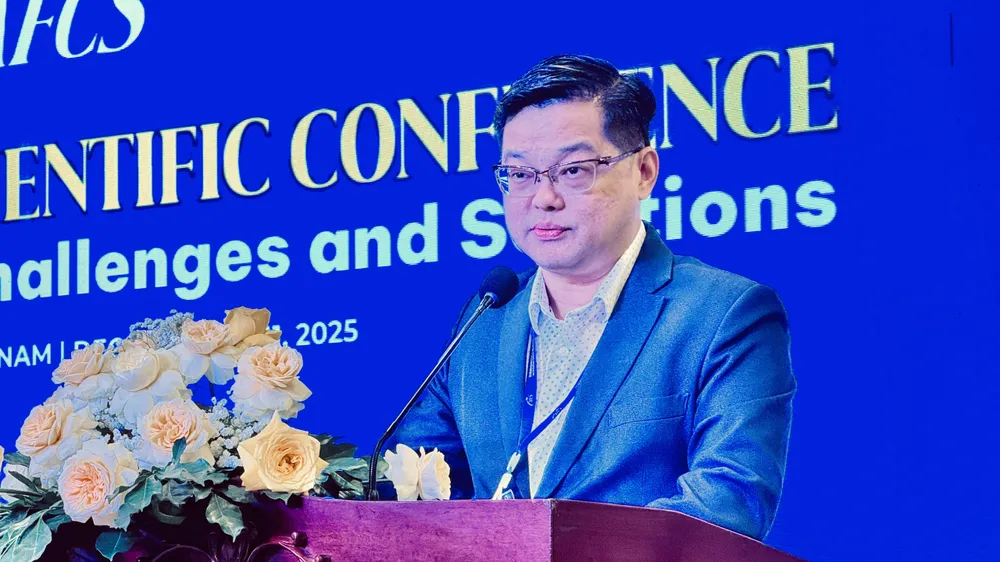
From an international perspective, Associate Professor SzeKee KOH, Director of Business, Media and Design at the Singapore Institute of Technology (SIT), stated that Singapore is heavily investing in automation and operational flexibility at Changi Airport's Terminal 5. The country will mandate the use of sustainable aviation fuel (SAF) from 2026 at a minimum of 1%, increasing to 3-5% by 2030. “AI will play a key role in the virtual control tower and smart airport management, optimizing operational capacity,” Associate Professor SzeKee KOH shared.
From Turkey, Professor Nafiz Arica, Rector of Piri Reis Maritime University, presented a video paper proposing an interdisciplinary approach between maritime and aviation, focusing on aerodynamics, hydrogen fuel cells, and structural optimization to achieve the highest energy efficiency.
In a keynote presentation, Mr. Ho Minh Tan, Deputy Director of the Vietnam Civil Aviation Authority, analyzed the "reaching for the horizon" picture of the global aviation industry after the pandemic. With one of the fastest recovery rates in the world , Vietnam is expected to reach 300 million passengers by 2030, creating significant pressure on infrastructure, airspace, and ground operations. Vietnam is accelerating the planning of a network of 30 airports, with Long Thanh being a key project.
Mr. Ho Minh Tan also pointed out 5 major challenges shaping the aviation industry today: (1) airspace complexity due to the emergence of UAVs and urban air traffic models; (2) cybersecurity risks; (3) pressure to green transition to achieve Net Zero 2050; (4) shortage of technical personnel, pilots and air traffic controllers after the pandemic; (5) unpredictable impacts from geopolitical fluctuations and fuel prices.
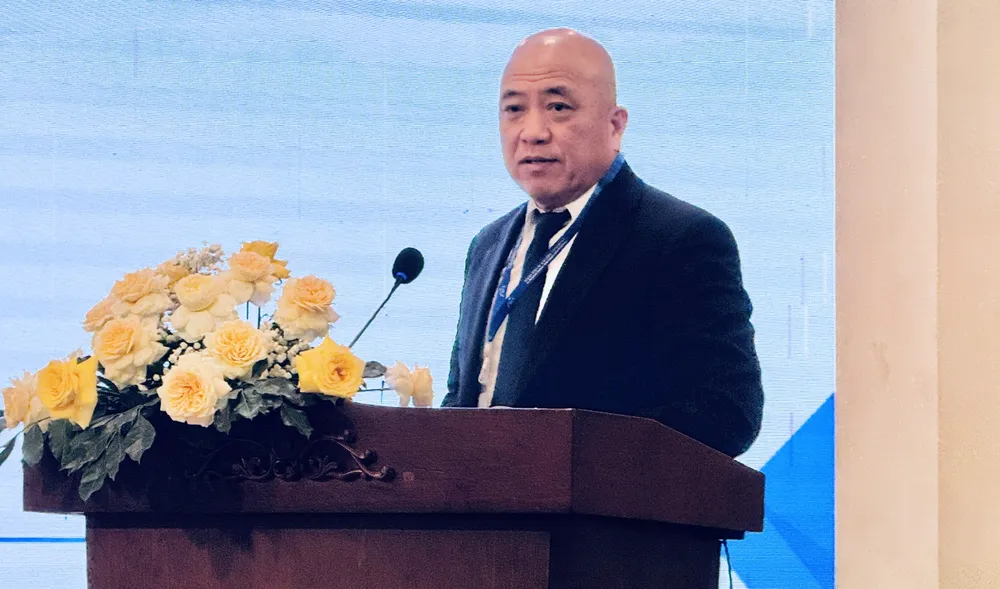
“When the skies are full of uncertainty, no nation can fly alone. Cooperation between the Government, businesses, and academia is the key to a sustainable future,” Mr. Ho Minh Tan emphasized, borrowing the message of the International Civil Aviation Organization: "No country left behind."
AFCS 2025 will continue until December 11-12, with in-depth discussions on technology, air traffic management, and air transport economics.
Source: https://www.sggp.org.vn/afcs-2025-dinh-hinh-tuong-lai-hang-khong-trong-ky-nguyen-tang-truong-nong-va-chuyen-doi-xanh-post827861.html






























![[Video] The craft of making Dong Ho folk paintings has been inscribed by UNESCO on the List of Crafts in Need of Urgent Safeguarding.](https://vphoto.vietnam.vn/thumb/402x226/vietnam/resource/IMAGE/2025/12/10/1765350246533_tranh-dong-ho-734-jpg.webp)



















































Comment (0)