

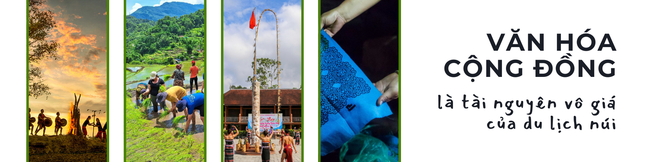
Mountain resort tourism is defined as a type of tourism that combines relaxation, health care, physical and mental recovery with the experience of nature, landscape, fresh climate and indigenous culture in mountainous areas. If majestic landscape and fresh climate are the attractive appearance, then the cultural factor is the "soul" that creates long-term, sustainable value and irreplaceable difference for this type of tourism.
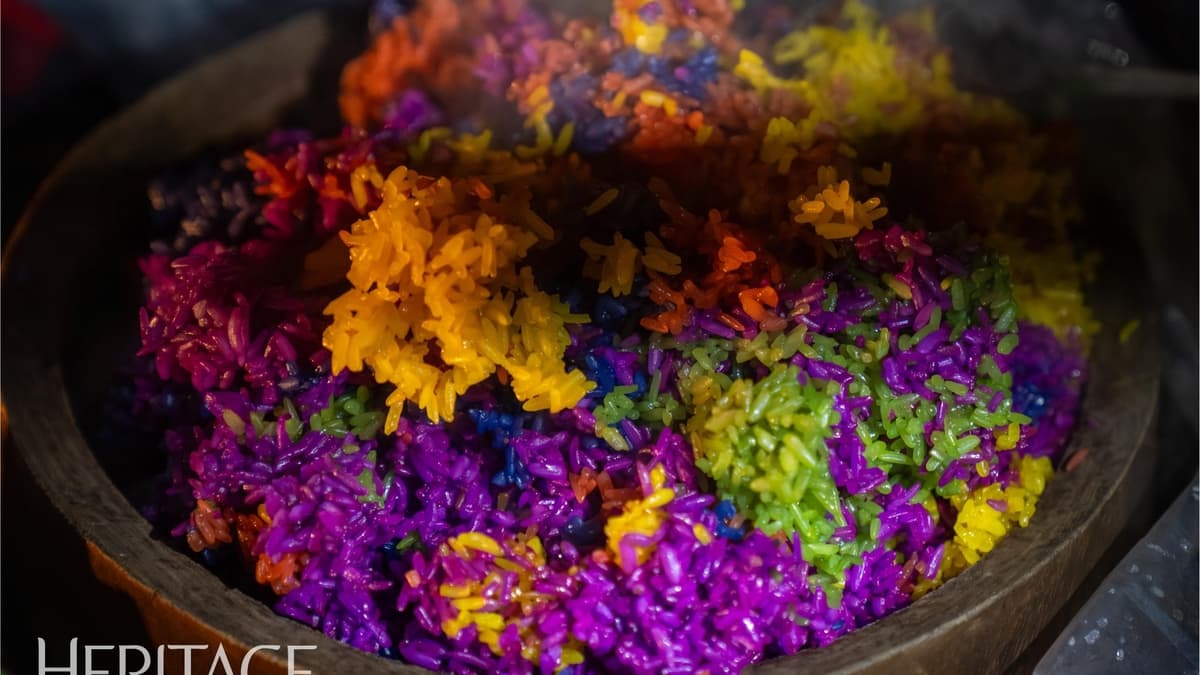
Ethnic minority communities are the ones who hold precious spiritual assets, creating richness in the tourist experience. This asset includes: from festivals, customs, unique folk performing arts (such as Thai xoe dance, Mong flute dance...), to typical cuisine and traditional architecture (stilt houses, rammed earth houses...). It is thanks to this direct contact with life and identity that the tourist experience becomes deeper and more meaningful.
Furthermore, for mountain resort tourism, community culture is an invaluable asset. It is not only a source of inspiration and differentiation for tourism products, but also a solid foundation to ensure long-term sustainable development. When culture and heritage are respected and exploited responsibly, it will continuously regenerate value, attract tourists and create harmonious economic benefits for generations.
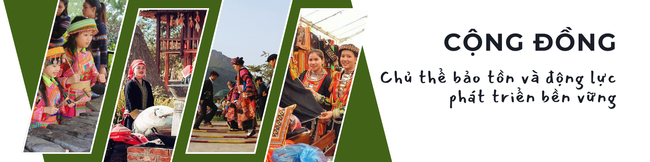
The role of local communities in the development of mountain resort tourism is multidimensional and pivotal, underpinned by the principles of the Community Based Tourism (CBT) model.
The community is the gatekeeper and direct conservation subject. They have the ultimate responsibility for preserving the natural environment and local cultural heritage – the core elements that create the unique appeal of mountain tourism. This conservation not only comes from awareness but is also linked to long-term economic benefits.
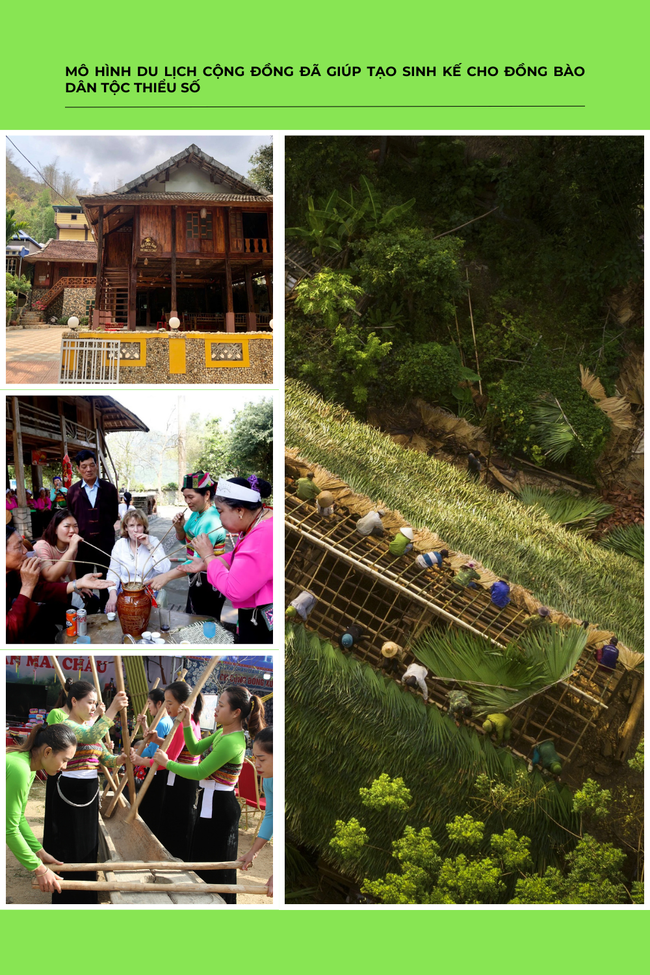
For example, in Ban Ang (Son La), the people's joint efforts to preserve forests and natural landscapes have directly generated income from accommodation services, thereby significantly reducing deforestation. In addition, the community is directly involved in providing core tourism services. They are the ones who operate traditional homestays, prepare authentic cuisine, provide transportation services, and develop traditional handicrafts, thereby diversifying and enriching the experience for tourists.
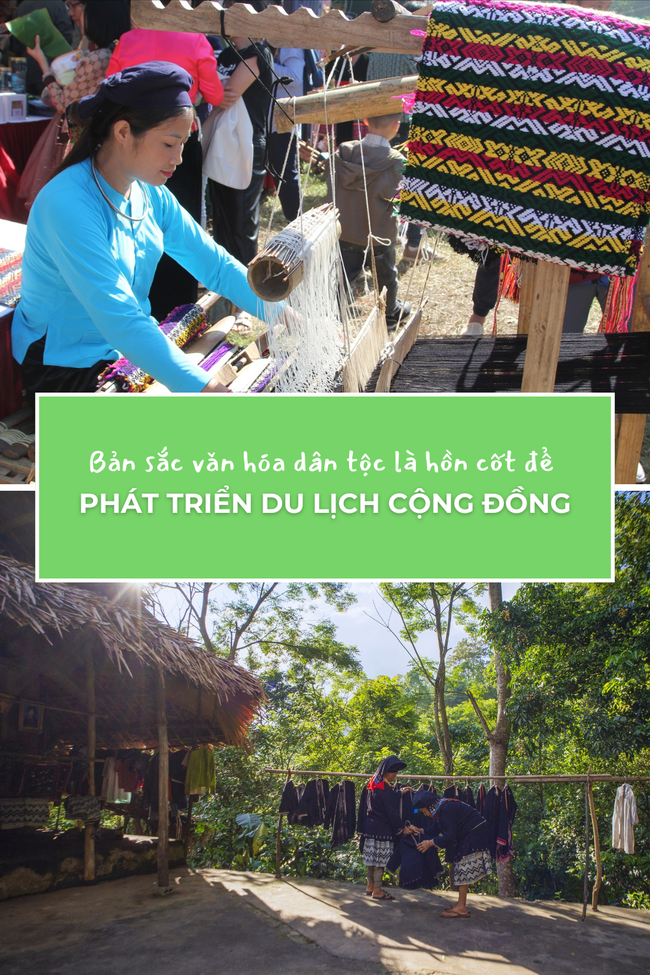
Local people also act as true ambassadors of intangible culture. They directly exchange, interact and perform traditional cultural heritages such as Thai folk dance (Xoe dance, conical hat dance). This form not only brings entertainment value to tourists, but is also a way for the community to tell its own cultural story, helping tourists have deeper experiences and longer-term attachment to the locality.
In terms of socio-economics, mountain resort tourism is considered a fast-growing industry, capable of creating jobs, reducing poverty and diversifying livelihoods for mountain communities that depend mainly on agriculture. This was pointed out in the 2014 study "Tourism in Mountain Regions: Hopes, Fears and Realities", jointly conducted by the University of Geneva, the University of Bern and UNEP (United Nations Environment Programme).
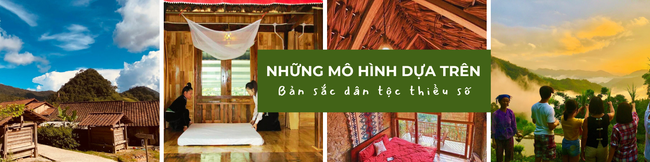
The success of mountain resort tourism in Vietnam is clearly demonstrated through many typical models, where ethnic minority communities play the role of subjects in preserving culture and developing livelihoods:
In Mai Chau (Phu Tho), the homestay model of the Thai people in Lac and Pom Coong villages is a model of preserving traditional stilt house architecture while upgrading facilities for tourists. Here, the people not only provide accommodation services but are also artisans who organize folk art programs (xoe dance, bamboo dance) and directly teach them to the younger generation, turning this cultural activity into an indispensable highlight of mountain resort tourism products.
In Lao Cai, the Green Thai Ban Restaurant model has successfully built a community value chain. This restaurant not only introduces cuisine but also uses almost entirely the supply from the local Thai community (more than 90% of the ingredients, costumes, and staff). The kitchen staff, service staff, and the performing arts group are all Thai people who understand traditional arts, create sustainable livelihoods, and help visitors gain an in-depth look at cultural identity.
Similarly, in Tuyen Quang, community-based mountain resorts such as Plum Homestay Dong Van also focus on creating stable jobs for local people and affirming sustainable development by focusing on service quality instead of short-term profits. Mr. Tai Dinh Tinh, operator of Plum Homestay Dong Van, said: "Visitors who visit our facility often feel friendly and close, but at the same time are satisfied with the luxurious and polite space thanks to the professional service, the layout and landscape design associated with the typical ecological environment."
These models are vivid proof that when ethnic minority communities are empowered, mountain resort tourism not only develops economically but also maintains the "quality" of indigenous culture. It is this direct participation and long-term connection of interests that has turned the people into the decisive factor for the quality and sustainability of Vietnam's tourism.
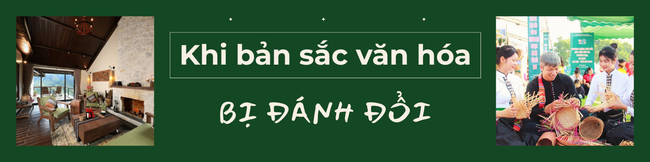
Despite its great potential, promoting the role of community actors is still facing many significant obstacles in Vietnam.
One of the biggest challenges is the risk of cultural loss and commercialization. Market demand often pushes traditional cultural values into a state of excessive "theatricalization". Many festivals and dances are performed according to schedules to serve tourists instead of the rhythm of indigenous culture, leading to the distortion of identity, loss of sacredness and causing the community to gradually forget its original meaning.
In addition, there is the problem of economic benefit distribution and the polarization of rich and poor. The large profits from mountain resort tourism are often concentrated in large enterprises and corporations. Ethnic minority communities only benefit by selling goods, taking photos for hire, or doing simple labor. This difference can easily cause dissatisfaction, lack of cohesion and can lead to potential conflicts within the community.
Rapid tourism development also puts heavy pressure on the environment. Overexploitation and massive construction on mountain slopes cause landslides, destroy the landscape, and create the problem of tourism waste. Communities are put in a difficult position: either protect the long-term living environment or pursue short-term benefits from tourism.
Finally, capacity and management limitations are also barriers. People lack knowledge about sustainable tourism, foreign languages, service skills and food safety. Furthermore, the local community tourism management mechanism is overlapping and lacks synchronous coordination, making it difficult for the community to truly take control of its activities. If these challenges are not properly addressed, the community will only be "on the sidelines in the development process of their homeland", and the goal of sustainable mountain resort tourism development will be difficult to achieve.

According to MSc. Nguyen Thi Phuong Lan (Vietnam Institute of Culture, Arts, Sports and Tourism), in order for the community to truly become the subject of cultural preservation and the owner of mountain resort tourism, it is necessary to implement a series of synchronous and sustainable solutions. First of all, raising awareness and capacity is essential: it is necessary to equip ethnic minorities with knowledge about sustainable tourism, communication skills, foreign languages, and service skills, while improving understanding of environmental protection and preserving identity.
Next, there is a need to strengthen participation and empowerment mechanisms by building transparent mechanisms that allow communities to participate in planning, decision-making and monitoring tourism activities; equitable benefit distribution is seen as key to encouraging people to actively protect resources.
In addition, the development of livelihood models associated with indigenous culture must be prioritized, through encouraging the exploitation of traditional cuisine, folk arts, crafts and indigenous architecture to create a stable source of income and increase product value.
At the same time, it is necessary to support infrastructure and value chain linkages, in order to develop a closed tourism ecosystem with close links between the Community - Enterprises - Management Agencies, in which the community plays an important role. Finally, it is necessary to encourage green tourism models by applying initiatives such as village environmental funds, models to limit plastic waste, or eco-tourism; because giving direct responsibility for nature conservation to the community will bring higher sustainable efficiency.
From practice, promoting the role of the community in developing mountain resort tourism is both a fundamental solution and an ultimate goal. Only the proactive, active and empowered participation of local communities, especially ethnic minority communities, can ensure long-term, harmonious development without harming local resources and culture./.
Source: https://bvhttdl.gov.vn/ban-sac-cong-dong-yeu-to-quyet-dinh-cho-du-lich-nghi-duong-nui-ben-vung-20251203043153749.htm


![[Photo] Parade to celebrate the 50th anniversary of Laos' National Day](/_next/image?url=https%3A%2F%2Fvphoto.vietnam.vn%2Fthumb%2F1200x675%2Fvietnam%2Fresource%2FIMAGE%2F2025%2F12%2F02%2F1764691918289_ndo_br_0-jpg.webp&w=3840&q=75)
![[Photo] Worshiping the Tuyet Son statue - a nearly 400-year-old treasure at Keo Pagoda](/_next/image?url=https%3A%2F%2Fvphoto.vietnam.vn%2Fthumb%2F1200x675%2Fvietnam%2Fresource%2FIMAGE%2F2025%2F12%2F02%2F1764679323086_ndo_br_tempimageomw0hi-4884-jpg.webp&w=3840&q=75)

















![[Video] Protecting World Heritage from Extreme Climate Change](https://vphoto.vietnam.vn/thumb/402x226/vietnam/resource/IMAGE/2025/12/03/1764721929017_dung00-57-35-42982still012-jpg.webp)
















































Comment (0)