

Reuters reported on March 20 that the Long March-8 rocket carried the Queqiao-2 signal relay satellite and two small satellites, Tiandu 1 and 2, into orbit from Hainan Island, serving the exploration of the far side of the Moon - a new phase in the effort to conquer this planet.
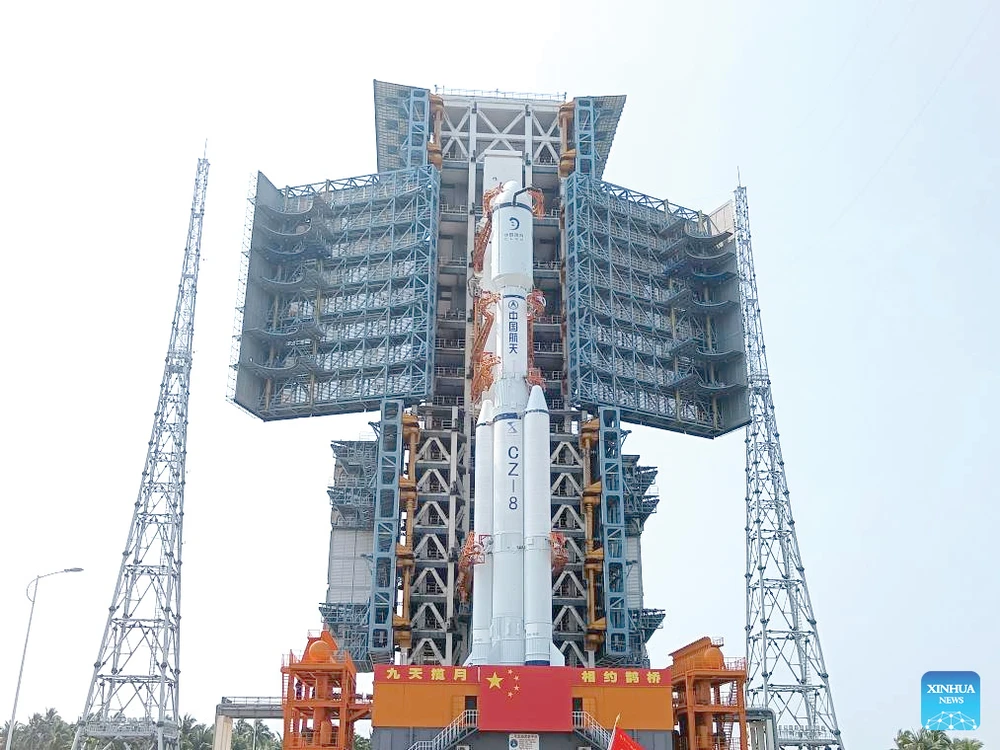
The near side of the Moon always faces Earth, meaning that transmitting signals from the far side to Earth is impossible without a relay satellite. Queqiao-2 will orbit the Moon to relay signals to and from the Chang'e-6 lunar probe, which is scheduled to launch next May.
This probe is tasked with searching for and collecting samples in an area on the far side of the Moon that no country in the world has ever set foot on. This project is not only a major breakthrough in China's lunar exploration journey, but also a historic moment marking the country's aerospace technology reaching a new height. Therefore, Queqiao-2 is considered a particularly important link in this project.
When the American Apollo astronauts orbited the Moon, their communications with Earth were cut off every time the command module entered the far side of the Moon. This is because the Moon itself blocks radio signals, making it difficult to communicate when it comes between Earth and any spacecraft. But Chinese scientists solved a centuries-old space problem and overcame the American scientists' difficulties by launching a relay satellite orbiting a point in space called the Earth-Moon Lagrangian point (L2) and facing the far side of the Moon. L2 is a point about 65,000km from the Moon.
This is one of five Lagrange points where gravity is balanced, meaning Queqiao-2 will orbit that spot forever because gravity isn't pulling it away. The fact that Queqiao-2 is built to stay and work at the L2 point will help it receive and transmit signals from Chang'e-6's lander to ground stations on Earth. Queqiao-2 is designed to operate for eight years and will take over the mission of Queqiao-1 (which was launched in 2018).
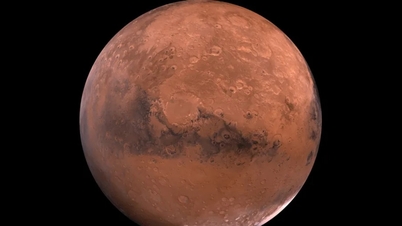
The satellite will also serve as a relay for the Chang'e-7 (2026) and Chang'e-8 (2028) missions. By 2040, Queqiao-2 will be part of a relay satellite network, acting as a communication bridge for exploration of the Moon as well as other planets such as Mars and Venus. The two small satellites Tiandu 1 and 2 will conduct experiments to develop this satellite network.
Meanwhile, in 2019, the Chang'e-4 probe was the first spacecraft to land on the far side of the Moon. Chang'e-6 is a very complex mission among China's lunar exploration missions. After landing on the Moon, the probe needs to be able to automatically collect samples, fly up, take off, and return to Earth - all automatically. If successful, Chang'e-6 will be a demonstration of the pinnacle of space technology that the US, Russia, and India have never done.
With Chang'e-7 and Chang'e-8, these missions will form the basis of a larger Chinese plan, called the International Lunar Research Station, which is expected to be built in the 2030s.
PEARL
Source




























































































Comment (0)