

In Indonesia, figures updated on December 6 from Aceh province on Sumatra island showed that at least 867 people had died and 521 were missing. Aceh recorded more than 800,000 people displaced. Indonesia's meteorological agency warned that the province could continue to receive "very heavy rain" through December 6, while North and West Sumatra also faced similar risks.
Aceh Governor Muzakir Manaf said rescuers were continuing to search for bodies in “waist-deep” mud. He warned that famine was a serious threat in remote areas where supplies were not yet available.
He said many villages, especially in Aceh Tamiang, had been completely washed away: “Many villages and districts now exist in name only.”
In Sri Lanka, the government confirmed 607 deaths and 214 missing. President Anura Kumara Dissanayake called it the most challenging natural disaster the country has ever faced. More than two million people, or nearly 10% of the population, have been affected.
Sri Lanka's Disaster Management Centre said more than 71,000 homes were damaged, with nearly 5,000 destroyed. Authorities warned that continued heavy rain could trigger more landslides, especially in the central region. Meanwhile in Thailand, state media reported at least 276 deaths due to flooding.
The severe flooding comes as two storms and a tornado simultaneously hit the region last week, bringing widespread heavy rain. Experts say such extreme weather conditions are likely to become more frequent due to climate change.
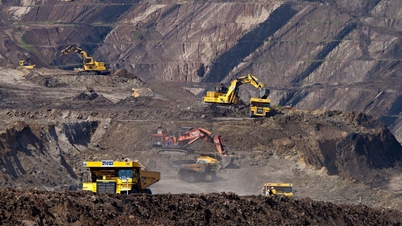
In Sumatra, deforestation and illegal logging – partly linked to global demand for palm oil – are thought to be driving the devastation. Images from the scene show large sections of timber swept away by floodwaters. Indonesia has long been among the countries with high rates of deforestation due to mining, plantations and forest fires.
Indonesian Forestry Minister Raja Juli Antoni said on December 5 that the government was revoking logging permits from 20 companies, covering a total area of 750,000 hectares, including flood-affected areas. Environment Minister Hanif Faisol Nurofiq also ordered an immediate halt to operations by palm oil companies, mining companies and power plants located upstream of the disaster zone.
Mr Hanif stressed that the Batang Toru and Garoga basins are ecologically important areas and “must not be encroached upon”.
According to expert Febi Dwirahmadi from Griffith University (Australia), tropical rainforests act as “sponges” to absorb water during heavy rains. After the forests are destroyed, the rain has nowhere to be contained, causing the water to flow straight into rivers and streams, causing more serious flash floods.
Source: https://congluan.vn/so-nguoi-thiet-mang-vi-lu-lut-o-chau-a-vuot-qua-1-750-10321604.html


![[Photo] 60th Anniversary of the Founding of the Vietnam Association of Photographic Artists](/_next/image?url=https%3A%2F%2Fvphoto.vietnam.vn%2Fthumb%2F1200x675%2Fvietnam%2Fresource%2FIMAGE%2F2025%2F12%2F05%2F1764935864512_a1-bnd-0841-9740-jpg.webp&w=3840&q=75)
![[Photo] National Assembly Chairman Tran Thanh Man attends the VinFuture 2025 Award Ceremony](/_next/image?url=https%3A%2F%2Fvphoto.vietnam.vn%2Fthumb%2F1200x675%2Fvietnam%2Fresource%2FIMAGE%2F2025%2F12%2F05%2F1764951162416_2628509768338816493-6995-jpg.webp&w=3840&q=75)












![[VIDEO] Save the Children helps children in Bac Ninh return to life soon after natural disasters](https://vphoto.vietnam.vn/thumb/402x226/vietnam/resource/IMAGE/2025/12/06/1765004276755_cu-u-tro-bn-2-cover20251206131142.jpeg)










































































Comment (0)