

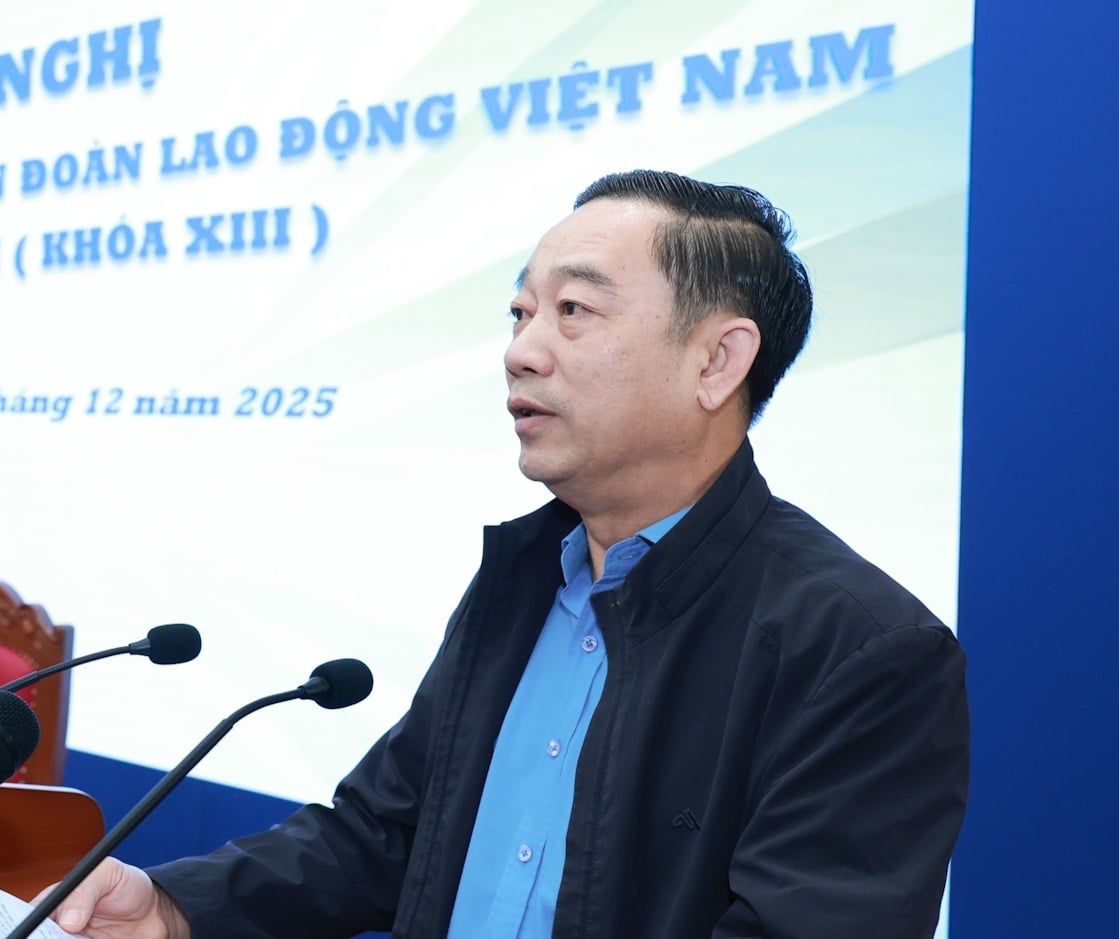
A reporter from the newspaper Tin Tuc va Dan Toc (News and Nation) had an interview with Mr. Le Van Hoa, Vice Chairman of the Ho Chi Minh City Federation of Labor, regarding this issue.
As a grassroots trade union, how has the unit proactively identified and proposed policies related to regional minimum wages based on practical experience, sir?
The Ho Chi Minh City Federation of Labor Unions views the minimum wage as a legal "floor" protecting vulnerable workers, and also as a very sensitive input cost for businesses. Therefore, any adjustments to wage levels and wage zoning must be based on evidence, ensuring a balance of interests between workers, employers, and the sustainable development of the locality.
Trade unions should not only "react" to policies already issued, but must also proactively identify shortcomings early on, based on practical experience at the grassroots level, promptly make recommendations, and participate from the drafting stage to the assessment of the impact of legal documents, especially regulations on minimum wage.
In the context of the restructuring of the two-tiered administrative system, rapid urban development, and deep international integration, the minimum wage policy must be adjusted flexibly, taking into account the cost of living, growth rates, transportation conditions, and the overall labor market between adjacent areas, avoiding excessive disparities that lead to labor migration, unhealthy competition, and frequent labor disputes.
In practice, after the reorganization of provinces and cities and the implementation of a two-tiered government system, Ho Chi Minh City has 168 commune-level administrative units; the "horizontal transfer" of minimum wage zoning from the old district level to the new commune level has resulted in some communes, wards, and special zones within the same labor space belonging to two different wage zones, separated by up to two regional tiers.
According to the draft Decree stipulating the regional minimum wage for 2026, the projected minimum wage for Region I is 5,310,000 VND; Region II is 4,730,000 VND; Region III is 4,140,000 VND; and Region IV is 3,700,000 VND.
Thus, the difference between Region I and Region III amounts to 1,170,000 VND, equivalent to over 28%, even though these areas are only separated by a bridge and a road, and the workers are engaged in the same occupations, performing the same type of work with the same intensity.
Based on the experience of the years 2013–2017, in the border area between Phu My town and the former Chau Duc district, a difference of just one wage level in the regional wage structure led to numerous disputes and complex collective work stoppages; only when the Government readjusted the regional classification did labor relations stabilize.
Building on previous research findings and the practical experience of the city's Trade Union in proactively proposing to the local and central authorities to upgrade a district from Zone 2 to Zone 1 (which was approved in 2017), the implementation of the new two-tiered government model on July 1, 2025, has revealed inadequacies in the minimum wage zoning at the commune, ward, and special zone levels compared to the zoning of districts, towns, and cities.
Based on feedback from workers and grassroots trade unions, through monitoring, dialogue at enterprises, and field surveys in areas bordering Region I, the Standing Committee of the Ho Chi Minh City Federation of Labor Unions has found that: The socio -economic development conditions, urbanization levels, transportation infrastructure, commodity prices, and living costs in some communes, wards, and special zones formerly belonging to Ba Ria - Vung Tau (now part of Ho Chi Minh City) have approached Region I, and are no longer suitable for the wage levels of Region III.
Based on that, the City's Labor Union issued Official Letter No. 3494/LĐLĐ dated September 30, 2025, proposing to adjust the minimum wage zoning from Zone III to Zone II for: Kim Long commune, Chau Duc commune, Ngai Giao commune, Nghia Thanh commune, Long Hai commune, Long Dien commune, and Con Dao special zone.
This proposal stems from a very clear management principle: "units bordering Region I should have a difference of no more than one sub-region," aiming to narrow the gap in income, living standards, and living conditions between regions, while also limiting the risk of labor disputes due to differences in minimum wage, as the difference between Region I and Region III is as much as 1,170,000 VND.
Based on the recommendations of the City's Labor Union, the Department of Internal Affairs chaired a meeting with the participation of the City's Labor Union, the Management Board of Export Processing Zones and Industrial Parks, representatives of employers (VCCI - HCM), and the People's Committees of relevant communes, wards, and special zones to review and assess the impact.
As a result, the People's Committees of Kim Long, Ngai Giao, Nghia Thanh, Chau Duc, Long Hai, Long Dien communes and the Con Dao special zone all agreed with the proposal of the City's Labor Union to adjust from Zone III to Zone II, affirming that the price levels, living costs, and labor wages in the localities have approached those of adjacent Zone I areas.
The Management Board of Export Processing Zones and Industrial Parks of Ho Chi Minh City basically agrees with the adjustment of zoning, and at the same time proposes a suitable transition mechanism for industrial parks located in areas with different minimum wage levels to avoid "cost shocks" for businesses, especially those employing a large workforce.
Representatives of employers (VCCI) agreed on the principle of updating the wage zoning to better reflect reality, but emphasized the need for a roadmap and enhanced communication to ensure businesses understand that adjusting the zoning is a basis for management, not a requirement for a uniform wage increase at the same rate, and that specific wage levels will still be negotiated between the parties.
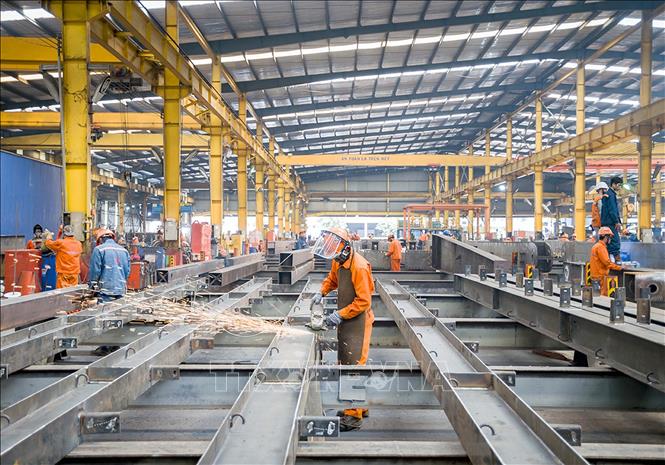
Based on that, the Department of Internal Affairs advised the City People's Committee to report and propose to the Ministry of Internal Affairs to submit to the Government Decree 293/2025/ND-CP on the minimum wage applicable from January 1, 2026, which approves the adjustment of the aforementioned units from Region III to Region II. This will help tens of thousands of workers benefit from the new regional minimum wage.
Most notably, the Ho Chi Minh City Federation of Labor was one of the units that promptly identified the need to retain the wages for arduous, hazardous, and dangerous work, as well as the exceptionally arduous, hazardous, and dangerous work wages, which were not included in the draft Decree during the consultation process. Thanks to the timely written proposal from the Ho Chi Minh City Federation of Labor through the Vietnam General Confederation of Labor, requesting that the wages for arduous, hazardous, and dangerous work be maintained at least 5% higher than normal work wages, and the wages for exceptionally arduous, hazardous, and dangerous work be maintained at least 7% higher than normal work wages, the Ministry accepted this proposal and submitted it to the Government for promulgation of Decree No. 293/2025/ND-CP with all the proposed content. This ensures that millions of workers nationwide engaged in arduous, hazardous, and dangerous work will continue to benefit from this wage policy.
Through these specific cases, it can be affirmed that when trade unions proactively identify problems from practical experience, promptly advise, and closely coordinate with the government, businesses, and relevant parties, policies will "preempt" disputes, maintaining stable labor relations.
Based on that experience, what lessons has the Ho Chi Minh City Trade Union learned, sir?
Based on the above experience, the City Federation of Labor Unions has drawn several lessons learned, including: Building a system for gathering information from the grassroots level, thereby strengthening the role of grassroots trade unions, industrial park trade unions, legal counseling centers, and hotlines to promptly collect data on wages, income, living expenses, and labor fluctuations; Utilizing online surveys and digital applications to obtain broad and rapid data for policy impact assessment.
Enhancing the social critique role of trade unions by fully and proactively participating in the feedback rounds on draft laws and decrees, especially those concerning wages, social insurance, and social security; mobilizing trade union officials who are economic and labor experts, scientists, and practitioners to participate in drafting and providing feedback; preparing complete dossiers and arguments, including comparative data across regions.
Strengthen dialogue and collaborate with businesses when proposing minimum wage policies, always taking into account the capacity of businesses to bear the burden, especially small and micro-enterprises and labor-intensive industries; propose a reasonable transition roadmap and mechanism.
Employers should work together to clearly communicate to workers the nature of the minimum wage and regional zoning, avoiding expectations that exceed the company's actual capabilities, which can strain labor relations.
Developing a "two-in-one" team of trade union officials who are not only proficient in labor law but also possess a strong understanding of corporate economics and finance, negotiation skills, policy analysis, and data utilization; proactively researching models of wage councils to advise on improving the tripartite dialogue mechanism in Vietnam.
What suggestions do you have regarding the recent proposal to zon the minimum wage increase?
Based on the experience of Ho Chi Minh City, we propose the following: Completing the legal framework on minimum wage zoning, clearly stipulating the principle that areas bordering Zone I should not differ by more than one wage zone; and considering a special wage zone mechanism for island areas with exceptionally high living costs, such as Con Dao.
There are regulations on transitional provisions for industrial parks and export processing zones that undergo significant zoning changes after administrative unit reorganization, to avoid sudden pressure on businesses.
Furthermore, the role of workers' representative organizations should be more strongly institutionalized, including regulations mandating consultation with the Vietnam General Confederation of Labor and provincial/city labor confederations in the process of developing and amending minimum wage policies; and piloting a mechanism for regional and special urban wage councils, in which local trade unions participate permanently, to better reflect the specific characteristics of each region.
Strengthen information and communication efforts regarding the minimum wage by developing materials, publications, and communication clips to help workers and businesses understand correctly: the minimum wage is the lowest level used as a basis for negotiation; adjustments to regional zoning are for management purposes and do not mean that businesses are forced to increase wages at the same rate for all workers; assign the Trade Union to take the lead in coordinating with relevant departments and agencies to conduct extensive communication after each adjustment of the minimum wage level and zoning.
The case of proposing adjustments to the minimum wage zoning for 7 communes and the Con Dao special zone of Ho Chi Minh City is a clear example showing that when trade unions proactively identify problems, dare to propose solutions, persistently recommend solutions based on solid data and reasoning, and at the same time listen to the voice of businesses, we can make a practical contribution to improving policies and laws on minimum wages, better protecting the legitimate rights and interests of workers, and maintaining a stable investment and business environment.
Thank you very much, sir!
Source: https://baotintuc.vn/xa-hoi/chu-dong-phat-hien-de-xuat-bat-cap-ve-phan-vung-luong-toi-thieu-20251212215851278.htm


![[Photo] Prime Minister Pham Minh Chinh attends the Conference summarizing and implementing tasks of the judicial sector.](/_next/image?url=https%3A%2F%2Fvphoto.vietnam.vn%2Fthumb%2F1200x675%2Fvietnam%2Fresource%2FIMAGE%2F2025%2F12%2F13%2F1765616082148_dsc-5565-jpg.webp&w=3840&q=75)














































































Comment (0)