

With nearly 20 years of experience in chicken farming, Ms. Le Thi Hang (Xuan Quang commune, Bao Thang district) said: "Normally, in March and April, the weather changes, with high humidity and erratic rain and sunshine, reducing the resistance of livestock and making them very susceptible to disease outbreaks. Therefore, in addition to administering all necessary vaccines, my family buys disinfectant to spray the entire chicken coop once a week and regularly sweeps, collects waste, and clears weeds around the coop."
Thanks to proactive disease prevention measures, Mrs. Hang's family's poultry flock has developed steadily without outbreaks of disease. Each year, her family raises more than 15,000 chickens, earning over 300 million VND.

Bat Xat district has over 55,000 head of livestock and 290,000 head of poultry. With the current situation of small-scale, scattered farming, the risk of disease outbreaks and spread is ever-present. Mr. Nguyen Quang Chien, in charge of the Bat Xat District Veterinary Station, said: "The current weather conditions are favorable for the emergence and spread of pathogens, so people need to regularly clean, disinfect, and sterilize livestock barns, and vaccinate on time and with the correct dosage. During the first phase of the 2024 General Sanitation, Disinfection, and Environmental Sterilization Month, the station provided over 1,000 liters of Benkocid disinfectant to communes and towns for environmental disinfection."

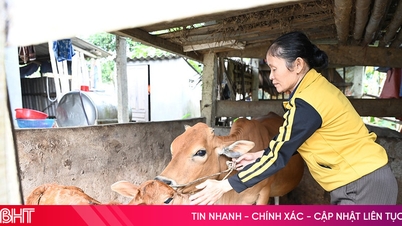
Ms. Dang Thi Nham's family is a prime example of successful livestock farming in Ban Vuoc commune (Bat Xat district). Currently, her farm raises 14 buffaloes and cows, 60 goats, and 10 native black pigs. She considers hygiene, disinfection, and sterilization of barns and the farming environment as one of the best solutions for preventing disease in her livestock. Ms. Nham stated that livestock barns, especially waste, can easily breed pathogens if not regularly collected, cleaned, and disinfected. Therefore, her family proactively cleans the barns and surrounding environment, collects waste for disposal, and regularly sprinkles lime powder on walkways and around the barns.

To proactively prevent the outbreak and spread of livestock and poultry diseases, prevent transmission to humans, and ensure food safety and disease control in animal husbandry, the province implements two main phases of environmental sanitation, disinfection, and decontamination each year (phase 1 in March, phase 2 in November). Each phase, the province provides approximately 6,000-7,000 liters of chemicals to localities for spraying and disinfecting the environment in residential areas near the border, poultry markets, public places, village roads, alleys, former outbreak sites, and areas at high risk of disease outbreaks and spread among livestock.

In addition, livestock farmers are advised to disinfect the entire breeding area, grazing area, and surrounding areas once a week. Vehicles and equipment used for transporting animals, animal products, and animal feed, as well as animal holding areas awaiting slaughter, must be thoroughly cleaned, and waste and manure collected for burial or incineration. Slaughterhouses, markets, and collection points must be cleaned, disinfected, and sterilized after each production shift and at the end of each production day. Wastewater from the slaughtering process should be treated with chemicals before being discharged into the environment.
The Department of Livestock and Veterinary Medicine, in coordination with the Departments of Agriculture and Rural Development in districts, cities, and towns, is stepping up the dissemination of information about the purpose and significance of spraying disinfectants and sterilizing the livestock environment so that people, especially livestock farmers, can proactively implement it. Training on the techniques of spraying disinfectants and sterilizing livestock barns and the environment is being organized for veterinary staff at the commune level and those directly involved. At the same time, veterinary officers are assigned to specific areas to strengthen supervision and guidance on the procedures and techniques of spraying disinfectants and sterilizing...
During the first phase of the 2024 environmental sanitation, disinfection, and decontamination campaign, localities in the province used over 900 tons of lime powder and more than 6,600 liters of chemicals, mobilizing nearly 12,000 people to participate in clearing and dredging drainage ditches, and sweeping village roads and alleys.

Source
![[Image] Vietnam's colorful journey of innovation](/_next/image?url=https%3A%2F%2Fvphoto.vietnam.vn%2Fthumb%2F1200x675%2Fvietnam%2Fresource%2FIMAGE%2F2025%2F12%2F14%2F1765703036409_image-1.jpeg&w=3840&q=75)
































































![[Image] Vietnam's colorful journey of innovation](https://vphoto.vietnam.vn/thumb/402x226/vietnam/resource/IMAGE/2025/12/14/1765703036409_image-1.jpeg)

























Comment (0)