

The silk farming industry, once thought to be on the verge of extinction, is now experiencing a strong resurgence, becoming an effective economic development direction that has helped many households in Coc Khieng village, Phuc Khanh commune, Lao Cai province to achieve legitimate wealth.
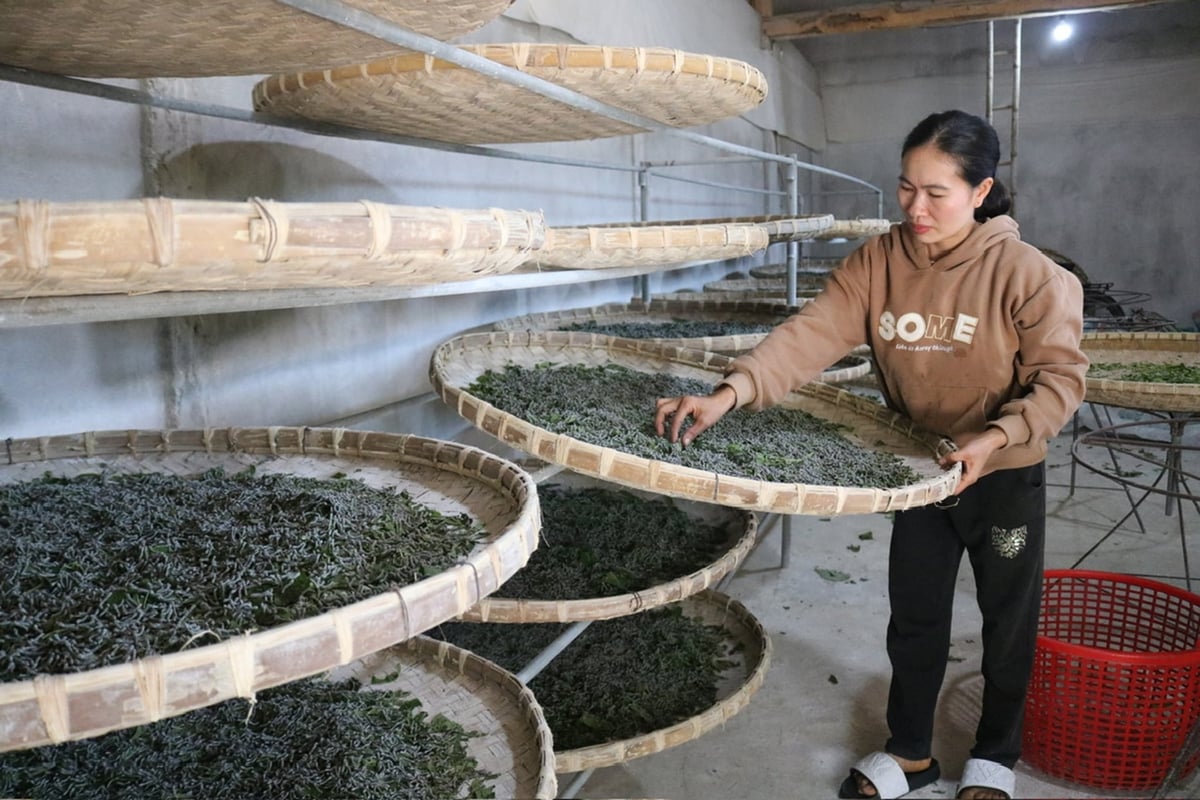
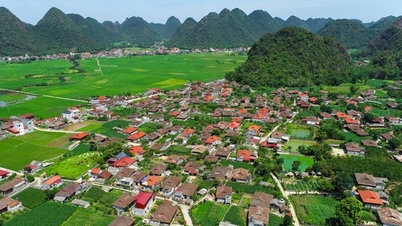
Silk farming in Phuc Khanh commune, Lao Cai province, is becoming a new livelihood that helps people develop their economy and escape poverty. Photo: Bich Hop.
Ms. Ngo Thi Dien's family, from Coc Khieng village, one of the long-standing silkworm farming households in Phuc Khanh commune, shared: "Initially, I only tried planting a few acres of mulberry trees to raise silkworms during the agricultural off-season. Unexpectedly, the results were very good. Currently, Ms. Dien's family maintains a consistent silkworm farming operation with 10-12 batches per year, earning hundreds of millions of dong after deducting expenses."
According to locals, the biggest advantage of silkworm farming is the quick return on investment and the utilization of local labor. Mulberry leaves are easy to grow, resistant to pests and diseases, and suitable for the soil and climate conditions of Phuc Khanh. Each silkworm cycle lasts only about 15-20 days, and with good care, the cocoons are of high quality and fetch a good price.
Not only experienced households, but also many young households are boldly investing in expanding their scale. Thanks to technical training and support with new mulberry varieties and healthy silkworms, many families achieve revenues of hundreds of millions of dong each year, becoming exemplary models of successful economic development in the locality.
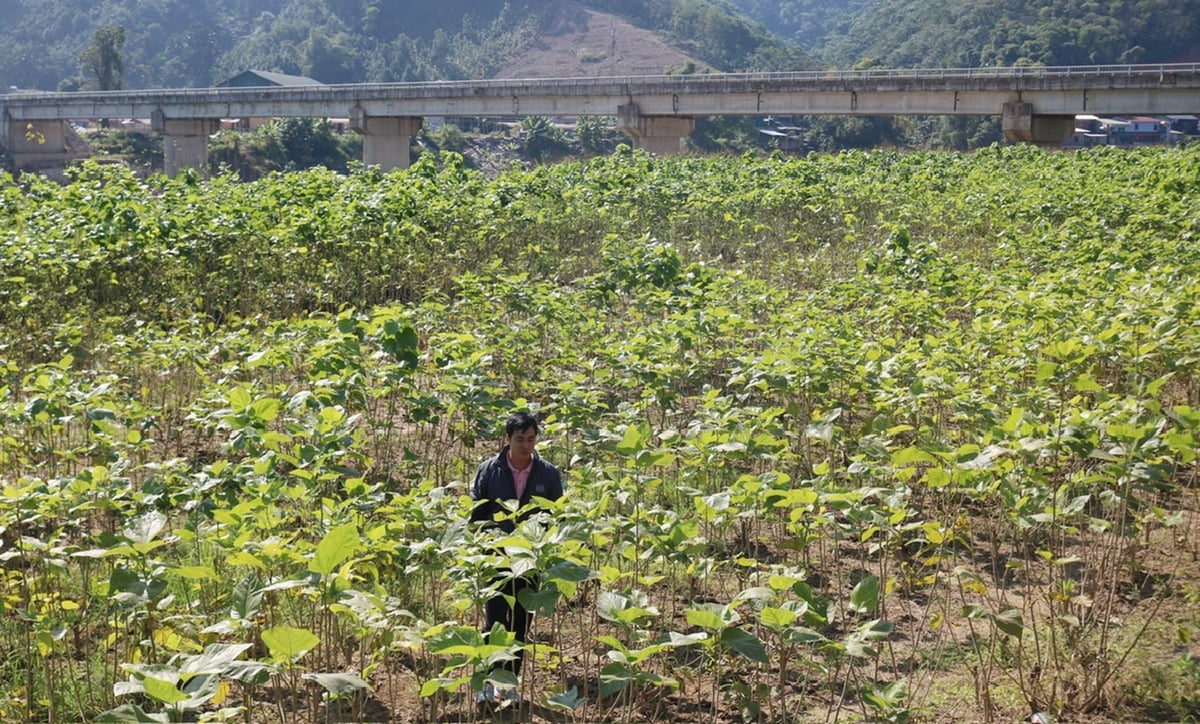
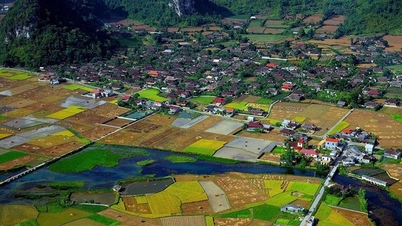
Lush green mulberry fields along the Chay River in Coc Khieng village, Phuc Khanh commune, Lao Cai province. Photo: Bich Hop.
According to Mr. Le Duy Hung, Head of Coc Khieng village, Phuc Khanh commune, in the past, the villagers mainly grew upland rice and cassava, resulting in unstable incomes, and many households remained poor. Now, nearly 60 households have switched to mulberry cultivation and silkworm farming, each with 0.5-1 hectare, leading to a significant increase in income, and many households have recently escaped poverty.
According to Mr. Doan Truong Son, Vice Chairman of the People's Committee of Phuc Khanh commune, the mulberry cultivation model is being developed in the commune as part of a linked agricultural product chain. Phuc Khanh commune has identified this as a long-term livelihood, has planned a concentrated mulberry growing area, and included it in the criteria for sustainable poverty reduction in the 2025-2030 period.
Currently, Phuc Khanh commune has established a concentrated mulberry cultivation area spanning tens of hectares, attracting hundreds of households to participate in silkworm farming. In addition, the commune collaborates with specialized agencies to organize training courses on silkworm disease prevention and control, and techniques for safe mulberry cultivation, improving productivity and cocoon quality.
Notably, linking the consumption of cocoons with purchasing facilities inside and outside the province helps people feel secure in their production. The price of cocoons remains stable at a relatively high level, limiting the "bumper harvest, low prices" situation seen with some other agricultural products.
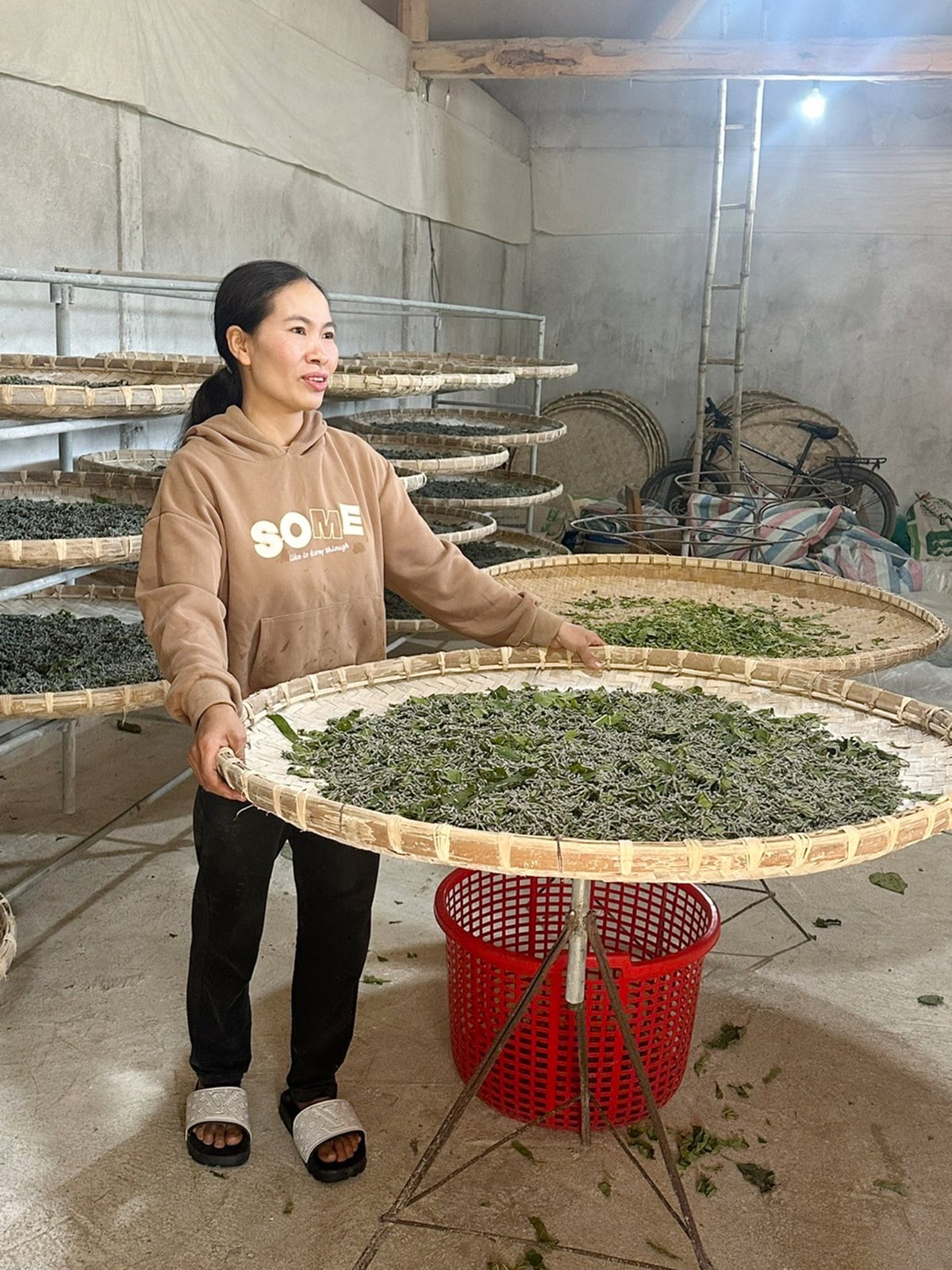
Ms. Ngo Thi Dien, from Coc Khieng village, Phuc Khanh commune, is tending to trays of silkworm larvae ready for sale in her family's mulberry cultivation and silkworm farming model. Photo: Bich Hop.
Mr. Vu Duc Hung, an official from the Economic Department of Phuc Khanh commune, commented: "Mulberry cultivation and silkworm rearing is one of the agricultural models that brings high added value per unit area. If well organized, people can achieve incomes many times higher than traditional rice or corn cultivation."
According to Mr. Hung, for the sustainable development of silkworm farming, the economic sector will continue to advise on expanding mulberry raw material areas, support the establishment of silkworm farming cooperatives and associations to increase competitiveness, and gradually move towards deep processing of silk products. At the same time, it will encourage the application of science and technology and mechanization in some stages to reduce labor and improve production efficiency.
In reality, mulberry cultivation and silkworm rearing not only provide high income but also contribute to solving the unemployment problem for rural workers, especially women and the elderly. The work of caring for silkworms and harvesting mulberry leaves can be done while at home, helping to stabilize livelihoods and reduce the number of young people leaving their hometowns for work elsewhere.
Source: https://nongnghiepmoitruong.vn/nghe-trong-dau-nuoi-tam-hoi-sinh-manh-me-d789212.html












![Anticipating future trends: [Part 1] New livelihoods from floating tank frog farming model](https://vphoto.vietnam.vn/thumb/402x226/vietnam/resource/IMAGE/2025/12/13/1765607984017_dsc06888-210118_726-133559.jpeg)





























































Comment (0)